
Eastern Southeast Europe (1840–1851 CE): Revolutions, National …
Years: 1840 - 1851
Eastern Southeast Europe (1840–1851 CE): Revolutions, National Movements, and Shifting Alliances
Settlement and Migration Patterns
Serbian Settlement in Southern Hungary
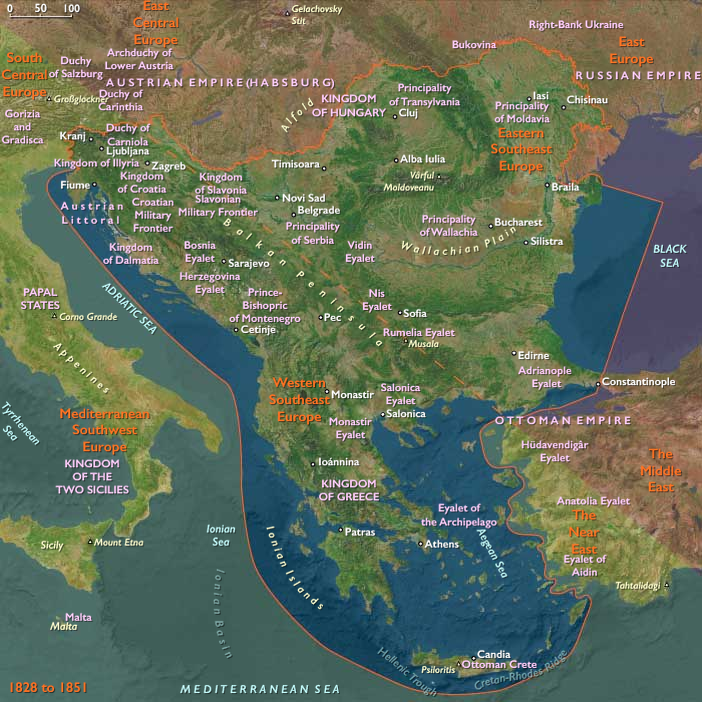
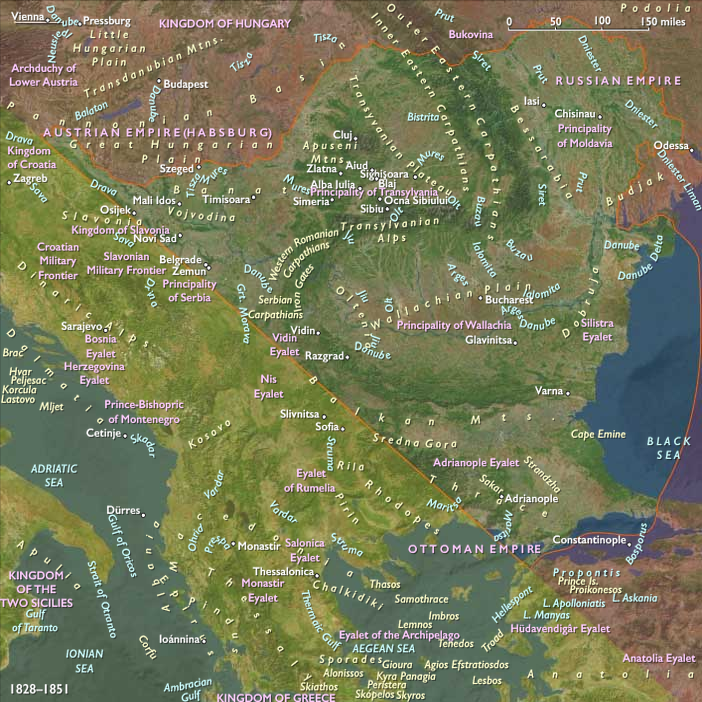
Following harsh repression by the Ottoman Empire, thousands of Serbs fled into southern Hungary and Slavonia, settling as border guards. The Austrian Militärgrenze (Military Frontier) thus introduced Orthodox Serbs into predominantly Catholic territories, leading to demographic changes and cultural tensions.
Romanian Migration from Transylvania
Harsh economic conditions in Transylvania, following Austrian repression of the 1848 revolutions, triggered significant Romanian migration. Many Romanian peasants, facing poverty and limited opportunities, moved into the Danubian principalities (Wallachia and Moldavia) seeking improved living conditions.
Economic and Social Developments
Economic Changes in Wallachia and Moldavia
Increased trade, particularly through the Black Sea wheat trade, facilitated by Jewish middlemen from Galicia, benefitted boyars but rarely reached the peasant majority. Infrastructure improvements began with the construction of the first major roadways, and in 1846, Gheorghe Bibescu of Wallachia and Mihai Sturdza of Moldavia agreed to dismantle customs barriers, marking the first steps toward economic integration between the two principalities.
Cultural and Artistic Developments
Bulgarian National and Cultural Revival
Bulgarian cultural revival accelerated in the mid-nineteenth century. Significant advances occurred in education and literature, including the first Bulgarian-language periodicals printed primarily in Romanian emigrant centers and in Constantinople. Bulgarian intellectual life was increasingly influenced by Western and Russian educational models, fostering a cosmopolitan Bulgarian intelligentsia.
Serbian Cultural Renaissance
Serbian culture flourished through the efforts of scholars like Vuk Karadžić and Dositej Obradović. Karadžić’s language reforms, literary translations, and collection of Serbian folklore strengthened Serbian national identity and cultural unity.
Intellectual and Religious Developments
Hungarian-Croatian Linguistic Conflicts
The Hungarian Diet's 1843 law making Magyar the official language intensified linguistic tensions in the region. Croatian intellectuals responded by promoting the Croatian language vigorously, seeking to establish a distinct Slavic cultural identity within the Austrian Empire.
Bulgarian Church Autonomy Efforts
From 1849 onward, Bulgarians actively sought ecclesiastical autonomy from the Greek Orthodox Patriarchate of Constantinople, pressing Ottoman authorities to appoint Bulgarian bishops and permit liturgy in Bulgarian. This movement underscored the intersection of religious and national identity in the region.
Political Dynamics and Regional Rivalries
1848 Revolutions and Romanian National Awakening
The European revolutions of 1848 significantly impacted Wallachia, Moldavia, and Transylvania. Transylvanian Romanians, excluded from political life, rallied for national recognition and equality. Austrian forces, with Russian support, eventually crushed the revolts, reinstating strict governance but abolishing serfdom, dismantling the Union of Three Nations, and granting Romanians citizenship in Transylvania, albeit without substantial land reforms.
Serbian Autonomy and Hungarian Tensions
Serbs in Vojvodina, facing Hungarian attempts at Magyarization, declared autonomy and aligned with Austrian and Croatian forces against Hungary during the revolutions. However, their hopes for autonomy were dashed when Austria harshly reimposed direct control, laying the groundwork for future tensions.
Ottoman Tanzimat Reforms Continuation
The Ottoman Empire continued its Tanzimat reforms, attempting to modernize governance and improve conditions within its European territories. Despite these reforms, nationalist sentiments and local dissatisfaction continued to grow.
Key Historical Events and Developments
-
The Hungarian Revolution of 1848 led to substantial political and social upheaval across the region.
-
The Romanian revolutionary movements in Wallachia and Moldavia signaled growing nationalist sentiments.
-
Cultural and linguistic struggles intensified between Hungarian and Croatian groups, significantly influencing political dynamics in the region.
-
Bulgarian efforts toward ecclesiastical autonomy began gaining momentum.
Long-Term Consequences and Historical Significance
The era from 1840 to 1851 was pivotal, marked by revolutionary fervor, heightened national consciousness, and significant demographic shifts. These events laid the groundwork for intensified nationalist movements and further conflicts, shaping the region's political landscape in subsequent decades.
People
Groups
- Bulgarians (South Slavs)
- Croats (South Slavs)
- Serbs (South Slavs)
- Bulgarian Orthodox Church
- Romanians
- Christians, Eastern Orthodox
- Serbian Orthodox Church
- Ottoman Empire
- Bulgaria, Ottoman
- Union of Three Nations
- Turkish people
- Slavonian Krajina (Military Frontier)
- Moldavia (Ottoman vassal), Principality of
- Wallachia (Ottoman vassal), Principality of
- Russian Empire
- Slavonia, (Habsburg) Kingdom of
- Serbia, (Ottoman vassal) Principality of
Topics
Commodoties
Subjects
- Commerce
- Language
- Labor and Service
- Decorative arts
- Conflict
- Mayhem
- Faith
- Government
- Scholarship
- Custom and Law
- Human Migration
Regions
Subregions
Years: 1840 - 1851
People
Groups
- Bulgarians (South Slavs)
- Croats (South Slavs)
- Serbs (South Slavs)
- Bulgarian Orthodox Church
- Romanians
- Christians, Eastern Orthodox
- Serbian Orthodox Church
- Ottoman Empire
- Bulgaria, Ottoman
- Union of Three Nations
- Turkish people
- Slavonian Krajina (Military Frontier)
- Moldavia (Ottoman vassal), Principality of
- Wallachia (Ottoman vassal), Principality of
- Russian Empire
- Slavonia, (Habsburg) Kingdom of
- Serbia, (Ottoman vassal) Principality of
Topics
Commodoties
Subjects
- Commerce
- Language
- Labor and Service
- Decorative arts
- Conflict
- Mayhem
- Faith
- Government
- Scholarship
- Custom and Law
- Human Migration
Regions
Subregions