
Eastern Southeast Europe (676–819 CE): Transformation, Division, …
Years: 676 - 819
Eastern Southeast Europe (676–819 CE): Transformation, Division, and Regional Realignments
Settlement and Migration Patterns
Bulgarian and Slavic Territorial Consolidation
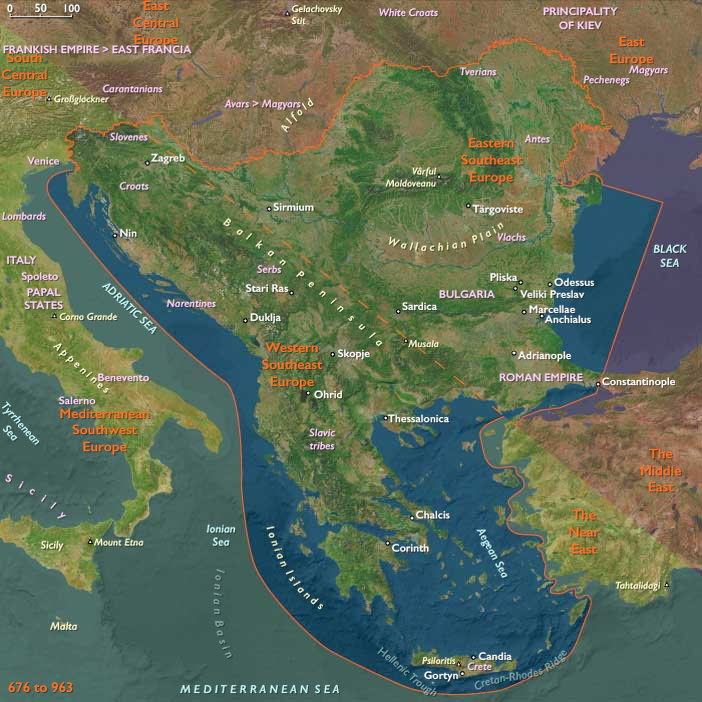
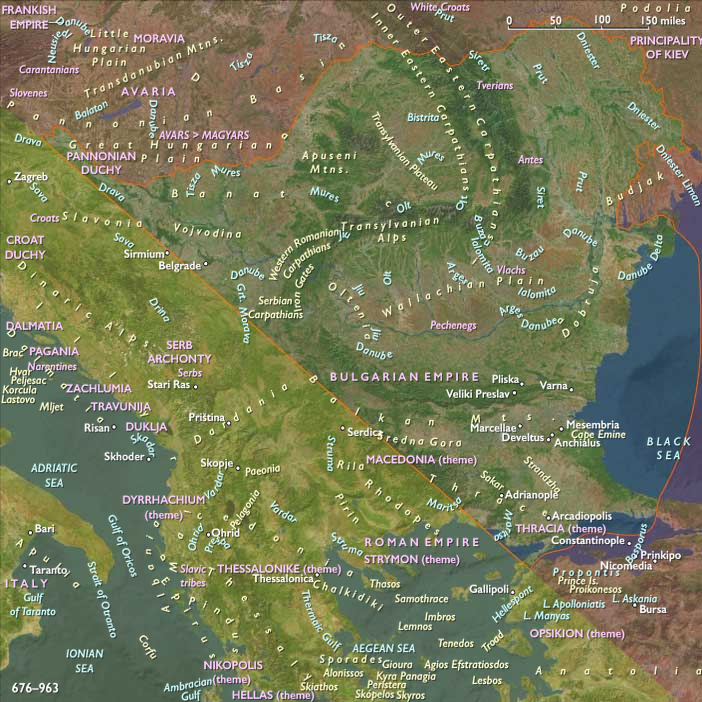
From 676 to 819 CE, Eastern Southeast Europe witnessed significant demographic and geopolitical changes. The establishment and expansion of the Bulgarian Empire, beginning with the inception of the first Bulgarian state around Pliska, led to major shifts. This expansion included territories eastward to the Black Sea, southward encompassing Macedonia, and northwestward reaching present-day Belgrade, reshaping regional settlement patterns dramatically.
Byzantine Territorial Challenges
Constantinople's control over the Balkans weakened significantly due to persistent Bulgarian pressures and shifting alliances. Despite substantial internal fortification efforts, the Byzantine Empire struggled to maintain its southern Balkan territories, facing increasing Slavic and Bulgarian influence.
Political and Military Developments
Bulgarian Ascendancy and Byzantine Retreat
Bulgarian political stability fluctuated, notably through a series of leadership crises, yet its territorial expansions continuously challenged Byzantine dominance. The Bulgarian Empire capitalized on Byzantine weaknesses, notably expanding after the Avars' defeat by Charlemagne, further diminishing Byzantine strategic influence.
Iconoclasm and Imperial Stability
Internally, the Byzantine Empire grappled with profound religious controversies, particularly Iconoclasm under Emperors Leo III and Constantine V. These theological disputes significantly influenced political stability, although Constantine V successfully enhanced military strength and internal administrative efficiency.
Charlemagne's Coronation and Diplomatic Realignment
Charlemagne's coronation in 800 CE symbolically restored the Western Roman Empire, permanently fracturing Byzantine aspirations of reunifying Christendom. The Byzantine Empire, after initial resistance, reluctantly recognized Charlemagne’s title, deepening the divide between Latin and Greek Christian traditions.
Economic and Technological Developments
Economic Adjustments Amid Geopolitical Shifts
Throughout this period, the economic landscape adapted to geopolitical upheavals. Bulgarian expansion altered trade routes and commercial dynamics, while Byzantine territories increasingly relied on enhanced fortifications and defensive technologies to secure economic stability.
Defensive Innovations
Both Byzantine and Bulgarian states prioritized military fortifications and defensive infrastructure. Strategic investments in defense, especially during Emperor Leo III and Constantine V’s reigns, ensured the survival and territorial integrity of their respective domains despite external threats.
Cultural and Artistic Developments
Cultural Exchanges and Adaptation
Cultural life thrived amid shifting political boundaries. Byzantine art, architecture, and religious practices experienced significant transformations due to Bulgarian and Slavic interactions. The Seventh Ecumenical Council’s restoration of icons in 787 CE marked a profound cultural shift, reinforcing traditional religious and artistic expressions.
Scholarly and Intellectual Resilience
Despite political disruptions, scholarly institutions maintained their critical roles, preserving classical, theological, and philosophical traditions. Intellectual continuity supported cultural resilience, adapting to new political and social contexts.
Social and Religious Developments
Religious Controversies and Ecclesiastical Divisions
The prolonged Iconoclast controversy deeply affected Byzantine society, notably under Leo III and Constantine V. Its resolution at the Seventh Ecumenical Council restored traditional icon veneration practices, reinforcing Eastern Orthodox identity and societal cohesion.
Strengthening of Eastern Orthodox Identity
Eastern Orthodoxy further solidified its role as a unifying social and religious force despite ongoing political fragmentation. Bulgarian territorial expansions introduced new social dynamics, compelling Eastern Orthodox institutions to adapt and reinforce their influential societal roles.
Long-Term Consequences and Historical Significance
The era from 676 to 819 CE was defined by transformative geopolitical shifts, critical religious controversies, and significant cultural exchanges. The establishment and expansion of the Bulgarian Empire, the Byzantine retreat from the Balkans, and the enduring religious impacts of Iconoclasm and Charlemagne’s coronation fundamentally reshaped Eastern Southeast Europe's historical trajectory, setting lasting regional dynamics and cultural identities.
People
Groups
- Arab people
- Thrace, Theme of
- Bulgars
- Slavs, South
- Christianity, Chalcedonian
- Avar Khaganate (Eurasian Avars)
- Roman Empire, Eastern: Heraclian dynasty
- Umayyad Caliphate (Damascus)
- Bulgarians (South Slavs)
- Bulgarian Empire (First)
- Roman Empire, Eastern: Non-dynastic
- Roman Empire, Eastern: Heraclian dynasty
- Roman Empire, Eastern: Non-dynastic
- Roman Empire, Eastern: Isaurian dynasty
- Francia (Carolingians)
- Frankish, or Carolingian (Roman) Empire
- Roman Empire, Eastern: Nikephorian dynasty
- Roman Empire, Eastern: Non-dynastic
Topics
Commodoties
Subjects
- Commerce
- Decorative arts
- Conflict
- Faith
- Government
- Scholarship
- Custom and Law
- Human Migration
- Theology
Regions
Subregions
Related Events
Showing 10 events out of 56205 total
Years: 676 - 819
People
Groups
- Arab people
- Thrace, Theme of
- Bulgars
- Slavs, South
- Christianity, Chalcedonian
- Avar Khaganate (Eurasian Avars)
- Roman Empire, Eastern: Heraclian dynasty
- Umayyad Caliphate (Damascus)
- Bulgarians (South Slavs)
- Bulgarian Empire (First)
- Roman Empire, Eastern: Non-dynastic
- Roman Empire, Eastern: Heraclian dynasty
- Roman Empire, Eastern: Non-dynastic
- Roman Empire, Eastern: Isaurian dynasty
- Francia (Carolingians)
- Frankish, or Carolingian (Roman) Empire
- Roman Empire, Eastern: Nikephorian dynasty
- Roman Empire, Eastern: Non-dynastic
Topics
Commodoties
Subjects
- Commerce
- Decorative arts
- Conflict
- Faith
- Government
- Scholarship
- Custom and Law
- Human Migration
- Theology
Regions
Subregions