West Polynesia (676–819 CE): Chiefly Consolidation, Monumental…
676 CE to 819 CE
West Polynesia (676–819 CE): Chiefly Consolidation, Monumental Beginnings, and Oceanic Networks
Geographical Parameters
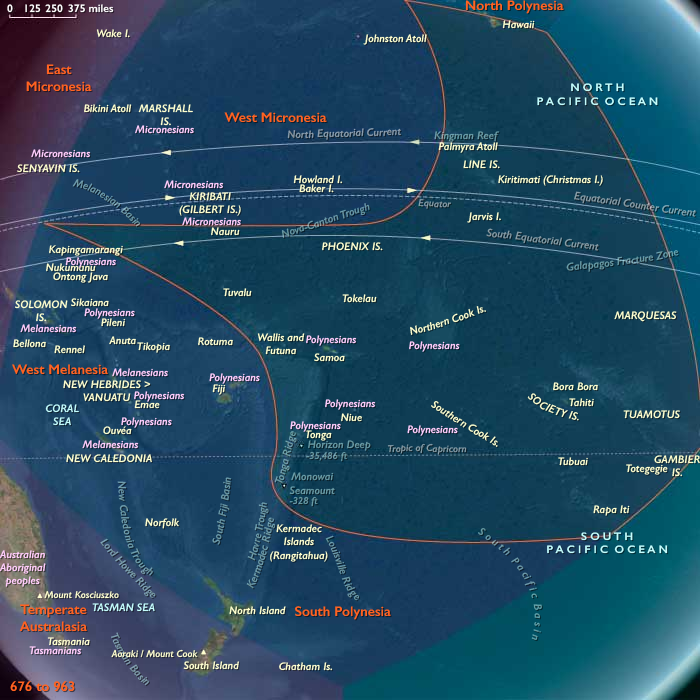
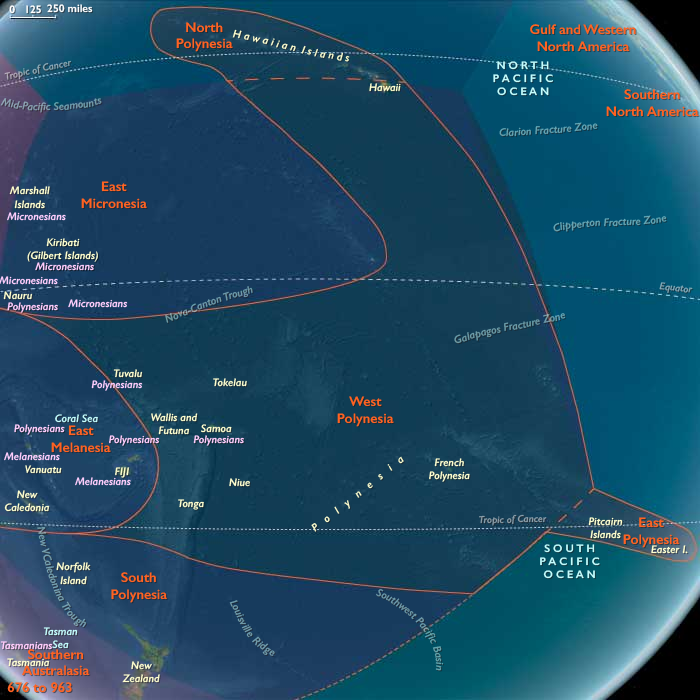
West Polynesia includes Hawaiʻi Island (the Big Island); Tonga (Tongatapu, Haʻapai, Vavaʻu); Samoa (Savaiʻi, Upolu, Tutuila/Manuʻa); Tuvalu and Tokelau; the Cook Islands (Rarotonga, Aitutaki, Mangaia, etc.); the Society Islands (Raiatea–Tahiti–Moʻorea–Bora Bora); and the Marquesas (Nuku Hiva, Hiva Oa).
Anchors
Core settled heartland
- Tongatapu
- Haʻapai
- Vavaʻu
- Savaiʻi
- Upolu
Peripheral spheres
- Tuvalu
- Tokelau
- Cook Islands
- Society Islands
- Marquesas
- Hawaiʻi Island (still uncolonized)
Climate & Environmental Conditions
Reliable trade winds, fertile volcanic soils, protected lagoons, and productive reef systems supported some of the most successful island economies in Oceania.
Breadfruit groves, taro systems, coastal fisheries, and canoe corridors formed integrated ridge-to-reef landscapes.
Subsistence & Settlement
Large villages clustered around:
- reef passages
- sheltered canoe landings
- freshwater valleys
- taro-producing wetlands
Agroforestry mosaics combined:
- breadfruit
- coconut
- banana
- yam
- taro
with reef fisheries and offshore voyaging.
Settlements became increasingly permanent and organized.
Technology & Material Culture
- double-hulled voyaging canoes
- refined sail technologies
- polished adzes
- shell ornaments
- basalt tools
- specialized canoe construction
Navigation traditions reached mature forms capable of supporting long-distance exploration and colonization.
Society & Political Structure
Chiefly hierarchies became increasingly formalized.
Tonga developed the strongest stratification, while Samoa maintained lineage-centered chiefly systems.
Ceremonial landscapes expanded through:
- marae
- malae
- sacred enclosures
- raised platforms
- early monument traditions
These should appear as components of broader landscapes rather than as focal monuments.
Movement & Interaction Corridors
The Tonga–Samoa–Fiji triangle functioned as the primary exchange core.
Canoe routes linked:
- Tonga
- Samoa
- Fiji
- Tuvalu
- Tokelau
while exploratory voyages increasingly reached farther east and north.
Movement of:
- crops
- marriage alliances
- ritual traditions
- navigation knowledge
helped unify the Polynesian world.
Cultural & Symbolic Expressions
Genealogical traditions, ceremonial exchange, tattooing, dance, kava rituals, and sacred landscapes reinforced chiefly authority and regional identity.
Navigation lore remained one of the defining intellectual traditions of the region.
Environmental Adaptation & Resilience
Agroforestry, reef management, crop diversification, and inter-island exchange produced unusually resilient island systems.
The combination of:
- horticulture
- fisheries
- arboriculture
- voyaging
created a durable economic foundation across the archipelago.
Transition
By 819 CE, West Polynesia had become a mature network of interconnected chiefdoms whose ceremonial traditions, navigation systems, agroforestry economies, and exchange networks formed the cultural core from which later Polynesian expansion into the wider Pacific would emerge.
Groups
Subjects
Regions
Polynesia
View →Subregions