
Eastern Southeast Europe (621–478 BCE): Cultural Integration,…
621 BCE to 478 BCE
Eastern Southeast Europe (621–478 BCE): Cultural Integration, Warfare, and Classical Foundations
Settlement and Migration Patterns
Expansion of Greek Influence
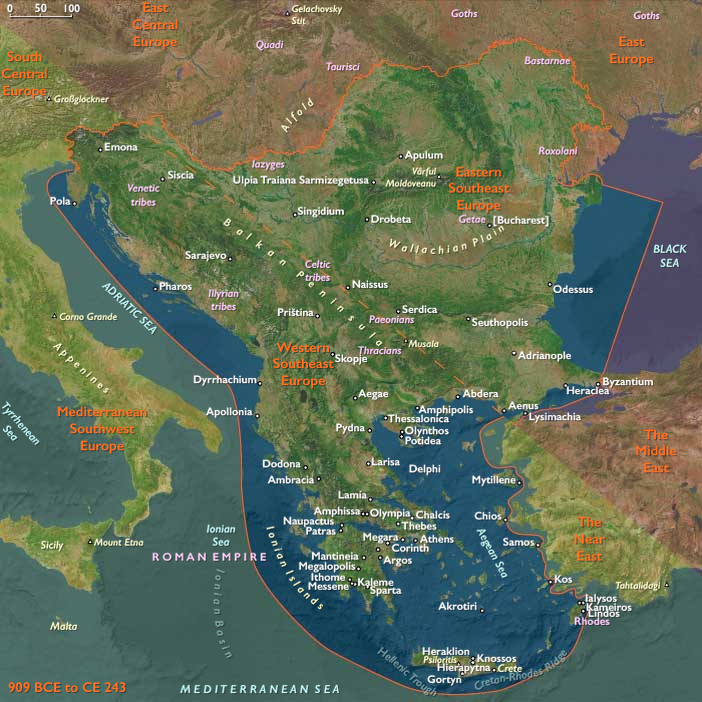
Between 621 and 478 BCE, Greek settlements continued to flourish along the Aegean Sea and the Black Sea coasts. Greeks had established colonies such as Istria, Callatis (modern-day Mangalia), and Tomi (modern-day Constanța), fostering strong trade networks and cultural exchanges with indigenous populations. Greek influence significantly impacted coastal and riverbank Thraco-Getian communities.
Thracian Territorial Consolidation
Thracian communities sustained significant territorial and cultural influence throughout present-day Bulgaria, Romania, and northern Greece. The Odrysian Kingdom, founded by King Teres I following the collapse of the Persian presence in Europe after the failed invasion of Greece (480–479 BCE), emerged as a prominent political entity, establishing structured governance and regional dominance.
Economic and Technological Developments
Expansion of Trade and Maritime Commerce
Trade networks greatly expanded, facilitating the exchange of grain, cattle, metals, wine, honey, and luxury goods between Eastern Southeast Europe and broader Mediterranean economies. Maritime commerce was pivotal, enhancing regional prosperity and connectivity.
Metallurgical Innovations
Significant advances in metallurgy, particularly increased use of iron, improved agricultural productivity, warfare capabilities, and societal structures. Ironworking became widely adopted, marking a technological transformation across the region.
Cultural and Artistic Developments
Flourishing of Greek and Thracian Arts
Both Greek colonies and Thracian communities experienced artistic growth. Classical Greek pottery, sculpture, and architecture matured, exemplified by notable colonies like Byzantium (later Constantinople/Istanbul). Thracian metalwork and ceremonial artifacts continued to demonstrate exceptional craftsmanship.
Literary and Philosophical Developments
Greek settlements evolved into intellectual centers, initiating foundational elements of Western literary and philosophical traditions. These developments significantly impacted the region’s cultural and intellectual life.
Social and Religious Developments
Sophisticated Political Organization
Political structures evolved into complex systems, exemplified by prominent city-states and kingdoms. Greek colonies such as Byzantium developed sophisticated political institutions, while the Odrysian Kingdom demonstrated advanced Thracian governance.
Religious and Cultural Syncretism
Religious beliefs and rituals increasingly integrated Thracian and Greek elements. The establishment of prominent religious sanctuaries and ceremonial sites, including worship of deities like Zalmoxis, reinforced communal unity and intercultural dialogue.
Long-Term Consequences and Historical Significance
From 621 to 478 BCE, Eastern Southeast Europe experienced profound political sophistication, economic integration, and cultural innovation. This era established enduring classical foundations, significantly shaping subsequent historical developments and providing critical frameworks for future cultural and political dynamics.
Commodities
Subjects
Regions
Southeast Europe
View →Subregions
