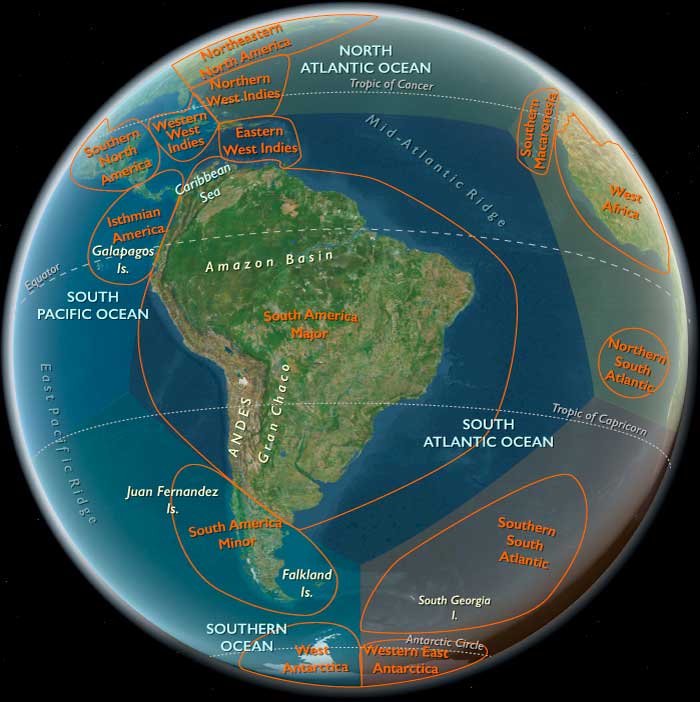
Event
Eastern West Indies (1804–1815 CE): Haitian Independence,…
Eastern West Indies (1804–1815 CE): Haitian Independence, Division, and Regional Instability
Birth of Haiti and Dessalines' Rule
On January 1, 1804, Jean-Jacques Dessalines proclaimed the establishment of the independent nation of Haiti, deriving its name from an Arawak word meaning "mountainous." Haiti emerged as the world’s first independent black republic and the second-oldest republic in the Western Hemisphere. Dessalines, who became governor-general for life in 1803, crowned himself Emperor Jacques I in 1804, adopting a red-and-blue flag derived from the French tricolor.
Dessalines' rule soon faced widespread dissatisfaction due to his perceived ignorance, racial hostility towards mulattoes, corruption, and poor economic decisions. Haiti's plantation-based economy lay in ruins, and its population had dramatically shrunk from approximately 480,000 in 1789 to 250,000 by 1804, severely hindering economic recovery. Attempts to reinstate plantation labor, symbolizing oppression to former slaves, were resisted strongly. Dessalines' authoritarian military rule became a lasting pattern in Haitian politics, persisting until the army was disbanded in 1995.
Assassination and Division of Haiti
Dessalines was assassinated on October 17, 1806, near Port-au-Prince during a mulatto-led rebellion. His violent death, the first of many among Haitian leaders, deepened racial tensions. The subsequent power vacuum led to a political compromise where Henri Christophe became president, controlled by Alexandre Pétion, head of the legislature—a fragile balance known as "politics by understudies" (politique de doublure). This arrangement quickly unraveled, splitting Haiti into two rival regions.
Christophe, who crowned himself King Henry I of northern Haiti in 1811, governed from Cap-Haïtien. Born a slave in Grenada and influenced by his mentor, Toussaint Louverture, Christophe was a lifelong anglophile, encouraging British educational initiatives and investments. He reinstated the plantation system with state-leased lands and laborers bound to estates, reinforced by a disciplined military, including four thousand Royal Dahomet warriors imported from Dahomey.
In contrast, Pétion governed the south and west as a republic. Unlike Christophe, Pétion distributed state lands in small parcels to former soldiers and citizens beginning in 1809, promoting widespread landownership. Though well-intentioned, Pétion's land reforms ultimately fragmented properties into increasingly unproductive units due to inheritance subdivision.
Restoration of Spanish Rule in Santo Domingo
Meanwhile, in Santo Domingo, Spanish royalists resisted French control, receiving arms from Haiti and British naval support. By July 1809, French representatives had fled, allowing the restoration of Spanish sovereignty. This restoration, under King Ferdinand VII, was marked by economic decline, leading to the period known as España Boba (Foolish Spain).
Economic stagnation under Spanish rule prompted independence sentiments. In November 1821, Lieutenant Governor José Núñez de Cáceres declared independence, seeking inclusion in the Republic of Gran Colombia. However, Haitian President Jean-Pierre Boyer preempted this move by invading Santo Domingo, initiating a Haitian occupation lasting from 1822 to 1844, remembered with ambivalence by Dominicans.
Peak and Decline of the Slave Trade
The period marked the peak of transatlantic slavery, with around 60% of enslaved Africans transported to the Americas arriving between 1700 and 1810. Increasing anti-slavery sentiments, inspired by Enlightenment ideals, began challenging the moral and legal foundations of slavery. A landmark judicial decision by British Chief Justice Lord Mansfield in 1772 had declared slavery illegal within Britain itself, freeing approximately 15,000 enslaved people and significantly impacting the institution globally.
Conclusion
The era 1804–1815 in the Eastern West Indies was characterized by Haitian independence, intense internal divisions, economic struggles, and evolving regional dynamics. Haiti's revolutionary legacy, combined with shifts in regional power structures and attitudes towards slavery, laid critical foundations for future Caribbean developments and anti-colonial movements.
-
{# Image navigates to the detail page; the magnifying-glass chip is the only Fancybox lightbox trigger (kept a separate sibling — anchors can't nest). #}
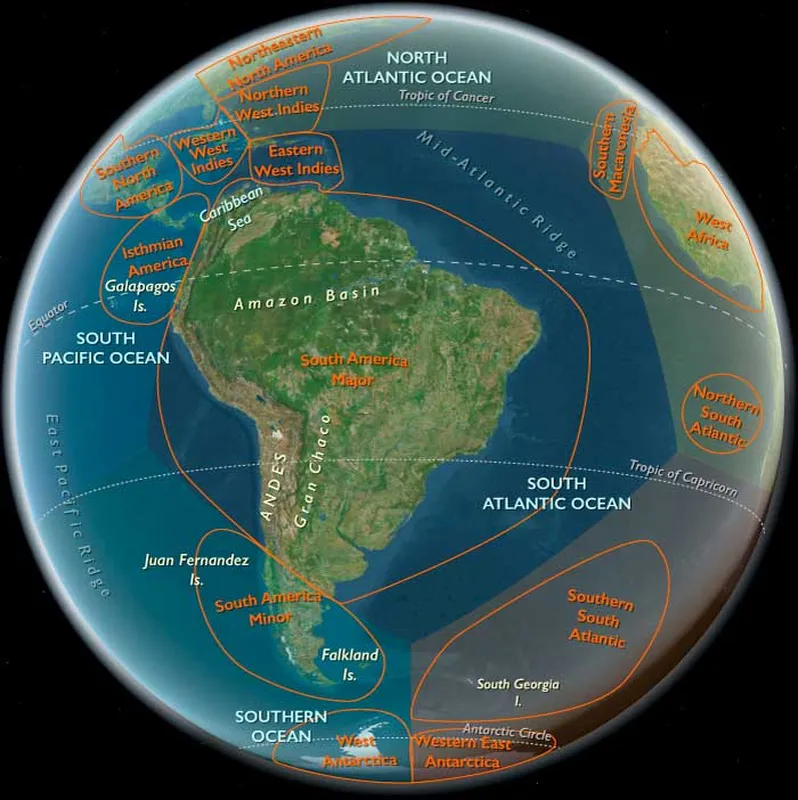 South America and The Eastern Isles
World
South America and The Eastern Isles
World
-
{# Image navigates to the detail page; the magnifying-glass chip is the only Fancybox lightbox trigger (kept a separate sibling — anchors can't nest). #}
 West Indies
Region
West Indies
Region
-
{# Image navigates to the detail page; the magnifying-glass chip is the only Fancybox lightbox trigger (kept a separate sibling — anchors can't nest). #}
 Eastern West Indies
Subregion
Eastern West Indies
Subregion