The spice trade during the sixteenth century had been dominated by the Portuguese, who used Lisbon as a staple port.
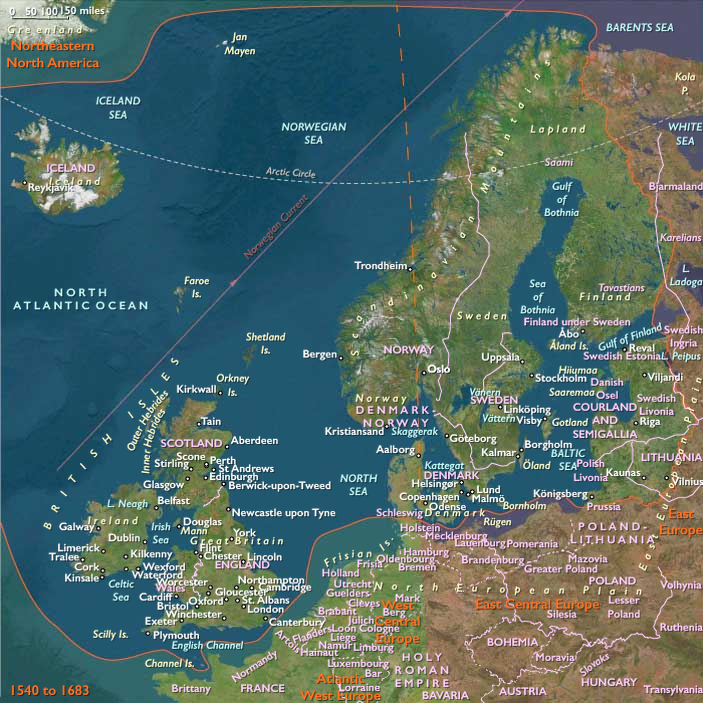
Before the Dutch Revolt, Antwerp had played an important role as a distribution center in northern Europe, but after 1591 the Portuguese had used an international syndicate of the German Fuggers and Welsers, and Spanish and Italian firms that used Hamburg as its northern staple, to distribute their goods, thereby cutting out Dutch merchants.
At the same time, the Portuguese trade system was so inefficient that it was unable to supply growing demand, in particular the demand for pepper.
The lagging supply of pepper had therefore caused a sharp rise in pepper prices at the time.
Likewise, as Portugal had been "united" with the Spanish crown, with which the Dutch Republic was at war, in 1580, the Portuguese Empire had become an appropriate target for military incursions.
These three factors form the motive for Dutch merchants to enter the intercontinental spice trade themselves.
At this time, it is customary for a company to be set up only for the duration of a single voyage, and to be liquidated on the return of the fleet.
Investment in these expeditions is a very high-risk venture, not only because of the usual dangers of piracy, disease and shipwreck, but also because the interplay of inelastic demand and relatively elastic supply of spices could make prices tumble at just the wrong moment, thereby ruining prospects of profitability.
To manage such risk the forming of a cartel to control supply would seem logical.
This first had occurred to the English, who had bundled their forces into a monopoly enterprise, the East India Company, in 1600, thereby threatening their Dutch competitors with ruin.
The Dutch government follows suit in 1602, sponsoring the creation of a single "United East Indies Company" that is also granted a monopoly over the Asian trade.
The charter of the new company empowers it to build forts, maintain armies, and conclude treaties with Asian rulers.
It provides for a venture that is to continue for twenty-one years, with a financial accounting only at the end of each decade.
Accordingly, the Verenigde Oost-Indische Compagnie (Dutch East India Company or VOC) is founded on March 20, 1602, with the goal of sharing the costs of the exploration of the East Indies and ultimately re-establishing the spice trade, a vital source of income to the new Republic of the Seven United Provinces.
The States-General gives a charter to the Company to conduct all commerce between the Dutch Republic and the lands between the Cape of Good Hope and the Strait of Magellan.
The Republic is at this time fighting the Habsburgs for their independence and the reason why the Dutch seek to control the spice trade is one of economic survival.
Prior to the union of the Portuguese and Spanish Crowns, Portuguese merchants had used the Low Countries as a base for the sale of their spices in northern Europe.
After the Spaniards wrested control over the Portuguese Empire, they had declared an embargo on all trade with the rebellious provinces.
This meant the trade would now be directed through the Spanish Netherlands, which, according to the Union of Arras or (Union of Atrecht) had been pledged to the Spanish monarch and are Roman Catholic, as opposed to the Dutch Protestant north.
This also meant that the Dutch had lost their most profitable trade partner and their most important source of financing the war against Spain.
Additionally they had lose their distribution monopoly with France, the Holy Roman Empire and northern Europe.
Their North Sea fishing and Baltic cereal trading activities simply do not suffice to maintain the republic.
The Dutch have made naval power, essential to the Dutch economy and independence, a high priority.
Since the English, with Dutch aid, had in 1588 defeated the Spanish Armada, the Dutch are hopeful of some success.