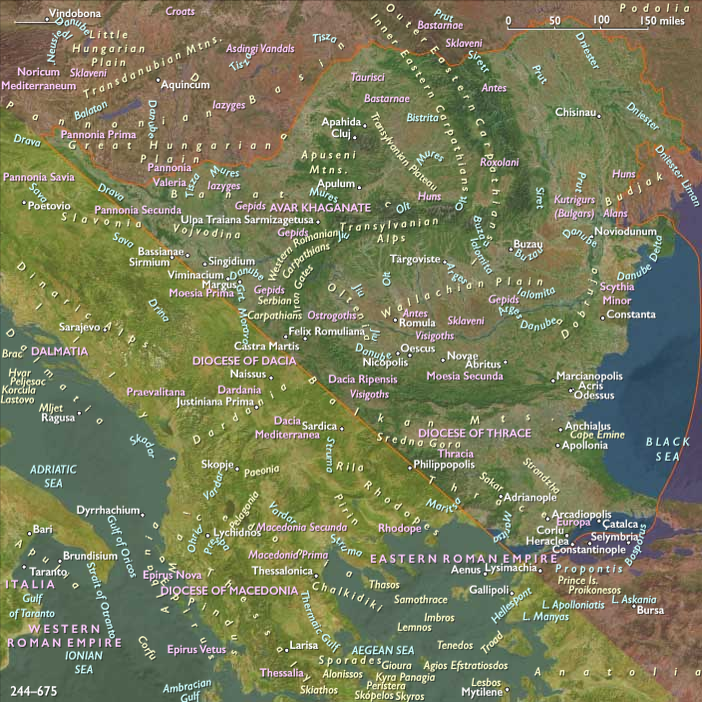
Emperor Heraclius, with a keen sense of…
640 CE
Emperor Heraclius, with a keen sense of reality, has adjusted the East Roman empire to the needs of the seventh century, departmentalizing the great state offices, initiating the militarization of Anatolia, known as the theme (military district) system, and replacing Latin with Greek as the official language.
At Constantinople, the papal envoys had continued to seek the confirmation of Severinus.
At first they were clearly told that unless they would go back and persuade the Pope to accept the Ecthesis, they were wasting their time.
To get around this obstacle, the legates have sought to persuade an unwell and slowly dying Heraclius that they are not there to make professions of faith, but to transact business.
They have said they are quite willing to put the document before the Pope, and if he likes what he sees, they will ask him to sign it, but they make it clear that if the emperor is going to force Severinus to sign it, that all the clergy of the See of Rome will stand together, and such a route will only end in a lengthy and destructive stalemate.
Over the following year the legates stand firm, and at last a clearly tired Heraclius backs down, broken by opposition both at Constantinople and at Rome against his Monothelite compromise.
The emperor grants the envoys their request, and the legates return to Rome with the news.
In 613, a year after the death of Heraclius' first wife, Eudocia, the emperor had married his niece Martina, thus offending the religious scruples of many of his subjects, who view his second marriage as incestuous and Martina as accursed.
It is apparently a happy marriage, Martina accompanying him on his campaigns and bearing him nine children.
Now in his mid-sixties, Heraclius apparently suffers from enlargement of the prostate gland, retention of urine, and a consequent inflammation.
Locations
People
Groups
Topics
Commodities
Subjects
Regions
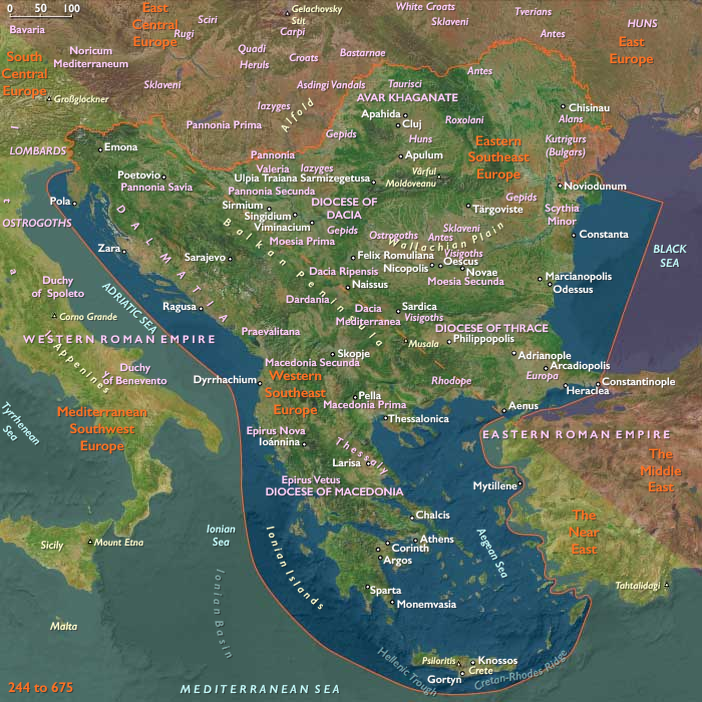
Southeast Europe
View →Subregions