
Estêvão Gomes: The Portuguese Explorer in Spanish…
1524 CE
Estêvão Gomes: The Portuguese Explorer in Spanish Service and His Search for the Northwest Passage (1524)
Estêvão Gomes (c. 1483–1538) was a Portuguese navigator and cartographer who sailed under the Spanish Crown. After deserting Ferdinand Magellan’s expedition in 1521, he regained favor with Emperor Charles V, securing funding for a new expedition to find the Northwest Passage, a hypothetical northern route to the Spice Islands.
Early Career and Role in Magellan’s Expedition (1519–1521)
- Born in Porto, northern Portugal, Gomes likely sailed on Portuguese ships during his youth.
- In 1518, he moved to Spain, becoming a pilot for the Casa de Contratación in Seville, the central agency for Spanish navigation and exploration.
- In 1519, he joined Magellan’s First Circumnavigation of the Earth as the captain of the San Antonio.
- However, before reaching the Strait of Magellan, Gomes deserted the expedition, returning to Spain in May 1521.
- Upon his return, he was imprisoned, but once the survivors of Magellan’s fleet returned and shared their horrific experiences, he was released and pardoned.
Gomes’ New Mission: Searching for the Northwest Passage (1524)
- Despite his checkered past, Gomes managed to persuade Charles V to finance a new expedition aimed at finding a northern passage to the Spice Islands, later known as the Northwest Passage.
- A 50-ton caravel, La Anunciada, was specifically built for the mission.
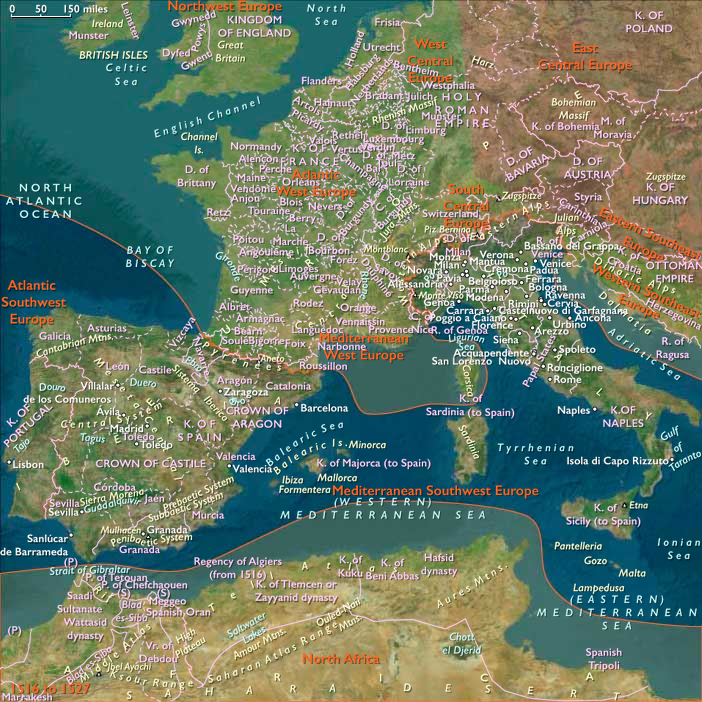
- On September 24, 1524, Gomes set sail from A Coruña, Galicia, with a crew of 29 men, embarking on one of the earliest recorded European explorations of the North American coast.
Significance of Gomes’ Expedition
- Though the Northwest Passage did not exist, his voyage would contribute to early European knowledge of North America’s Atlantic coastline.
- His explorations would help shape later Spanish and Portuguese maps, influencing future navigators and cartographers.
- Despite his past failure with Magellan, Gomes remained a trusted navigator, proving that explorers could reinvent themselves even after setbacks.
The 1524 expedition marked Gomes’ attempt at redemption, but it would also expose the harsh realities of exploration in unknown waters.
Locations
Commodities
Subjects
Regions
Southwest Europe
View →Subregions
