
The British realize that Aden's prosperity depends…
1840 CE
The British government concludes "protection and friendship" treaties with nine tribes surrounding Aden, whereas they will remain independent from British interference in their affairs as long as they do not conclude treaties with foreigners (non-Arab colonial powers).
Sultan Muhsin bin Fadl of the nearby state of Lahej, a sultanate of the Abdali dynasty under the suzerainty of the Zaidi imams, had in the previous year ceded one hundred and ninety-four square kilometers (seventy-five miles) including the port city, to Britain.
The South Arabian port that gives its name to the Gulf of Aden lies about equidistant from the Suez Canal, Bombay (Mumbai), and Zanzibar.
Its vast, natural harbor, first used by the ancient Kingdom of Awsan between the fifth and seventh centuries BCE to replenish supplies, particularly water, had been an entrepôt and a way-station for seamen in the ancient world.
The Zaidi Imams of Yemen had expelled the Ottomans from the interior around 1630, from which time the Ottomans have retained control only of isolated coastal areas, while the highlands generally have been ruled by the Zaidi Imams.
The Imamate had begun to collapse in the 1830s due to internal division, and the Ottomans have moved south along the west coast of Arabia back into northern Yemen.
Locations
Groups
Arab people
View →
Zaidiyyah
View →
Ottoman Empire
View →
Yemen, Ottoman eyalet of
View →
Lahej, Sultanate of
View →
East India Company, British (United Company of Merchants of England Trading to the East Indies)
View →
India, East India Company rule in
View →
Britain (United Kingdom of Great Britain and Ireland)
View →
Aden, Settlement of
View →
Commodities
Regions
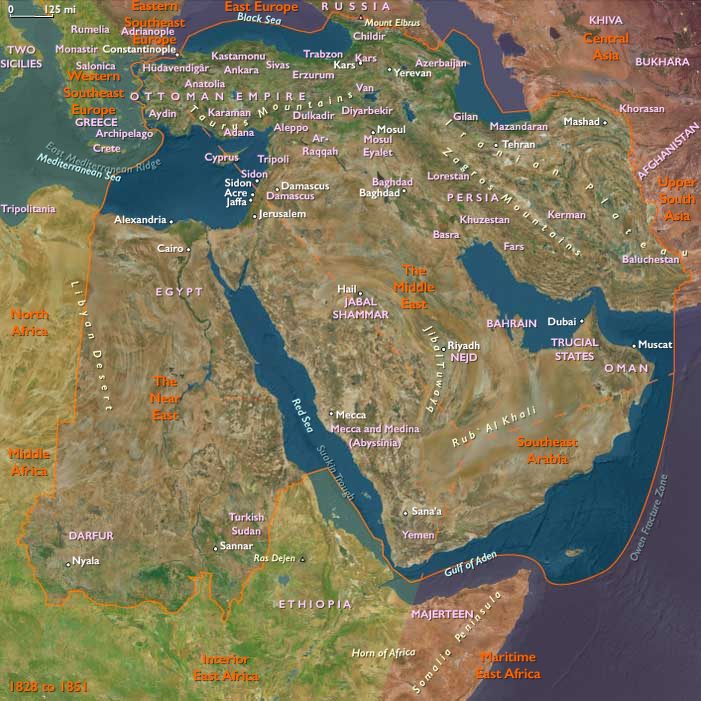
The Near and Middle East
View →Subregions
