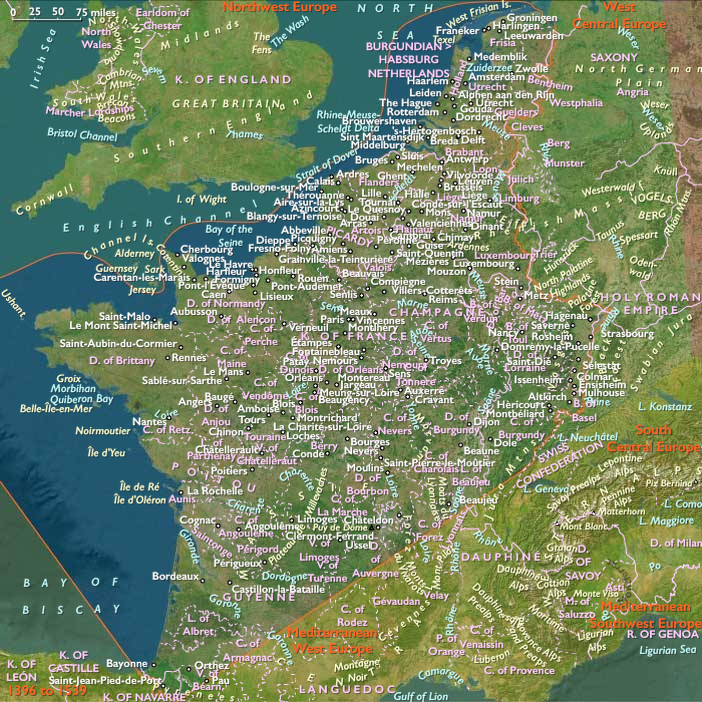
Gerard David and the Bruges School of…
1480 CE to 1491 CE
Gerard David and the Bruges School of Painting (1484)
In 1484, the painter Gerard David (c. 1460–1523), likely trained in Haarlem under either Albert van Ouwater or Geertgen tot Sint Jans, became officially recognized as a master painter upon his admission to the influential Painters' Guild of Bruges. David’s arrival marked a pivotal moment for Bruges, sustaining the city's prominence as a vital artistic center in the later fifteenth century, and contributing significantly to the continued flourishing of Flemish art following the achievements of masters such as Hans Memling and Jan van Eyck.
Artistic Background and Influences
Gerard David’s formative years in Haarlem had immersed him deeply in the rich artistic traditions of the Northern Netherlands, notably the luminous, refined realism of Albert van Ouwater and the gentle spirituality and subtle emotional depth of his possible contemporary, Geertgen tot Sint Jans. David’s stylistic development thus integrated the precise, detailed realism of his predecessors with a subtle, contemplative spirituality characteristic of late Gothic painting in the Netherlands.
Arrival and Establishment in Bruges (1484)
David's admission into Bruges’s prestigious painters' guild in 1484 affirmed his professional maturity and immediately positioned him at the heart of Bruges’ thriving artistic community. Bruges, at the time, remained an essential center for Flemish painting, highly influential through trade connections and patronage networks spanning Europe. David’s arrival thus represented both continuity and renewal, as his distinctive approach breathed new life into Bruges’ long-established artistic tradition.
Style and Artistic Characteristics
Gerard David’s style combined technical brilliance, meticulously observed detail, and a gentle emotional resonance. His compositions are known for their harmonious use of color, serene yet expressive figures, and mastery of atmosphere through refined lighting effects. His paintings often exhibited a contemplative spirituality balanced with exceptional realism, closely aligned with the traditions established by Flemish masters such as Memling and Van der Weyden. David thus carried forward Bruges’ artistic heritage, becoming instrumental in defining the city's style at the close of the fifteenth century.
Impact and Artistic Legacy
David quickly established himself as one of Bruges’ leading artists, receiving major commissions from prominent religious institutions and influential patrons across Flanders and Europe. He significantly influenced subsequent generations of Flemish painters, bridging the transition from late Gothic traditions to early Renaissance naturalism. By extending the innovations of earlier Netherlandish masters, David ensured Bruges’ continuing influence in shaping Northern European art into the sixteenth century.
Long-term Historical Significance
The admission of Gerard David to Bruges’ painters' guild in 1484 symbolizes an important moment of artistic continuity and evolution in late medieval Atlantic West Europe. David's presence and subsequent prominence cemented Bruges’ position as a leading European artistic hub, ensuring that Flemish art retained its powerful influence even as artistic innovation began to shift toward other centers. Through his refined, contemplative style and artistic achievements, David not only maintained Bruges’ artistic reputation but also significantly enriched Flemish painting, bridging late Gothic and emerging Renaissance artistic traditions.
People
Subjects
Regions

West Europe
View →Subregions