Hugo van der Goes and the Portinari…
1475 CE
Hugo van der Goes and the Portinari Altarpiece (1467–1478)
In the pivotal decades following his acceptance as a master painter in the guild of Ghent (1467), Flemish artist Hugo van der Goes (c. 1435–1482) rapidly gained international prominence, becoming one of the leading artistic figures in late medieval Atlantic West Europe. A contemporary and rival of painters like Hans Memling and successor to the traditions of artists such as Rogier van der Weyden, van der Goes achieved widespread acclaim for his innovative compositions, emotionally expressive realism, and sophisticated integration of Gothic and Renaissance elements.
Early Career and Burgundian Patronage (1467–1468)
Accepted as a master painter in the Ghent painters' guild in 1467, Hugo quickly established himself as a prominent figure in the cultural life of the Burgundian Netherlands. His early successes included prestigious commissions associated with Charles the Bold’s marriage to Margaret of York in 1468, when van der Goes created elaborate heraldic and decorative paintings for the celebrations in Bruges. The following year, in 1469, he produced similar ornamentation for Charles's ceremonial joyeuse entrée into Ghent, further solidifying his reputation within Burgundian artistic circles.
The Portinari Altarpiece: Innovation and Patronage (1475)
Van der Goes’s masterwork, the imposing Portinari Altarpiece, commissioned around 1475 by the influential Medici banker Tommaso Portinari (head of the Bruges branch of the Medici Bank), demonstrates the culmination of his innovative approach. Intended for the hospital church of San Egidio in Florence, this monumental triptych marks a pivotal intersection of Flemish realism with Italian patronage, vividly symbolizing the growing artistic connections between Northern and Southern Europe.
Stylistic and Iconographic Innovations
The Portinari Altarpiece is notable for its intense emotional expressiveness and psychological depth. In this influential work, van der Goes deliberately contrasts the serene, decorative, and stylized depiction of angels—rendered in a graceful, intellectualized Gothic manner—with the powerful, raw human emotions portrayed by figures such as the Virgin Mary, Joseph, and the shepherds. This striking emotional realism, captured through meticulous rendering of facial expressions, gestures, and physicality, exemplifies van der Goes’s distinctive artistic innovation.
Further reflecting his sophisticated technique, the painting reveals careful attention to texture, color, and symbolic detail, blending Gothic tradition with nuanced Renaissance influences. Van der Goes notably incorporates highly individualized portraits of Tommaso Portinari and his family into the altarpiece, directly linking devotional iconography to secular patrons and underlining the integration of personal and religious themes typical of late fifteenth-century art.
Cross-Cultural Influence and Artistic Legacy
The arrival of the Portinari Altarpiece in Florence in 1483 (after van der Goes’s death) profoundly influenced Italian Renaissance artists, including Ghirlandaio and other Florentine masters. The painting’s expressive realism, distinctive emotional depth, and luminous palette deeply impacted Italian art, bridging Flemish and Italian artistic traditions and enhancing cross-European cultural exchanges. This impact marked a significant turning point in the reciprocal artistic exchange between Northern and Southern Europe.
Late Life and Entry into Religious Life
In the mid-1470s, possibly shortly after completing the altarpiece, van der Goes underwent a significant personal transformation. He entered the monastery of the Red Cloister (Rooklooster) near Brussels—part of the devout and contemplative Windesheim Congregation—as a frater conversus (lay brother). This dramatic shift, from celebrated painter to cloistered religious life, highlights his complex personal spiritual journey and contrasts markedly with his earlier secular career. Scholars often interpret this move as indicative of deep spiritual conflict or introspection, a personal dimension that perhaps informed the expressive depth and introspection of his later works.
Long-Term Significance
Hugo van der Goes’s pioneering achievements, epitomized by the Portinari Altarpiece, established him as a major artistic figure in Northern Europe. His innovative blending of emotional realism, symbolic depth, and stylistic sophistication substantially influenced artistic developments across Europe, bridging the visual languages of Gothic tradition and Renaissance humanism. His work thus marks a critical transition point in late medieval art history, significantly enriching the artistic, cultural, and intellectual landscape of late medieval and early modern Atlantic West Europe.
People
Groups
Regions
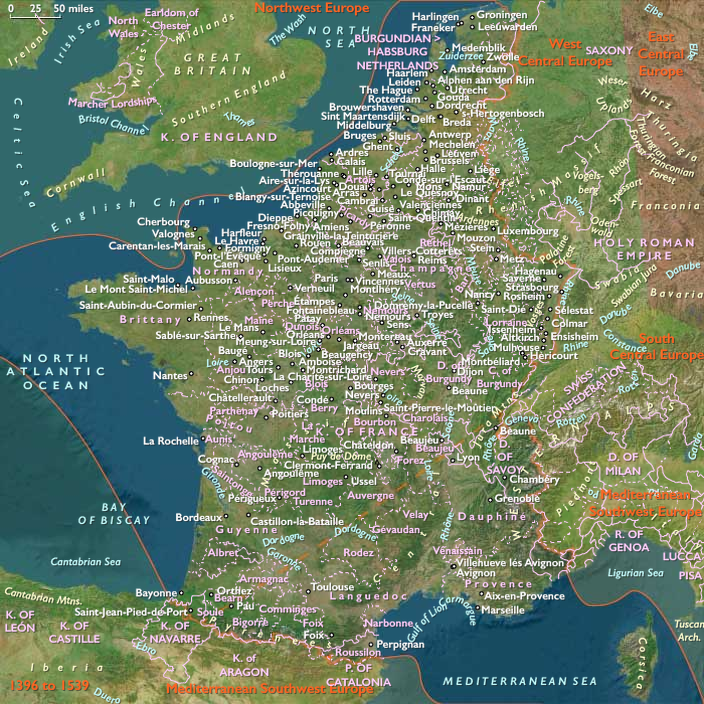
West Europe
View →Subregions