Event
The Constantia estate had been divided into…
The Constantia estate had been divided into three parts—Groot (Great) Constantia, Klein (Little) Constantia and Bergvliet—following the death of Simon van der Stel in 1712.
Under the ownership of Johannes Colijn Klein Constantia has continued to be a standard bearer for Cape wine.
In the 1770s, Groot Constantia had been sold to a businessman from Stellenbosch named Hendrik Cloete, who had replanted the vineyards and rebuilt the cellars in an attempt to revive the reputation of the estate.
Employing nearly 100 slaves, he had stationed them throughout the vineyard, charged with ensuring that not a single insect landed on the vines.
Cloete's dedication (and later that of his son, also named Hendrik) had raised the prestige of the estate and led to its prompt discovery by the invading British.
In his 1816 work, Topographie de Tous les Vignobles Connus, the French oenologist André Jullien includes the wines of Constantia in the highest category of his expansive quality classification of the world's wine.
Ranking it just below the wines of Tokay, Jullien described the dessert wine of Constantia as "...among the finest liqueur wines of the world...". (Johnson, Hugh. Vintage: The Story of Wine pg 236-242 Simon and Schuster 1989).
Having consolidated their rule over South Africa in 1815, the British have found a ready supply of wine now firmly within their control.
Since losing control of the Aquitaine and Bordeaux nearly three hundred and fifty years earlier, securing a steady stream of wine for the British market has been a pressing concern for the British.
By this point, the wines of Constantia have become world-renowned; enthusiastic patrons across the globe include Napoleon (who had requested several cases for his exile on St-Helena) and the restored French King Louis-Philippe I.
American merchants gladly trade their slaves for the famous South African wine.
The British public are greatly encouraged by a reduction in import duty on South African wine to a third of that imposed on Portuguese wine, which has enjoyed favorable duty rates due to the Methuen Treaty.
With easy access to the lucrative British market, the South African wine industry experiences a period of prosperity that will last until the middle of the 19th century
-
{# Image navigates to the detail page; the magnifying-glass chip is the only Fancybox lightbox trigger (kept a separate sibling — anchors can't nest). #}
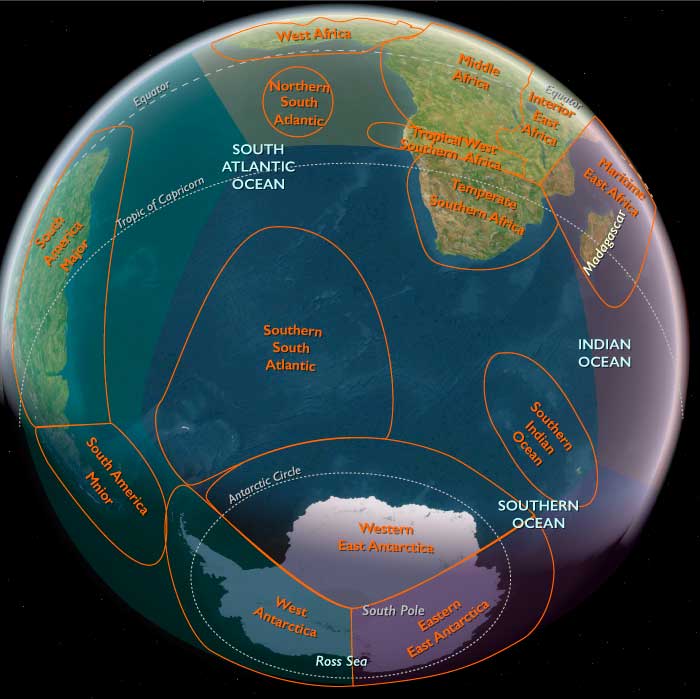
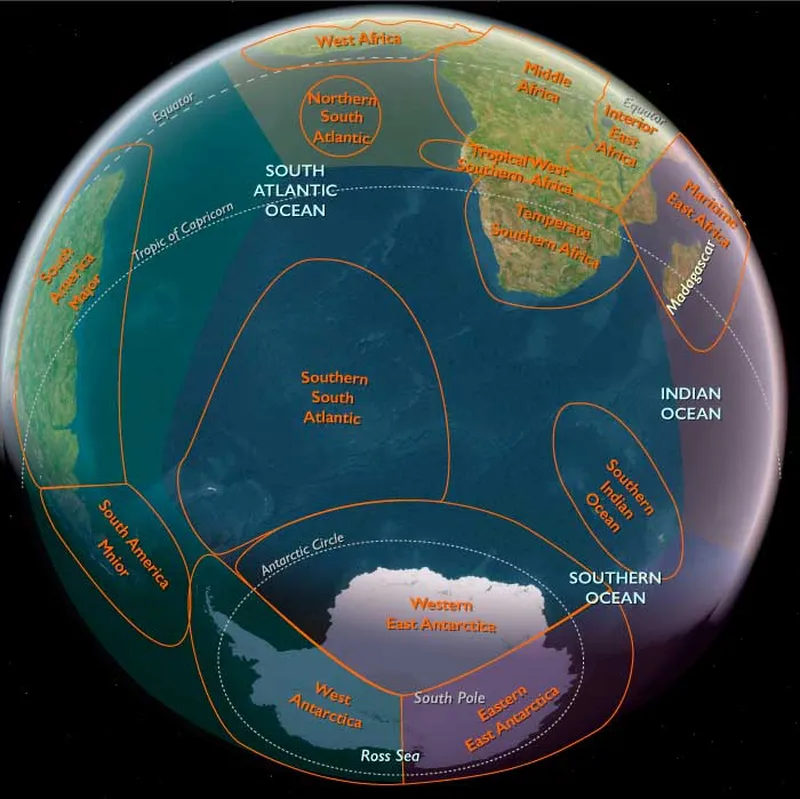 The African South
World
-
{# Image navigates to the detail page; the magnifying-glass chip is the only Fancybox lightbox trigger (kept a separate sibling — anchors can't nest). #}
 Southern Africa
Region
-
{# Image navigates to the detail page; the magnifying-glass chip is the only Fancybox lightbox trigger (kept a separate sibling — anchors can't nest). #}
 Temperate Southern Africa
Subregion