
Francis confirms the Arrêt de Mérindol in …
Years: 1545 - 1545
Francis confirms the Arrêt de Mérindol in 1545 after a series of appeals eventually fails.
The King’s decision has been engendered in part by the highly colored accounts forwarded by Jean Maynier d'Oppède, First President of the Parlement of Provence from 1543, of Protestant activities in the Vaudois, and encouragement by the papacy to root out the "heretics" in the Venaissin.
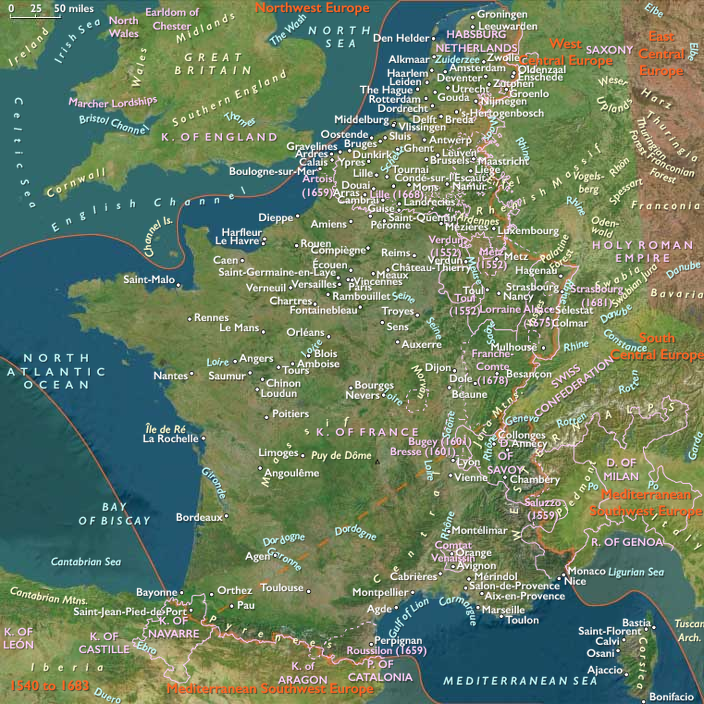
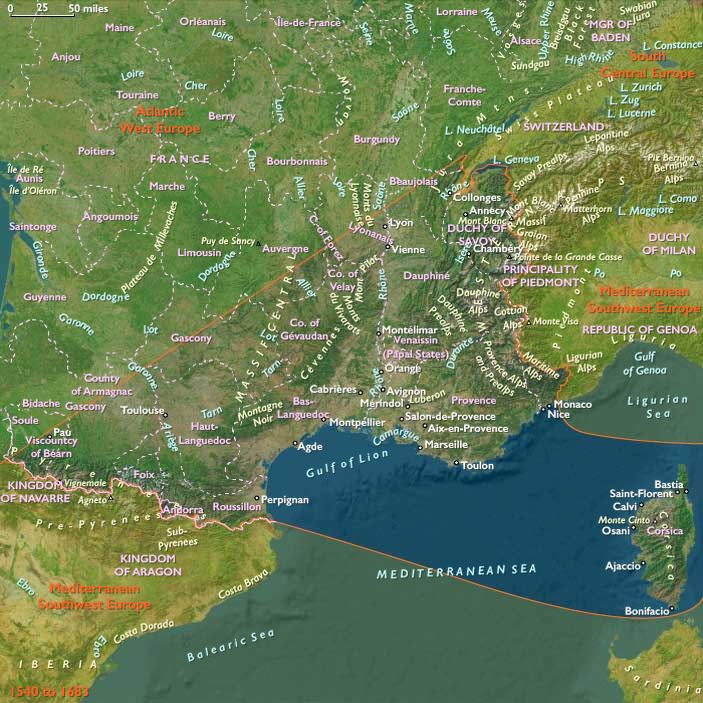
In April, Maynier raises an army of Provençal troops, who are joined by forces from the Papal Comtat Venaissin against the Waldensians of Merindol and Cabrières.
The military commander Antoine Escalin des Aimars, returning from the Italian Wars with two thousand veterans, the Bandes de Piémont, marches from Marseille on his way to fight against the English in the area of Boulogne.
These soldiers take the villages of Mérindol and Cabrieres and devastate neighboring Waldensian villages.
Deaths in the Massacre of Mérindol range from hundreds to thousands, depending on the estimates, with hundreds of others sent to forced labor in the French galleys, and several villages (between twenty-two and twenty-eight) devastated.
The execution of one young man, a servant, may well be the first example of execution by firing squad in Europe, at least for causes of ideology.
The massacres are followed by a wave of looting.
In the aftermath, both Francis I and Pope Paul III approve of the actions taken, and Maynier is awarded Imperial honors by the Pope.
Locations
People
Groups
- Christians, Roman Catholic
- Waldenses
- France, (Valois) Kingdom of
- Netherlands, Habsburg
- England, (Tudor) Kingdom of
- Protestantism
Topics
- Protestant Reformation
- Counter-Reformation (also Catholic Reformation or Catholic Revival)
- Anglo-French War of 1542-46
- Italian War of 1542-6, or Italian War between Charles V and Francis I, Fourth
Commodoties
Subjects
Regions
Subregions
Years: 1545 - 1545
Locations
People
Groups
- Christians, Roman Catholic
- Waldenses
- France, (Valois) Kingdom of
- Netherlands, Habsburg
- England, (Tudor) Kingdom of
- Protestantism
Topics
- Protestant Reformation
- Counter-Reformation (also Catholic Reformation or Catholic Revival)
- Anglo-French War of 1542-46
- Italian War of 1542-6, or Italian War between Charles V and Francis I, Fourth
Commodoties
Subjects
Regions
Subregions