
Francisco de Vitoria: The Defender of Indigenous…
1539 CE
Francisco de Vitoria: The Defender of Indigenous Rights and Founder of International Law
Francisco de Vitoria (c. 1483–1546) was a Dominican scholar, theologian, and humanist who laid the intellectual foundations for international law and human rights. His work challenged Spanish colonial policies, arguing that American Indians had natural rights and sovereignty. Through his lectures at the University of Salamanca, he became a leading advocate for justice in the treatment of indigenous peoples under Spanish rule.
Early Life and Education
- Born to a converso family in Burgos, he was the son of Pedro de Vitoria (of Álava) and Catalina de Compludo, both of noble lineage.
- In 1504, he joined the Dominican Order.
- He studied at Collège Saint-Jacques in Paris, where he was deeply influenced by Desiderius Erasmus and later by Thomistic thought through Pierre Crockaert and Thomas Cajetan.
- He taught theology in Paris from 1516, before returning to Spain in 1522.
Academic and Theological Career in Spain
- 1522: Began teaching at Saint Gregory’s College in Valladolid, where young Dominicans were trained for missionary work in the New World.
- 1524: Elected Chair of Theology at the University of Salamanca, where he became one of the most influential theologians of the Spanish Renaissance.
- He revived and expanded Thomism, particularly in applying Aquinas’ concept of ius gentium ("the law of nations") to the Spanish conquest of the Americas.
Advocate for Indigenous Rights and Limits on Spanish Power
Vitoria argued that the Spanish crown had no legitimate right to enslave or dispossess the indigenous peoples of the Americas, directly challenging the justifications given for colonial rule and forced conversions.
Key Arguments in His Relectiones (1537–1539)
- Indians are rightful owners of their lands and property.
- Indigenous rulers have legitimate authority over their people and territory.
- Neither the Pope nor Charles V has a rightful claim over indigenous lives or lands.
- No violent action can be justified against the natives unless they have first violated Spanish rights.
- Indigenous peoples cannot be considered "slaves by nature" (rejecting Aristotle’s theory of natural slavery, used by some to justify colonization).
His View on Just War and the Limits of Colonial Expansion
- In De iure belli, Vitoria argued that Spain’s wars in the New World lacked the conditions of a "just war".
- He rejected wars of conquest, arguing that they could only be justified in defense of victims of human sacrifice, since their human dignity was being violated.
- His reasoning echoed earlier Dominican scholars like Palacios Rubios, but Vitoria’s influence made these ideas central to European legal and ethical debates on colonialism.
Legacy: The Birth of International Law
- Vitoria’s lectures laid the groundwork for modern international law, influencing later thinkers such as Hugo Grotius and Samuel von Pufendorf.
- His application of ius gentium (the law of nations) helped shape legal principles of sovereignty, human rights, and just war theory.
- His defense of indigenous rights made him one of the first European intellectuals to argue for the moral limits of empire, influencing later reforms in Spanish colonial policies.
Conclusion: A Visionary Theologian and Legal Thinker
Francisco de Vitoria’s revolutionary ideas challenged the ethics of Spain’s colonial expansion and helped shape modern notions of international justice and human rights. His arguments against indigenous enslavement, land dispossession, and unjust war made him one of the most important intellectuals of the 16th century, influencing not only Spanish law but global legal traditions.
Locations
Groups
Topics
Commodities
Subjects
Regions
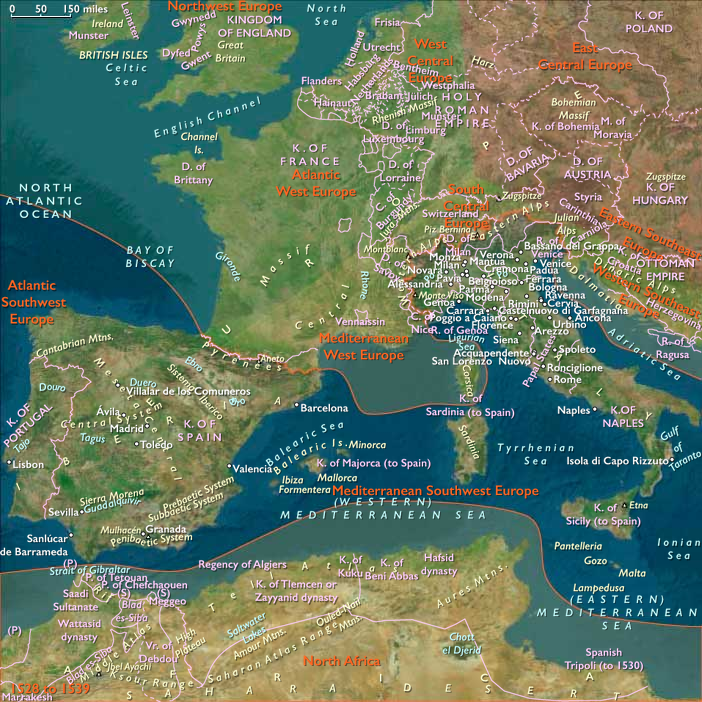
Southwest Europe
View →Subregions
