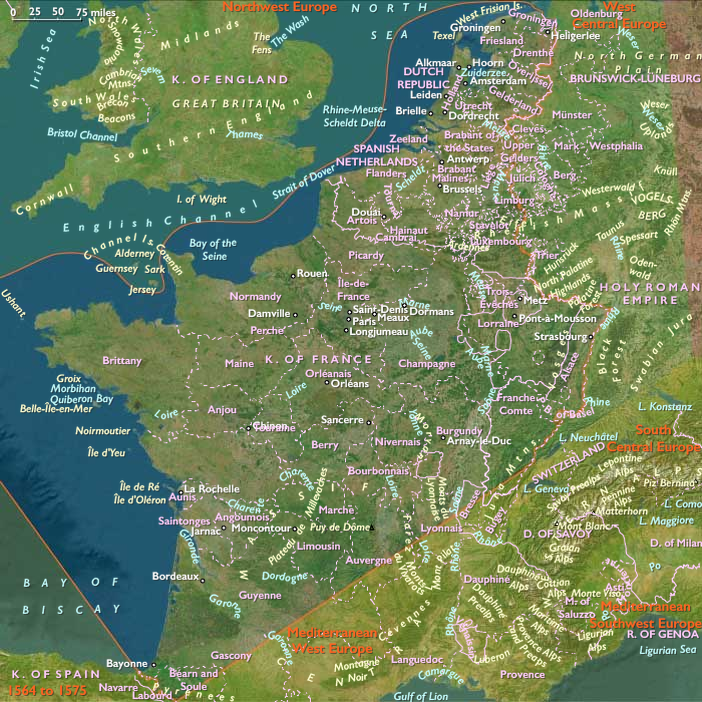
Jean Cousin, the son, had followed his…
1568 CE
Jean Cousin, the son, had followed his famous father, Jean Cousin, to Paris and become a student in his studio, which he had taken over when his father died in 1560/61.
He had achieved the title of master painter early in his career in Paris.
He has left Paris on occasion to work in other locations: he had journeyed to Sens in 1563 to consult on the preparations for the entrance of Charles IX, and had painted a series of portraits of his family there.
Also in 1563, Cousin had decorated the window and sculptures of the chapel of the Château de Fleurigny.
He has from 1565 sculpted the tomb for Philippe de Chabot, Seigneur de Brion, who had been reinstated as grand admiral of France by the time of his death in 1543.
There is some controversy surrounding Cousin's exact contribution to the piece, though it is now believed he made the ornamental border.
His style generally remains faithful to his father's, so it is difficult to distinguish many of their works, which are undated.
His most important surviving work is the Last Judgment, now in the Louvre, the theme of which is the insignificance of human life; the composition suggests both Florentine Mannerism and Flemish influences.
Cousin also is noted for his drawing style, best represented in the emblematic style of his Livre de Fortune, published in 1568.
Locations
Regions
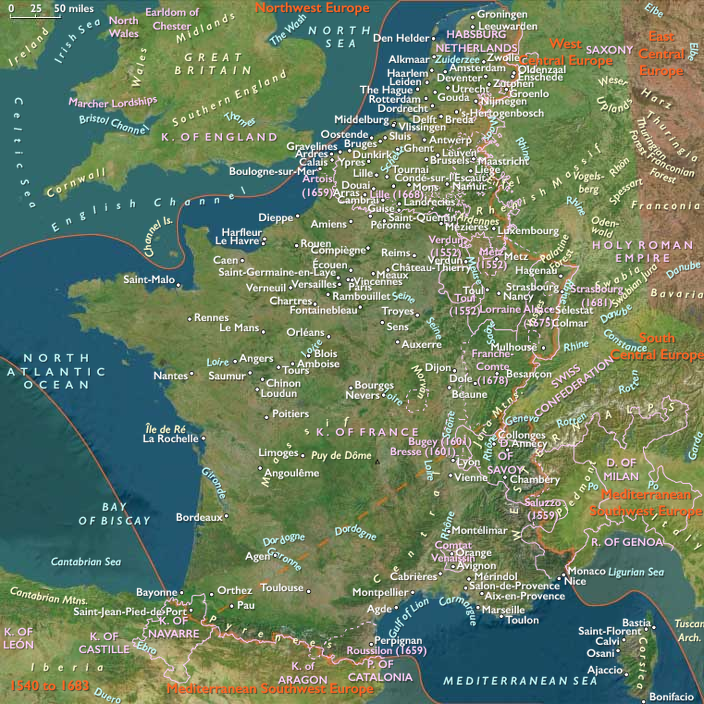
West Europe
View →Subregions