
French authorities restrict the selling of tobacco…
1635 CE
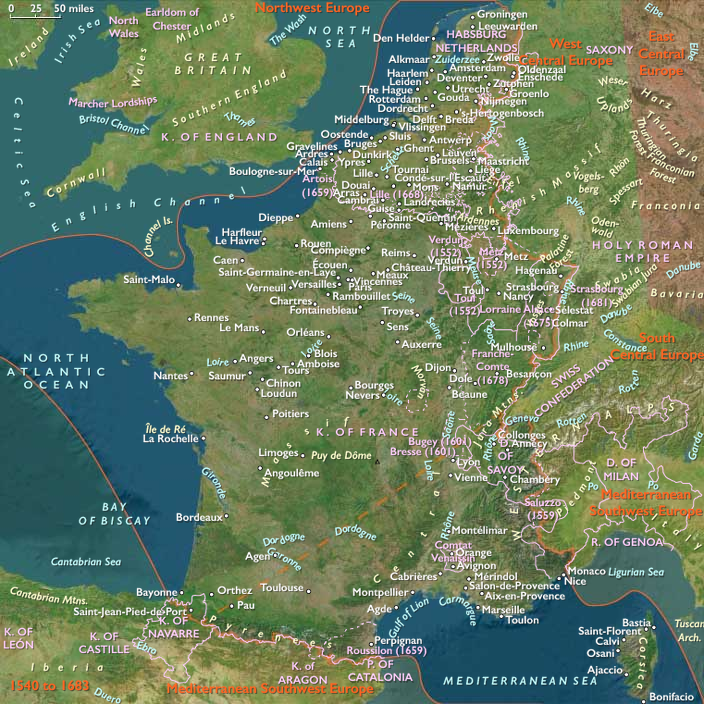
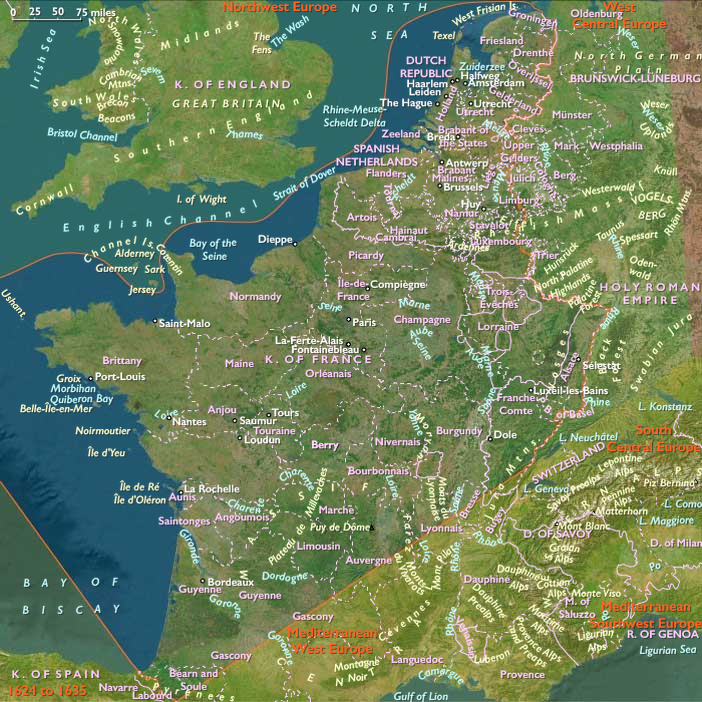
French authorities restrict the selling of tobacco in 1635 to apothecaries by doctor’s prescription only.
Locations
Commodities
Regions
West Europe
View →Subregions
Atlantic West Europe
View →Related Events
No active filters.
Showing 10 events out of 32468 total
The Tokugawa Shogunate in 1635 forbids merchants to travel abroad under penalty of death.
A Japanese imperial memorandum from this year decrees: "Hereafter entry by the Portuguese galeota is forbidden.
If they insist on coming, the ships must be destroyed and anyone aboard those ships must be beheaded."
Murad in 1635 takes personal command in the continuing war against Iran.
Murad leads an invading army in the recapture of Erivan (Yerevan) ...
...but stalls at Tabriz after plundering the city.
The victorious Sultan returns in triumph to Constantinople.
His victories are to be short-lived.
Fakhr ad-Din, captured in late 1634, is beheaded in Constantinople, together with two of his surviving sons, in 1635.
His domains are fragmented after his death, and no significant Maan rulers are to succeed him, yet the union of the Druze and Maronite districts survives.
The Turks take to the offensive with an augmented force in 1635, but are defeated and finally give in, agreeing to surrender the lowland cities Zabid, ...
...Mocha, and ...
...Kamaran.
Thus ends the first period of Ottoman rule in Yemen.
Ribera executes several fine male portraits and a self-portrait.
In the early 1630s, Ribera’s style changes away from strong contrasts of dark and light to a more diffused and golden lighting.
Salvator Rosa and Luca Giordano are his most distinguished followers, who may have been his pupils; others are also Giovanni Do, Enrico Fiammingo, Michelangelo Fracanzani, and Aniello Falcone, who is the first considerable painter of battle-pieces.
Ribera has been portrayed as selfishly protecting his prosperity, and is reputed to have been the chief in the so-called Cabal of Naples, his abettors being a Greek painter, Belisario Corenzio and the Neapolitan, Giambattista Caracciolo.
It is said this group aimed to monopolize Neapolitan art commissions, using intrigue, sabotage of work in progress, and even personal threats of violence to frighten away outside competitors such as Annibale Carracci, the Cavalier d'Arpino, Reni, and Domenichino.
All of them were invited to work in Naples, but found the place inhospitable.
Poussin has become acquainted with other artists in Rome and tends to befriend those with classicizing artistic leanings: the French sculptor François Duquesnoy who he had lodged with in 1626; the French artist Jacques Stella; Claude Lorraine; Domenichino; Andrea Sacchi.
He has joined an informal academy of artists and patrons opposed to the current Baroque style that has formed around Joachim von Sandrart.
At this time the papacy is Rome’s foremost patron of the arts.
Poussin’s Martyrdom of St. Erasmus for St. Peter’s is Poussin’s only papal commission, secured for him by Cardinal Barberini, the papal nephew, and Poussin will not be asked again to contribute major altarpieces or paint large scale decorations for a pope.
His subsequent career will depend on private patronage.
Apart from Cardinal Francesco Barberini, his first patrons include Cardinal Aluigi Omodei, for whom he produces around 1630 to 1632 the Triumphs of Flora (Louvre), Cardinal de Richelieu, who commissions various Bacchanals; Vincenzo Giustiniani, for whom he will paint the Massacre of the Innocents (uncertain early date, Museé Condé, Chantilly); Cassiano dal Pozzo, who is to become the owner of the first series of the Seven Sacraments (late 1630s, Belvoir Castle); and Paul Fréart de Chantelou, with whom Poussin, at the call of Sublet de Noyers, will return to France in 1640.