The novelist and feminist George Sand, born…
1839 CE
The novelist and feminist George Sand, born Amandine Aurore Lucile Dupin, Baroness Dudevant, had married Baron Casimir Dudevant, illegitimate son of Jean-François, at eighteen.
She and Dudevant had two children.
In early 1831, she had left her prosaic husband and entered upon a four- or five-year period of "romantic rebellion."
A romantic liaison with the writer Jules Sandeau had heralded her literary debut, the novel Rose et Blanche (1831).
They had published a few stories in collaboration, signing them "Jules Sand."
She had consequently adopted the pen name that is to make her famous—George Sand—for her first independent novel, Indiana (1832).
Her other novels of this era include Lélia (1833) and Mauprat (1837); idealized works that bring archaeological precision to the romantic novel.
Legally separated from Dudevant in 1835, she has been linked romantically also with Alfred de Musset (summer 1833 – March 1834) and Frédéric Chopin (1837 on).
She is engaged in an intimate friendship with actress Marie Dorval, which has led to widespread but unconfirmed rumors of a lesbian affair.
Sand's reputation was questioned when she began sporting men's clothing in public (which she justified by the clothes' being far sturdier and less expensive than the typical dress of a noblewoman at the time).
In addition to being comfortable, Sand's male dress also enables her to circulate more freely about Paris than most of her female contemporaries are able, and gives her increased access to venues from which women are often barred—even women of her social standing.
Also reasonably scandalous is Sand's tendency to smoke tobacco in public; neither peerage nor gentry has yet sanctioned the free indulgence of women in such a habit, especially in public.
These behaviors (and others) are exceptional for a woman of the early and mid-nineteenth century, when social codes—especially in the upper classes—are of the highest importance.
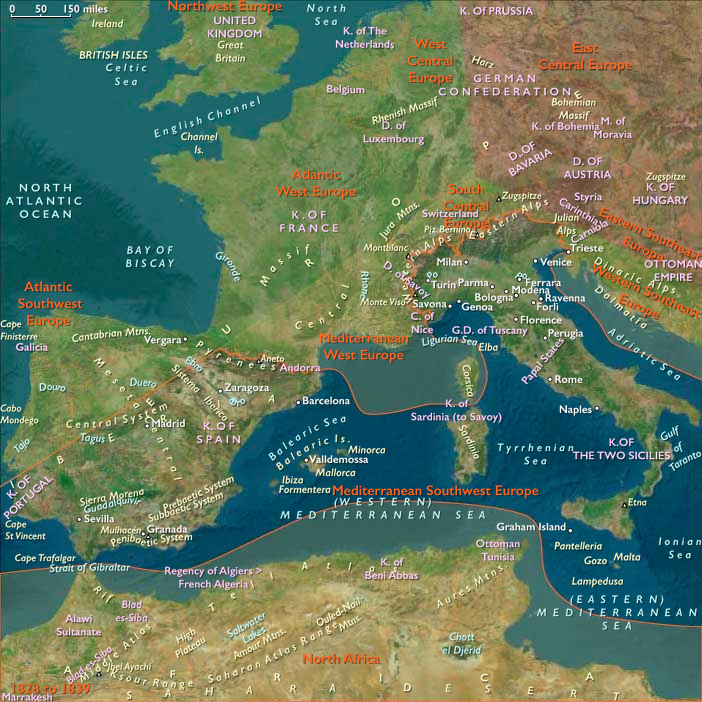
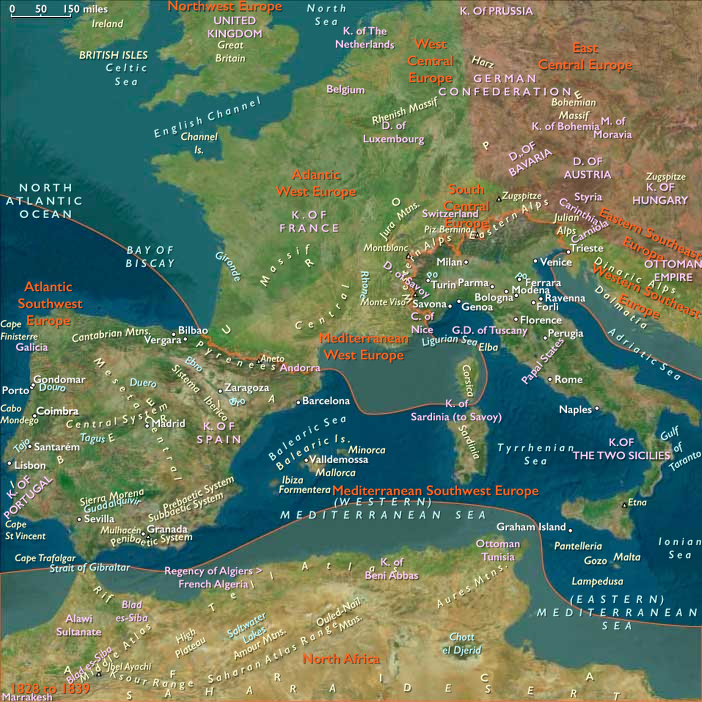
In Majorca, one can still visit the (at this time abandoned) Carthusian monastery of Valldemossa, where she spends the winter of 1838–39 with Chopin and her children.
Images
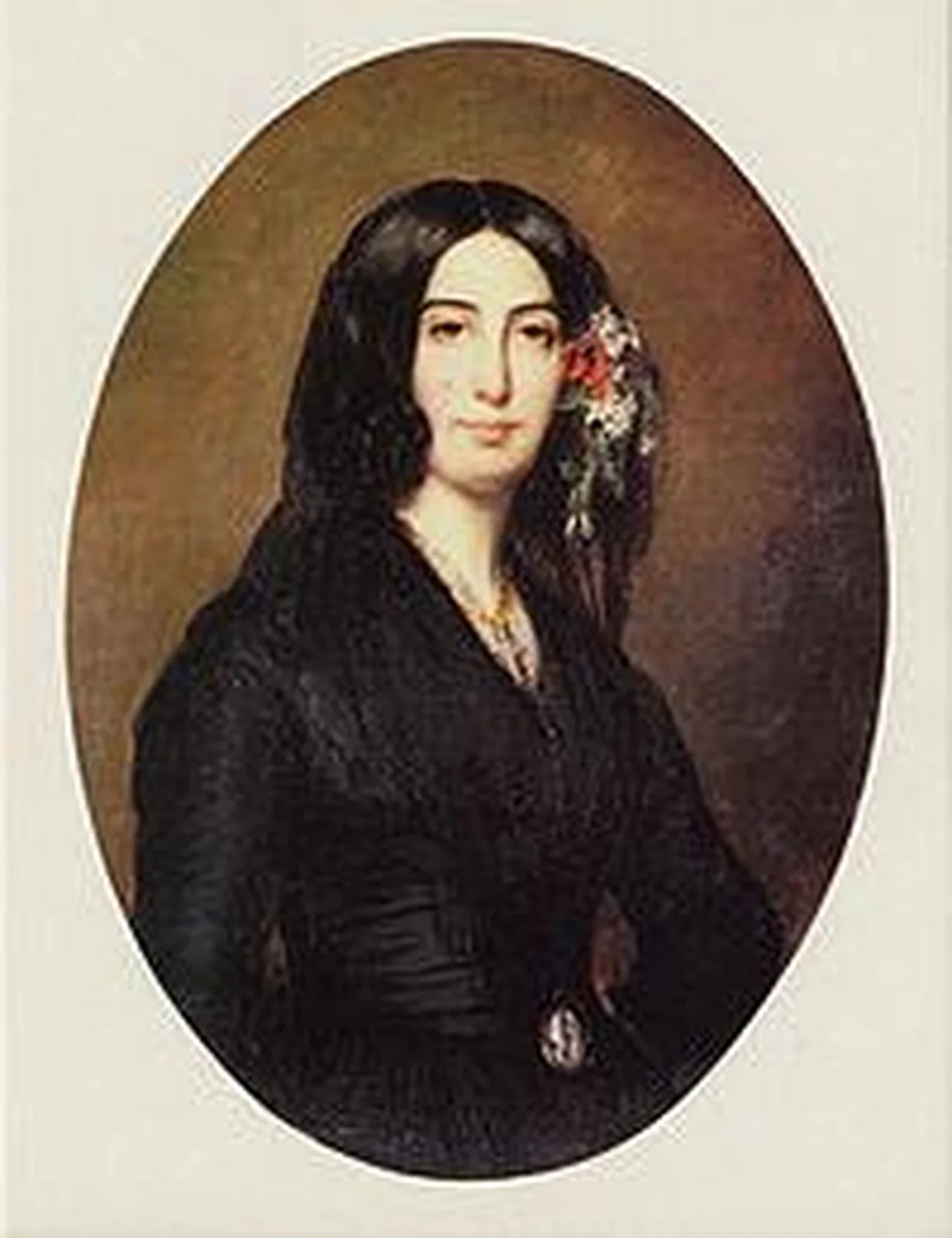
Portrait of George Sand by Auguste Charpentier (1838)
Locations
Subjects
Regions
Southwest Europe
View →Subregions