Karl Ludwig Harding discovers the asteroid Juno…
1803 CE
The eleventh-largest asteroid, and one of the two largest stony (S-type) asteroids, along with 15 Eunomia, 3 Juno is estimated to contain 1% of the total mass of the asteroid belt.
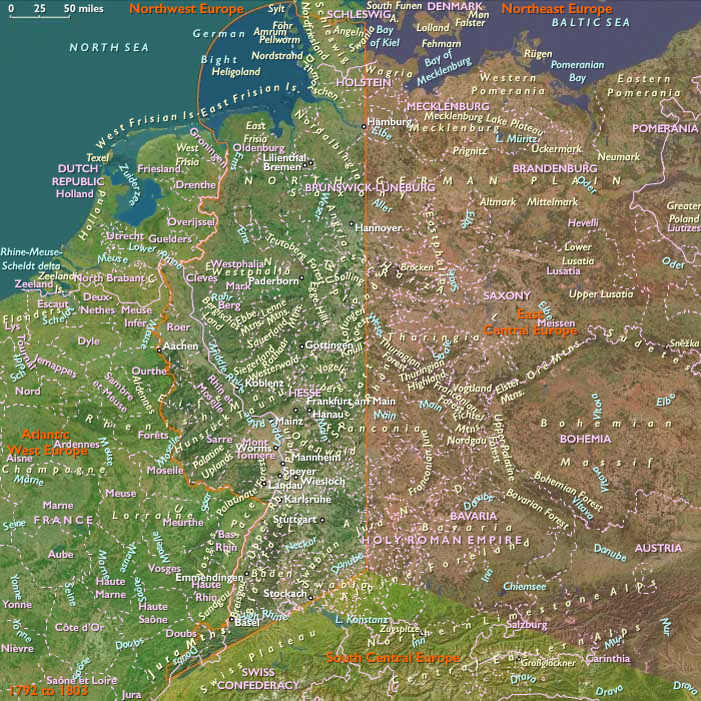
In the same year Harding is appointed professor of astronomy in Göttingen and leaves Lilienthal, where his successor becomes Friedrich Wilhelm Bessel.
Born in Lauenburg, Harding had been educated at the University of Göttingen, where he studied theology, mathematics, and physics.
In 1796, Schröter, an enthusiastic astronomer, had hired Harding as a tutor for his son, and Harding had soon been appointed observer and inspector in his observatory.
Locations
People
Groups
Subjects
Regions
Central Europe
View →Subregions