
The Turbulent Status of Frisia and the…
1516 CE
The Turbulent Status of Frisia and the Habsburg Acquisition (1515)
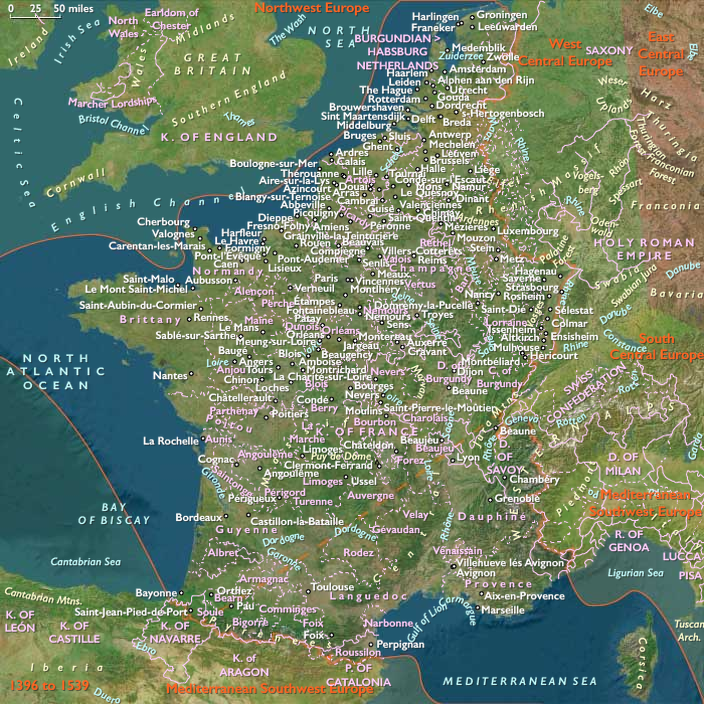
By 1515, the region of Frisia, located along the northern coast of the Low Countries, remained in turmoil despite repeated efforts by Saxon rulers to consolidate their control. Originally acquired in 1498 by Albert III, Duke of Saxony, Frisia was inherited by his son, Duke George of Saxony, who similarly failed to subdue local resistance during the protracted conflicts known as the Guelderian Wars.
Background: Saxon Domination and Frisian Resistance
Since Albert III of Saxony had received Frisia as an imperial fief from Emperor Maximilian I, his family's rule over the region had been persistently contested. Local Frisian rebels, fiercely attached to traditional republican autonomy, refused to submit to external authority. Their resistance was actively supported by Duke Charles II of Guelders, who had long opposed Burgundian-Habsburg interests in the Low Countries.
Throughout the early 1500s, the region remained turbulent, with effective Saxon control limited to only a few fortified cities such as Leeuwarden, Harlingen, and Franeker. Outside these strongholds, Frisian rebels effectively retained control, aided significantly by Gelderland troops who continuously challenged Saxon authority.
The Sale of Frisia to Charles of Burgundy (1515)
Facing ongoing instability and recognizing the futility of continued attempts to pacify the region, Duke George of Saxony ultimately sold his title to Frisia in 1515 to the ambitious young prince, Charles of Burgundy (later Emperor Charles V). By acquiring this contested territory, Charles aimed to extend and consolidate his dominion over the strategically valuable northern Netherlands, strengthening the broader Burgundian-Habsburg position in the Low Countries.
Despite the transfer, Charles’s immediate control was limited. He effectively governed only a small number of Frisian towns, notably Leeuwarden, ...
Locations
People
Groups
Commodities
Subjects
Regions
West Europe
View →Subregions
