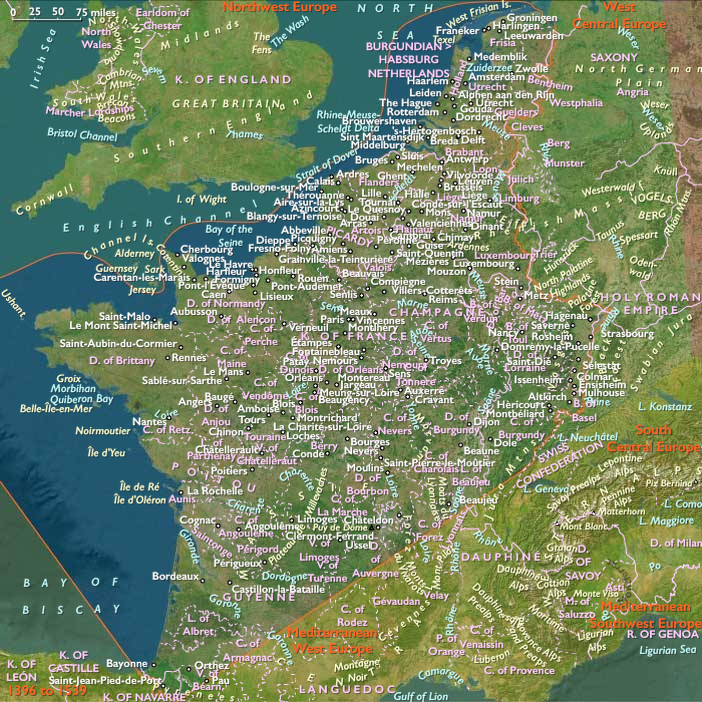
Geertgen tot Sint Jans and Late Flemish…
1480 CE to 1491 CE
Geertgen tot Sint Jans and Late Flemish Influence (1480–1484)
In the early 1480s, the painter Geertgen tot Sint Jans (c. 1465–c. 1495), also known as Gherrit van Haarlem, emerged as one of the Netherlands’ most promising and distinctive young artists. Based primarily in Haarlem, Geertgen developed an individualistic style strongly influenced by his mentor Albert van Ouwater and by the refined elegance of the late Flemish painter Dieric Bouts. As a lay brother affiliated with the local Commandery of the Knights Hospitaller (Sint Janskerk) in Haarlem, Geertgen produced devotional art deeply infused with a gentle, intimate spirituality and characterized by exceptional emotional depth and nuanced psychological realism.
Early Training and Influences
Geertgen’s training likely occurred in Haarlem under Albert van Ouwater, whose precise, clear, and luminous painting style significantly influenced the young painter. He was also notably inspired by Flemish masters such as Dirk Bouts, whose restrained emotional intensity, balanced compositions, and quiet spirituality provided a strong artistic model. These early Flemish influences are especially visible in Geertgen’s youthful masterpiece, the Holy Kinship (c.1480), a complex religious composition that already demonstrates his remarkable maturity, elegant style, and rich visual imagination despite being only about fifteen years old.
The "Holy Kinship" (c.1480): Early Artistic Achievement
Geertgen’s Holy Kinship, painted around 1480, showcases an impressive synthesis of his mentors' influences. Its balanced composition, delicate use of color, refined realism, and subtle lighting reveal clear affinities with both Ouwater’s restrained clarity and the expressive emotional realism of Dirk Bouts. Its tender, graceful depiction of familial affection and carefully constructed narrative composition establish Geertgen’s hallmark style, characterized by sensitive portrayal of figures, emotional intimacy, and luminous spatial clarity.
Altar for the Commandry and Artistic Refinement (c.1484)
Around 1484, Geertgen completed his most significant commission, the high altar of the Commandery of St. John in Haarlem, where he had become closely involved as a lay brother. Although the altarpiece itself survives only partially today, the extant panels depicting the Lamentation for Christ exemplify Geertgen’s artistic mastery. Here, he vividly evokes profound grief with restrained emotional expressiveness reminiscent of Bouts and other Flemish predecessors. The surviving panel of the Lamentation reveals extraordinary emotional sensitivity, nuanced lighting effects, and meticulous detail, reflecting both his skill and innovative approach to narrative devotional art.
Style and Artistic Legacy
Geertgen’s paintings are characterized by intimate spirituality, emotional subtlety, and psychological realism. His mature works, notably the famous surviving altar panels depicting the Lamentation and Resurrection scenes, reveal his unique talent for capturing profound emotion and spiritual depth with understated elegance. Geertgen became known for his extraordinary ability to evoke empathy through tender, reflective portrayals of sacred themes, and his harmonious, balanced compositions reflect a delicate blend of Gothic tradition and emerging Renaissance sensibilities.
Long-Term Historical and Artistic Significance
Though Geertgen tot Sint Jans’s career was brief, ending prematurely around 1495, his legacy was profound, influencing later Northern Renaissance artists. His gentle, expressive style became a key reference point for subsequent generations of painters, significantly shaping artistic developments throughout the Netherlands and northern Europe. Geertgen’s refined devotional compositions epitomized the blend of emotional intensity and technical innovation that defined the evolving artistic culture of late medieval Atlantic West Europe, securing his place as a pivotal transitional figure between Gothic and Renaissance artistic traditions in the region.
Locations
Groups
Regions

West Europe
View →Subregions