
Friedrich Spee, a German Jesuit and poet,…
1630 CE
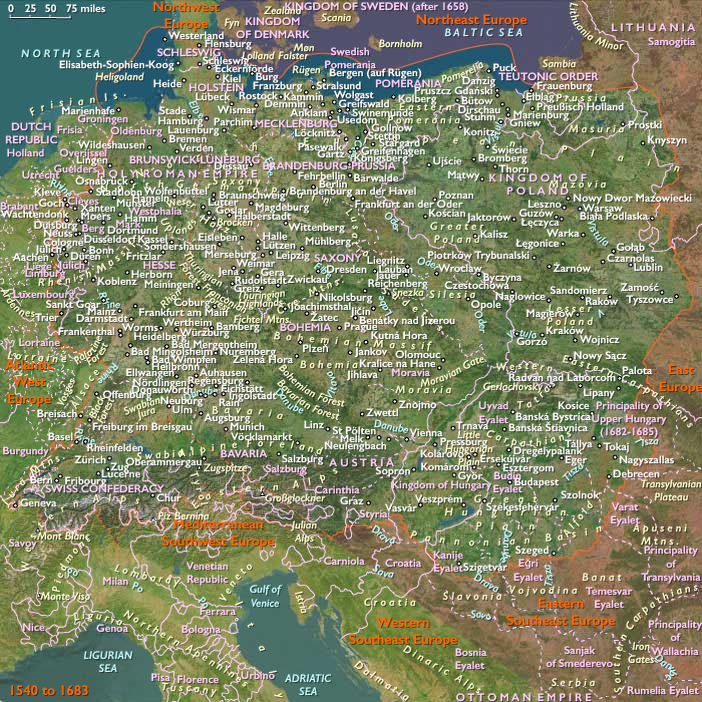
Friedrich Spee, a German Jesuit and poet, has been radically converted by his experience as a confessor of witches in the great persecution at Würzburg.
That experience, which had turned his hair prematurely white, had convinced him that all confessions were worthless, being based solely on torture, and that not a single witch whom he had led to the stake had been guilty.
Since he cannot utter his thoughts otherwise—for, as he wrote, he dreads the fate of Tanner—he writes a book which he intends to circulate in manuscript, anonymously, but a friend secretly conveys it to the Protestant city of Hameln and it is there printed in 1631 under the title Cautio Criminalis, (Precautions for Prosecutors), an arraignment of trial for witchcraft, based on his own experiences in Westphalia.
The traditional assumption is that he acted for a long time as "witch confessor" in Würzburg since he seems to have knowledge of what could be considered the private thoughts of the condemned.
The work is printed in 1631 at Rinteln without Spee's name or permission.
He does not advocate the immediate abolition of trials for witchcraft, but describes with sarcasm the abuses in the prevailing legal proceedings, particularly the use of the rack.
He demands measures of reform, such as a new German imperial law on the subject, liability to damages on the part of the judges, etc.
If these had been carried out, they would have quickly put an end to the persecution of witches.
Spee is not, however, a skeptic regarding the existence of witches, and opens his work with a declaration that witches are real.
However, he is concerned with the fact that innocent people are being killed alongside real witches, as he thinks.
Nevertheless, the Cautio Criminalis brings about the abolition of witch-burning in a number of places, especially at Mainz, and leads the way to its gradual suppression.
The moral impression created by the publication is very great.
A number of new editions and German translations will continue to appear.
Among the members of Spee's Jesuit order, his treatise finds a favorable reception.
A memorable observation in the book suggests that Germany and England must have more witches and devils then Spain and Italy since there are so many more stake-burnings in the former.
This may have been a not-so-subtle criticism of Protestant reform Europe, which he believes is guilty of even greater abuses then the Catholic countries.
The book remains in print today.
Locations
Groups
Topics
Regions
Central Europe
View →Subregions
