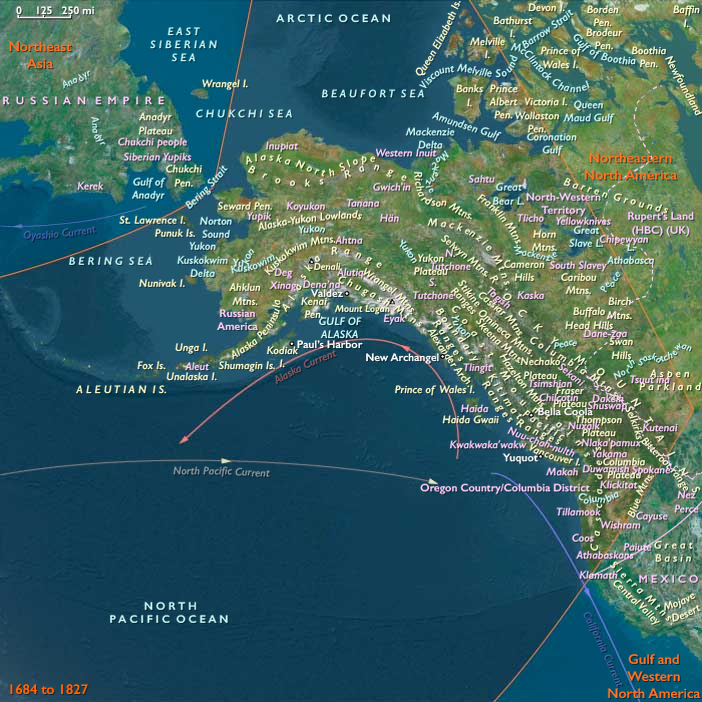
Gray takes the Columbia into the estuarine…
May 1792 CE
Gray takes the Columbia into the estuarine bay of Grays Harbor, Washington, on May 7. (Gray himself actually names this Bullfinch Harbor, but Vancouver's after-the-fact choice is the name that stuck.)
Gray carries on south afterward to what is, he rightly suspects, the mouth of a great river, and looks further for a way into this river.
His men discover what he seeks on May 11, and he orders a small sailboat launched to attempt to find a safe passage across the sand bars in the process known as sounding.
Gray's men finally find a safe channel in the evening of May 11, 1792, and ship and crew sail into the estuary of the Columbia River.
They sail upriver and Gray names this large river Columbia after his ship.
After entering the Columbia, they are met by many natives in their canoes, while the crew prepares to take on fresh water.
The ship and crew travel approximately thirteen miles (twenty-one kilometers) upriver and trade items such as nails for pelts, salmon, and animal meat over a nine-day period.
In addition to naming the river, Gray also names other landmarks such as Adams Point and Cape Hancock.
However, many of these places have since been renamed.
The farthest point Gray explores upriver is now known as Grays Bay, and the river that flows into it Grays River.
These names are not given by Gray, but by William Broughton, George Vancouver's lieutenant, who will explore the Columbia in October 1792.
Robert Gray had made a chart of the bay and the mouth of the river and a copy had been acquired by Vancouver.
Gray's success in entering the river will eventually form part of the basis for U.S. territorial claims to the Oregon Country.
Gray and crew sail from the Columbia on May 20, heading north to rendezvous with their sloop Adventure before setting sail for China.
Groups
Topics
Commodities
Regions
Northern North America
View →Subregions