The Carolingian Renaissance and Its Successors: The…
820 CE to 963 CE
The Carolingian Renaissance and Its Successors: The Macedonian and Ottonian Renaissances
The Carolingian Renaissance, initiated under Charlemagne, continues into the 9th and early 10th centuries, fostering intellectual revival, manuscript production, and architectural innovation in Western Europe. However, as the Carolingian Empire fragments in the mid-9th century, the focus of cultural and artistic renewal shifts eastward, particularly in the Byzantine Empire and later in Ottonian Germany.
The Macedonian Renaissance (c. 867–1056)
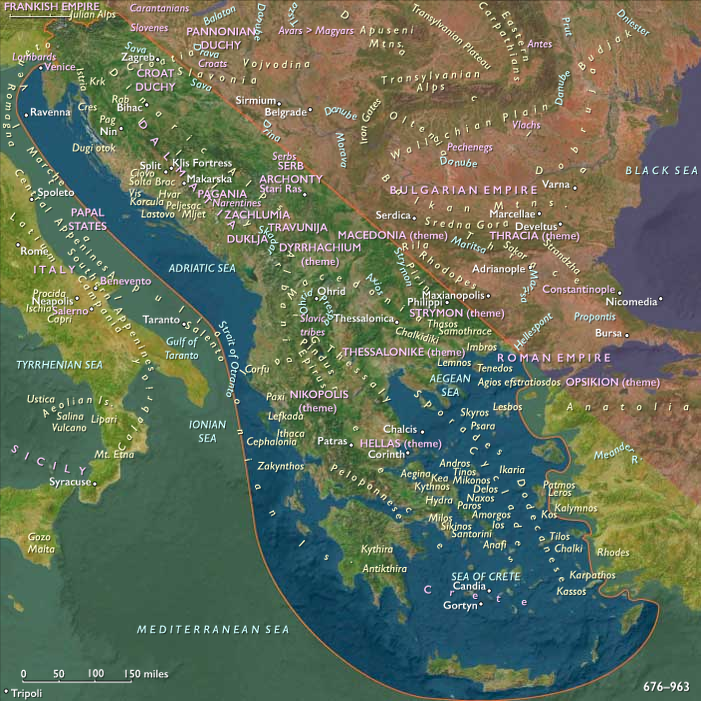
The Macedonian Renaissance refers to a period of cultural revival during the rule of the Macedonian dynasty in the Byzantine Empire, particularly in the 10th century. This era, marked by a renewed engagement with classical Greek scholarship, sees the preservation, copying, and commentary on ancient texts, particularly in philosophy, rhetoric, and science.
Key characteristics of the Macedonian Renaissance include:
- A revival of classical Greek learning, particularly in historical, philosophical, and theological writing.
- The integration of classical motifs into Christian art, seen in the decorative programs of churches such as the Nea Ekklesia in Constantinople.
- The systematic copying of ancient manuscripts, ensuring the survival of many classical texts that would later be rediscovered during the Italian Renaissance.
Although this cultural flourishing is often compared to the Carolingian Renaissance, the Byzantine revival remains more deeply rooted in the Greek intellectual tradition, while the Carolingians had focused on Latin learning and script reform.
The Ottonian Renaissance (c. 950–1050)
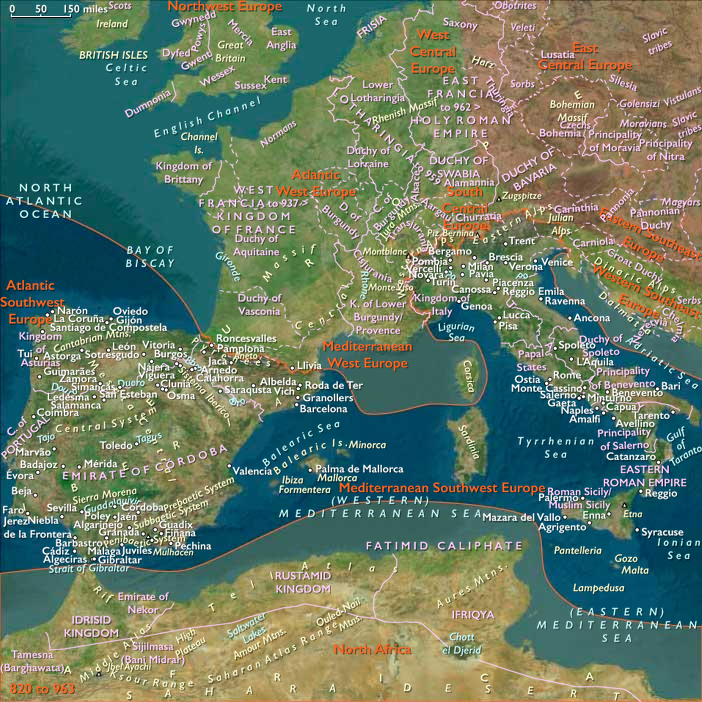
As the Carolingian Empire dissolves, the Ottonian dynasty (919–1024) in East Francia (Germany) rises to power, leading to a new phase of cultural revival in the West, known as the Ottonian Renaissance. This period is marked by:
- Art and architecture, particularly influenced by renewed contact with Byzantium, as seen in the grand cathedral constructions and the elaborate illuminated manuscripts from scriptoria such as Quedlinburg Abbey, founded in 936 by Otto I.
- Educational reforms in a select number of cathedral schools, such as the school of Bruno of Cologne, which fosters theological and political thought.
- The emulation of Carolingian ideals, reinforcing the connection between the Western imperial tradition and Christian kingship, particularly in political ideology.
The Ottonian Renaissance serves as a cultural bridge between the Carolingian and Romanesque periods, invigorating Germanic Europe’s artistic, intellectual, and political traditions while drawing inspiration from both Carolingian and Byzantine models.
Continuity and Transformation
Each of these renaissances—Carolingian, Macedonian, and Ottonian—represents a distinct phase of medieval intellectual and artistic revival, driven by political stability, imperial ambition, and religious reform. Though Western Europe and Byzantium develop independently, their intermittent cultural exchanges, particularly under the Ottonians, help shape the art, scholarship, and political thought of medieval Christendom.