Guillaume Dufay and Gilles Binchois: Two Pioneers…
1420 CE to 1431 CE
Guillaume Dufay and Gilles Binchois: Two Pioneers of the Early Renaissance Franco-Flemish School
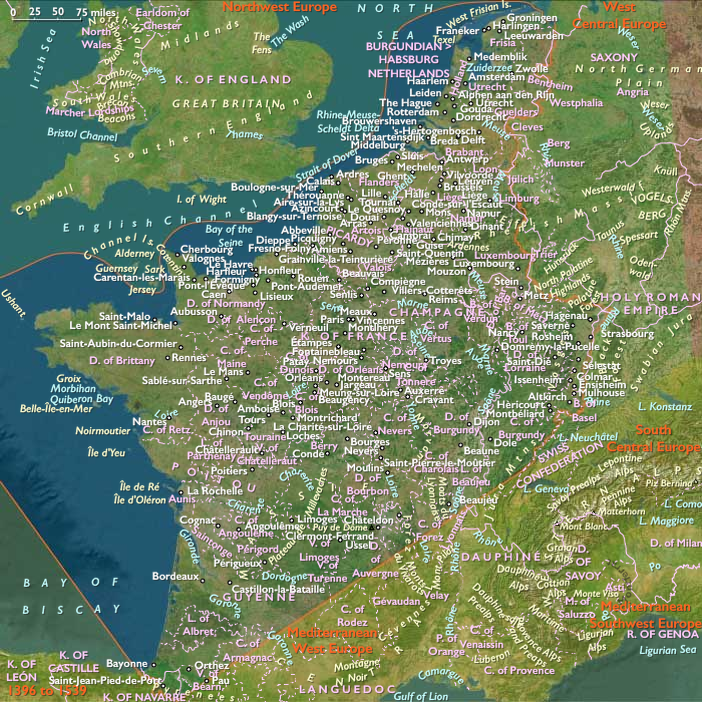
Guillaume Dufay (c. 1397–1474) and Gilles Binchois (c. 1400–1460) were among the most influential composers of the early Renaissance, shaping the Franco-Flemish School of polyphony. Their careers, though distinct, reflected the cultural exchanges between France, Italy, and the Burgundian court, contributing to the development of polyphonic sacred and secular music.
I. Guillaume Dufay: Church Musician and Cosmopolitan Composer
- Born probably in Hainaut, Dufay received his early musical education as a choirboy at Cambrai Cathedral.
- He was ordained a priest and later became chapel master at Cambrai, an influential musical center in northern France.
- His career took him to Paris and then to Italy, where he became a member of the papal choir in Rome.
- Dufay’s works include:
- Sacred polyphonic masses and motets, blending Gregorian tradition with innovative harmonies.
- Secular chansons, reflecting the refinement of Burgundian court music.
- He was one of the first composers to use fauxbourdon, a technique that helped define the early Renaissance sound.
II. Gilles Binchois: From Soldier to Burgundian Court Composer
- Born in Mons (modern Belgium), Binchois spent much of his early life in military service before taking holy orders.
- By 1424, he was employed by William de la Pole, Earl of Suffolk, which connected him to English and Burgundian influences.
- In 1430, he moved to the court of Burgundy, one of the leading cultural and musical centers of the 15th century.
- Binchois was particularly known for his chansons, which featured:
- Graceful melodies and elegant phrasing, ideal for courtly love poetry.
- A style that was simpler and more lyrical than Dufay’s, making his music highly popular.
III. Influence and Legacy
- Together, Dufay and Binchois helped define the Burgundian musical style, blending French, Italian, and English influences.
- Their use of consonant harmonies, controlled counterpoint, and melodic lyricism laid the groundwork for later Renaissance composers, including Johannes Ockeghem and Josquin des Prez.
- The interaction between the Burgundian court, the French church, and Italian patrons ensured that their innovations spread across Europe, influencing both sacred and secular music traditions.
Guillaume Dufay and Gilles Binchois were pioneers of the Franco-Flemish polyphonic tradition, their careers reflecting the rich cultural exchanges of 15th-century Europe and setting the stage for the musical Renaissance to follow.
Locations
Topics
Regions
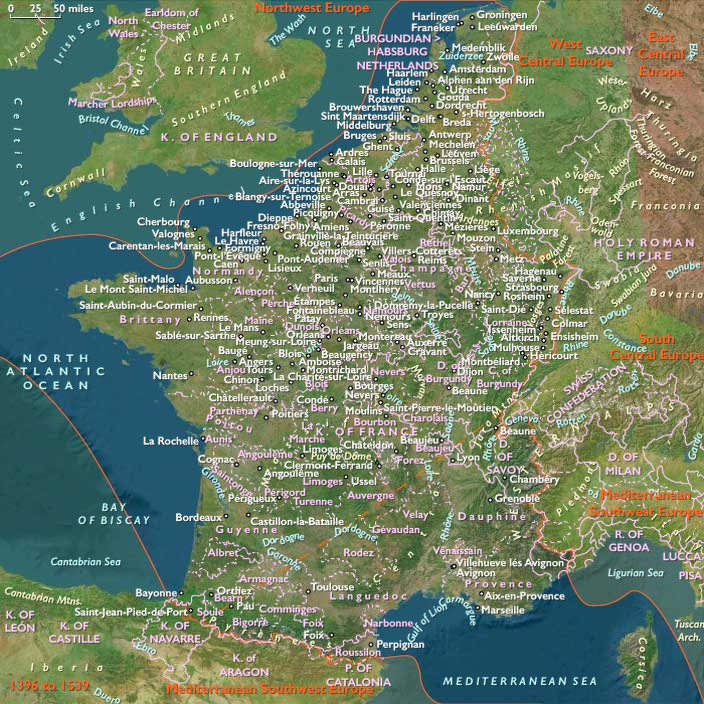
West Europe
View →Subregions