
Gulf and Western North America (1624 to …
Years: 1624 - 1635
Gulf and Western North America (1624 to 1635 CE): Missionary Expansion and Indigenous Adaptations
Apalachee Integration into Spanish Missions
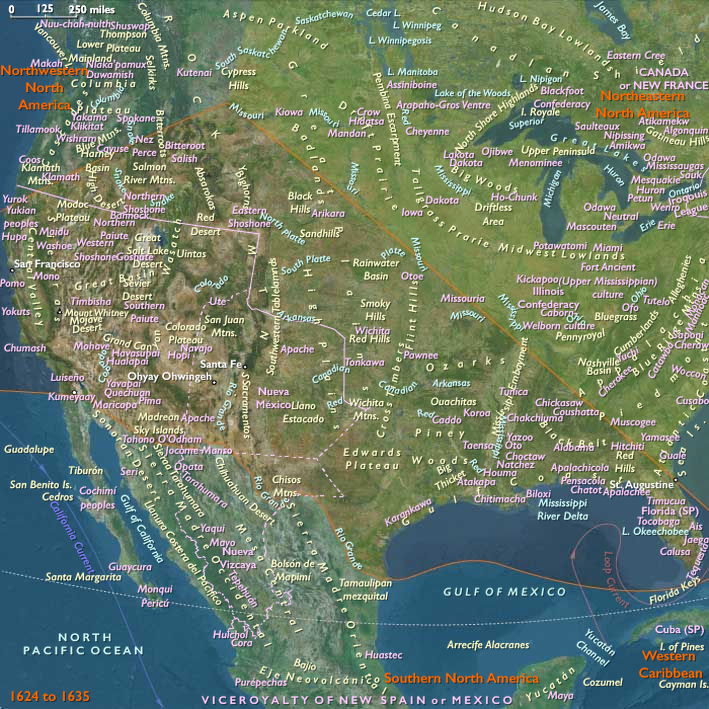
Following earlier requests for missionary presence, the Apalachee people of the densely populated and agriculturally fertile Apalachee Province experienced intensified Spanish missionary activity beginning in 1633. Spanish missionaries Pedro Muñoz and Francisco Martínez established the first formal mission at Anhaica (also known as Anhayca Apalache or Inihayca), historically the capital of the Apalachee Province. This mission formed part of Spain's broader colonial strategy, aiming to convert the indigenous Apalachee and Timucua peoples to Christianity and secure critical labor and food supplies for St. Augustine.
Apalachee and Spanish Interdependencies
The Apalachee had initiated consistent shipments of vital food provisions to the Spanish settlement at St. Augustine since 1625, underscoring the strategic interdependency between indigenous agricultural production and colonial survival. Many Apalachees converted to Catholicism, blending their traditions with Christian practices to form a distinctive syncretic culture. The Spanish missions thus served dual purposes: religious conversion and economic extraction, shaping a complex relationship between colonizers and indigenous populations.
Expanding Indigenous Equestrian Practices
Meanwhile, indigenous groups, particularly the Apache and Pueblo peoples, continued adapting their economies and defense strategies by expanding their use of horses. Although officially prohibited by Spanish authorities from owning horses, the Pueblo discreetly refined their breeding and care techniques. The Apache increasingly conducted raids to obtain horses, enhancing their mobility and transforming their hunting and warfare capabilities.
Stability and Isolation of Coastal California Tribes
In coastal California, tribes such as the Chumash, Luiseño, and Yokuts maintained autonomy and stability. Largely insulated from the disruptions of European colonization at this time, these groups continued their maritime trading networks, fishing practices, and stable economic structures, preserving their cultural identities despite growing external pressures.
Agricultural and Ecological Adaptations
Indigenous communities in the Mississippi Valley persisted in developing advanced agricultural techniques to adapt to disruptions from European-introduced livestock. These methods ensured sustainable food production and maintained ecological balance amidst continuing pressures from invasive species such as pigs and cattle.
Territorial Consolidation among the Yavapai and Mohave
The Yavapai and Mohave tribes continued strengthening their territorial positions along the Colorado River, utilizing advanced agricultural methods and strategic resource management. These practices reinforced their ability to sustain growing populations and maintain influential roles within the region.
Key Historical Developments
-
Formal establishment of Spanish missions among the Apalachee at Anhaica in 1633.
-
Continued supply of critical resources by the Apalachee to the Spanish colony at St. Augustine.
-
Ongoing discreet expansion of equestrian practices among the Pueblo peoples.
-
Increasing Apache horse raids, significantly enhancing their military and territorial strategies.
-
Sustained stability and cultural autonomy of California coastal tribes, notably the Chumash, Luiseño, and Yokuts.
-
Persistent indigenous ecological and agricultural adaptations in response to European livestock disruptions.
-
Consolidation and resource management among the Yavapai and Mohave.
Long-Term Consequences and Historical Significance
Between 1624 and 1635, Gulf and Western North America experienced heightened integration of indigenous societies into Spanish colonial systems alongside continued indigenous resistance and cultural resilience. The establishment of missions in Apalachee Province symbolized the complex dynamics of cultural exchange, resource dependence, and religious influence, setting the stage for further interactions that would profoundly affect the region's future development.
Groups
- Chumash people
- Mississippian culture
- Christians, Roman Catholic
- Apalachee (Amerind tribe)
- Spanish Empire
- Eight Northern Pueblos (Amerind tribal confederation)
- Apache (Na-Dené tribe)
- Navajo people (Na-Dené tribe)
- Timucua (Amerind tribe)
- Lipan Apache people (Amerind tribe)
- Plains Apache, or Kiowa Apache; also Kiowa-Apache, Naʼisha, Naisha (Amerind tribe)
- Luiseño
- Yavapai (Amerind tribe)
- Acoma Pueblo
- Yokuts
- Mohave people
- Jicarilla Apache
- Mescalero
- Western Apache
- Chiricahua
- Spanish Florida
- Apalachee Province
- Santa Fe de Nuevo México (Spanish Colony)
Topics
Commodoties
Subjects
Regions

Subregions
Related Events
Showing 10 events out of 32911 total
Years: 1624 - 1635
Groups
- Chumash people
- Mississippian culture
- Christians, Roman Catholic
- Apalachee (Amerind tribe)
- Spanish Empire
- Eight Northern Pueblos (Amerind tribal confederation)
- Apache (Na-Dené tribe)
- Navajo people (Na-Dené tribe)
- Timucua (Amerind tribe)
- Lipan Apache people (Amerind tribe)
- Plains Apache, or Kiowa Apache; also Kiowa-Apache, Naʼisha, Naisha (Amerind tribe)
- Luiseño
- Yavapai (Amerind tribe)
- Acoma Pueblo
- Yokuts
- Mohave people
- Jicarilla Apache
- Mescalero
- Western Apache
- Chiricahua
- Spanish Florida
- Apalachee Province
- Santa Fe de Nuevo México (Spanish Colony)
Topics
Commodoties
Subjects
Regions
Subregions