
Gulf and Western North America (1708–1719 CE): …
Years: 1708 - 1719
Gulf and Western North America (1708–1719 CE): Equestrian Cultures, Indigenous Slave Trade, and Colonial Competition
Transformation and Expansion of Horse Cultures
By the early 1700s, the Arapaho had fully integrated horses into their society, dramatically transforming their way of life. Previously sedentary agriculturalists, the Arapaho became nomadic hunters, leveraging horses to increase their hunting efficiency and territorial range across the Great Plains.
Concurrently, groups of Shoshone moved southeast from present-day Wyoming and Utah, gradually becoming the feared Comanche, renowned for their exceptional horsemanship. The Comanche emerged as a dominant equestrian power, significantly shaping Plains culture. Their skill with horses allowed them to assert dominance over expansive territories, particularly in present-day Texas, profoundly affecting interactions with European colonizers and neighboring indigenous tribes.
Colonial Rivalries and the Indigenous Slave Trade
During this period, the slave trade involving indigenous captives intensified dramatically, becoming the most profitable enterprise between Native American groups in the Lower Mississippi Valley and the European colonies. The English had long conducted this trade from their colonies, notably South Carolina, but by the early eighteenth century, the French established their own competitive networks, exacerbating intertribal warfare.
Many indigenous groups, seeking to maximize advantages, cultivated relationships with both French and English traders, fostering internal divisions. Among the Natchez, pro-French villages included the Grand Village, Flour, and Tioux, strategically situated near the Mississippi River, while pro-English villages such as White Apple, Jenzenaque, and Grigra positioned themselves closer to the Chickasaw and English trade networks. The differing alliances frequently fueled hostilities, with White Apple often central to conflicts involving the Natchez and French.
Indigenous Alliances and European Influence
In the Southern Plains and Mississippi regions, the French and Spanish consolidated colonial holdings. The French expanded their influence up the Mississippi River, establishing Fort Maurepas and later Fort de la Boulaye under the leadership of Jean Baptiste Le Moyne, Sieur de Bienville. Bienville solidified French governance in Louisiana, strategically positioning the French colony to rival Spanish interests.
Meanwhile, in Florida, conflict during Queen Anne’s War culminated in the English capturing and burning the Spanish settlement at St. Augustine in 1702. Although the Spanish fortress withstood the attack, the devastation of surrounding areas severely undermined the Spanish mission system. The resultant destruction, notably the Apalachee Massacre of 1704, decimated indigenous populations and crippled Spanish colonial efforts.
Cultural Developments among the Crow and Kiowa
Between 1708 and 1719, the Crow people, having recently separated from their Hidatsa kin, continued to develop as a distinct buffalo-hunting society. Interactions with neighboring tribes such as the Kiowa fostered cultural exchanges, including the sharing of ceremonial objects and rituals. The sacred Tai-may figure, integral to Kiowa ceremonial life, traces its origins to these exchanges, underscoring the interconnectedness of Plains tribes.
Key Historical Developments
-
Rapid adoption and transformation of equestrian culture among the Arapaho and Comanche.
-
Intensification of indigenous slave trading networks driven by European colonial competition.
-
Strategic positioning and rivalry between French and English colonial powers, influencing indigenous alliances and conflicts.
-
Devastation and decline of Spanish missions and indigenous populations in Florida due to English military actions.
-
Continued cultural and ceremonial exchanges among Plains tribes, notably between the Crow and Kiowa.
Long-Term Consequences and Historical Significance
The period from 1708 to 1719 significantly reshaped the socio-political and cultural dynamics across Gulf and Western North America. Indigenous societies rapidly adapted to equestrianism, fundamentally altering regional power structures and lifestyles. The escalation of the indigenous slave trade, exacerbated by European colonial competition, intensified intertribal warfare and demographic shifts, laying the groundwork for future conflicts and alliances.
People
Groups
- Chumash people
- Wichita, or Kitikitish (Amerind tribe)
- Christians, Roman Catholic
- Natchez (Amerind tribe)
- Tocobaga
- Karankawa (Amerind tribe)
- Apalachee (Amerind tribe)
- Houma people (Amerind tribe)
- Koroa (Amerind tribe)
- Taensa (Amerind tribe)
- Yavapai (Amerind tribe)
- Yokuts
- Mohave people
- Jicarilla Apache
- Mescalero
- Chiricahua
- Western Apache
- Luiseño
- Leon-Jefferson culture
- Acoma Pueblo
- Chickasaw (Amerind tribe)
- Mosopelea, or Ofo (Amerind tribe)
- Eight Northern Pueblos (Amerind tribal confederation)
- Apache (Na-Dené tribe)
- Navajo people (Na-Dené tribe)
- Quapaw, or Arkansas (Amerind tribe)
- Omaha (Amerind tribe)
- Pawnee (Amerind tribe)
- Caddo (Amerind tribe)
- Timucua (Amerind tribe)
- Tunica people
- Arikara people (Amerind tribe)
- Mandan (Amerind tribe)
- Hidatsa people (Amerind tribe)
- Shoshone, Shoshoni, or Snakes (Amerind tribe)
- Ute (Amerind tribe)
- Blackfoot Confederacy
- Crow people, aka Absaroka or Apsáalooke (Amerind tribe)
- Cheyenne people (Amerind tribe)
- Arapaho people (Amerind tribe)
- Nez Perce (Amerind tribe)
- Iowa (Amerind tribe)
- Ponca (Amerind tribe)
- Cayuse people (Amerind tribe)
- Palus, or Palouse (Amerind tribe)
- Lipan Apache people (Amerind tribe)
- Plains Apache, or Kiowa Apache; also Kiowa-Apache, Naʼisha, Naisha (Amerind tribe)
- Yazoo (Amerind tribe)
- Santo Domingo, Real Audiencia de
- Spanish Florida
- New France (French Colony)
- New Spain, Viceroyalty of
- Spain, Habsburg Kingdom of
- Apalachee Province
- France, (Bourbon) Kingdom of
- Santa Fe de Nuevo México (Spanish Colony)
- England, (Stewart, Restored) Kingdom of
- Illinois Country
- England, (Orange and Stewart) Kingdom of
Topics
- Age of Discovery
- Colonization of the Americas, Spanish
- Colonization of the Americas, French
- Colonization of the Americas, English
Commodoties
Subjects
Regions

Subregions
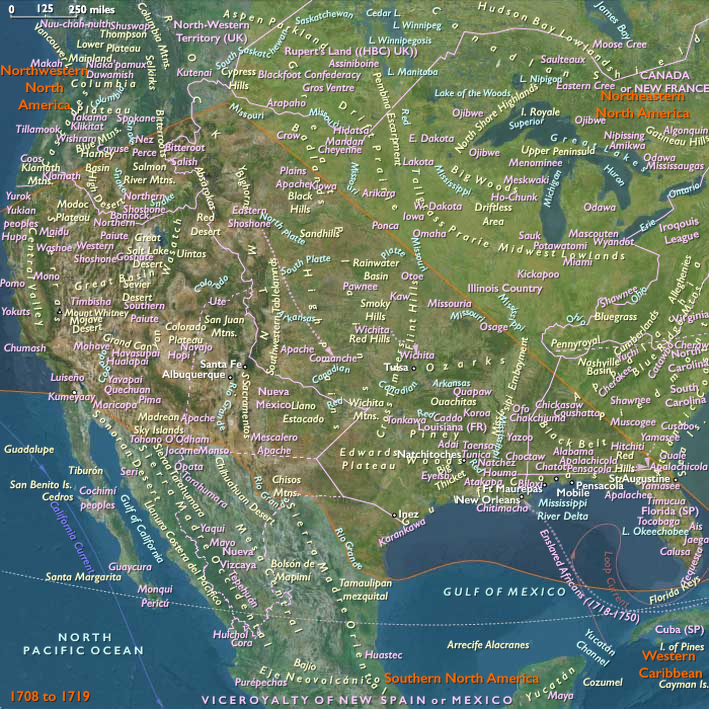
Years: 1708 - 1719
People
Groups
- Chumash people
- Wichita, or Kitikitish (Amerind tribe)
- Christians, Roman Catholic
- Natchez (Amerind tribe)
- Tocobaga
- Karankawa (Amerind tribe)
- Apalachee (Amerind tribe)
- Houma people (Amerind tribe)
- Koroa (Amerind tribe)
- Taensa (Amerind tribe)
- Yavapai (Amerind tribe)
- Yokuts
- Mohave people
- Jicarilla Apache
- Mescalero
- Chiricahua
- Western Apache
- Luiseño
- Leon-Jefferson culture
- Acoma Pueblo
- Chickasaw (Amerind tribe)
- Mosopelea, or Ofo (Amerind tribe)
- Eight Northern Pueblos (Amerind tribal confederation)
- Apache (Na-Dené tribe)
- Navajo people (Na-Dené tribe)
- Quapaw, or Arkansas (Amerind tribe)
- Omaha (Amerind tribe)
- Pawnee (Amerind tribe)
- Caddo (Amerind tribe)
- Timucua (Amerind tribe)
- Tunica people
- Arikara people (Amerind tribe)
- Mandan (Amerind tribe)
- Hidatsa people (Amerind tribe)
- Shoshone, Shoshoni, or Snakes (Amerind tribe)
- Ute (Amerind tribe)
- Blackfoot Confederacy
- Crow people, aka Absaroka or Apsáalooke (Amerind tribe)
- Cheyenne people (Amerind tribe)
- Arapaho people (Amerind tribe)
- Nez Perce (Amerind tribe)
- Iowa (Amerind tribe)
- Ponca (Amerind tribe)
- Cayuse people (Amerind tribe)
- Palus, or Palouse (Amerind tribe)
- Lipan Apache people (Amerind tribe)
- Plains Apache, or Kiowa Apache; also Kiowa-Apache, Naʼisha, Naisha (Amerind tribe)
- Yazoo (Amerind tribe)
- Santo Domingo, Real Audiencia de
- Spanish Florida
- New France (French Colony)
- New Spain, Viceroyalty of
- Spain, Habsburg Kingdom of
- Apalachee Province
- France, (Bourbon) Kingdom of
- Santa Fe de Nuevo México (Spanish Colony)
- England, (Stewart, Restored) Kingdom of
- Illinois Country
- England, (Orange and Stewart) Kingdom of
Topics
- Age of Discovery
- Colonization of the Americas, Spanish
- Colonization of the Americas, French
- Colonization of the Americas, English
Commodoties
Subjects
Regions
Subregions