Event
Gulf and Western North America (7,821–6,094 BCE):…
Gulf and Western North America (7,821–6,094 BCE): Drowned Gulf Plains, Shrinking Lakes, and the Regional Worlds of the Early Archaic.
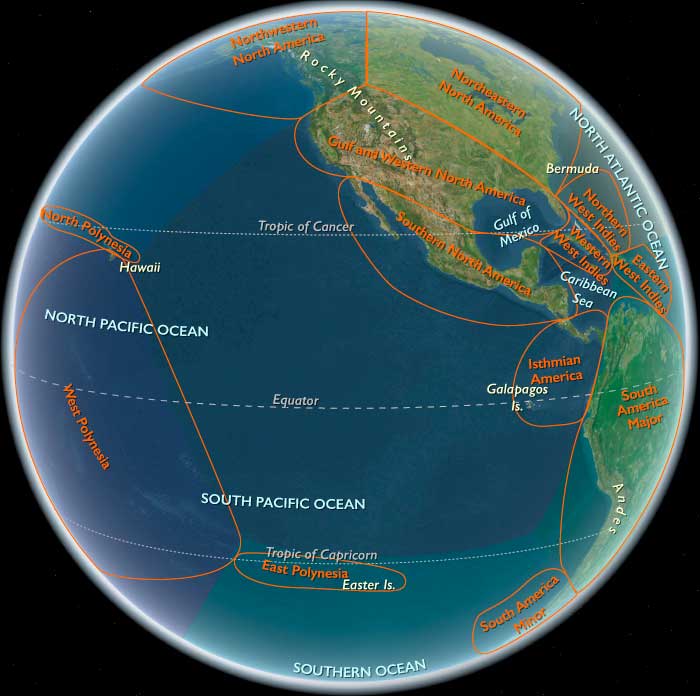
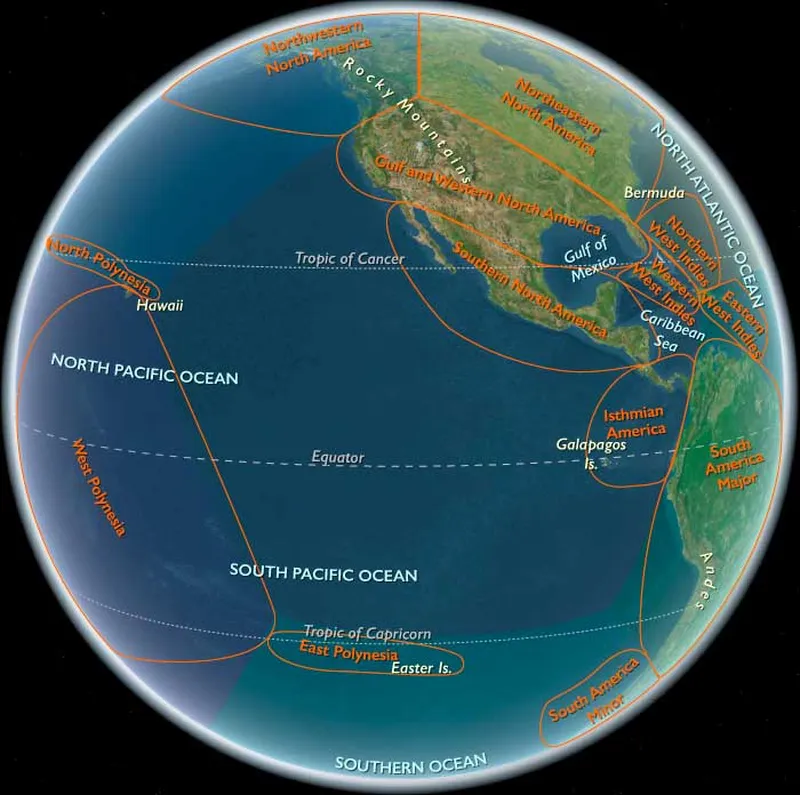
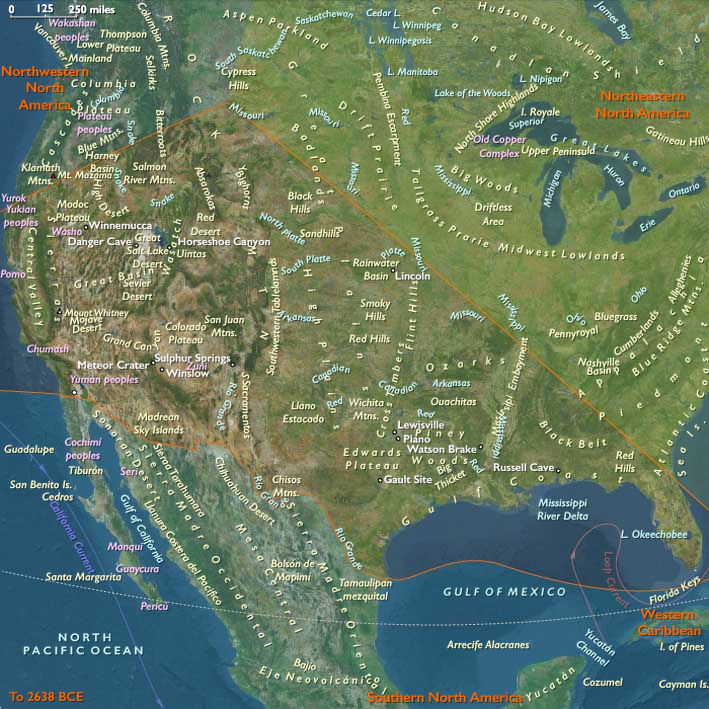
During the Early Holocene, Gulf and Western North America extended from the Lower Mississippi and Gulf Coast through the Southern Plains, Southwest, Rocky Mountain fringes and Great Basin to nearly all of California. Human communities were established throughout these environments, but no single cultural or economic system united them. The age instead saw increasingly regional adaptations to rivers, wetlands, grasslands, shrinking lakes, deserts and Pacific coasts.
Along the Lower Mississippi and northern Gulf, hunter-gatherers occupied river terraces, floodplains, freshwater wetlands and upland margins. The Mississippi had not yet developed its later delta configuration, and the shoreline of the Gulf lay considerably farther seaward than it would in later millennia.
Large areas now beneath shallow Gulf waters remained terrestrial. Rivers crossed these exposed coastal plains toward distant shorelines, and people used springs, wetlands and river corridors that would later be drowned by marine transgression.
In Florida, rising sea level likewise transformed an initially broader peninsula. Early Archaic communities moved among springs, river valleys, karst wetlands and uplands, while many coastal occupation zones of the age now lie submerged offshore.
Hunting focused increasingly on modern Holocene fauna. Deer, small mammals, birds, turtles and aquatic animals accompanied a broad range of gathered plants. Spear-throwers and stone-tipped darts remained important hunting tools, while permanent villages and pottery were absent.
Across the Southern Plains, mobile communities occupied grassland and wooded river corridors. Bison remained important where prairie conditions supported them, but diets also included deer, smaller animals and plant foods. Human movement followed water, game and seasonal resources rather than permanent settlement.
Farther west, the Southwest entered an increasingly arid Early Holocene phase. Residual wetlands, springs, grasslands and upland woodlands remained important within basins gradually approaching their later desert character.
Western Stemmed projectile traditions persisted across parts of the Great Basin and Southwest. Their users combined hunting with increasingly broad plant gathering, cooking and grinding, reflecting adaptation to Holocene environments rather than dependence on large Pleistocene game.
No cultivated maize had yet reached these lands. There were no irrigated plots, pithouse farming villages or managed livestock, and desert subsistence remained entirely based on wild resources.
The Great Basin preserved some of the clearest evidence for this transformation. The enormous pluvial lakes of the Late Pleistocene had contracted dramatically, leaving smaller lakes, marshes, saline flats and old shoreline terraces across Utah and Nevada.
People repeatedly occupied the margins of remaining wetlands and lakes. Hunting deer, pronghorn, waterfowl and smaller animals was combined with seed and plant gathering, while milling stones became increasingly important for processing wild foods.
Around Lake Mojave and related western basins, communities lived beside shrinking Early Holocene lakes between roughly 8,000 and 6,000 BCE. Handstones and milling slabs demonstrate growing reliance on gathered plants while fishing, waterfowl and terrestrial hunting remained part of the economy.
Along the southern Rocky Mountain fringes, seasonal movement connected plains, foothills and mountain parks. Hunters followed game into upland environments and returned to lower valleys and basins as seasons changed.
California contained another extraordinarily varied set of Early Holocene economies. Along some coasts, shellfish, fish and other marine resources supported repeated occupation while rising sea level progressively drowned older coastal terraces and estuaries.
In inland valleys and around lakes, mobile communities increasingly processed seeds and other plant foods using milling stones and handstones. Early regional traditions such as those associated with Borax Lake, western pluvial-lake adaptations and the Tahoe–Truckee region developed within their own ecological settings.
Oak woodland expanded in favorable parts of California, but the highly intensified acorn economies of later millennia had not yet become the regional norm. Early milling technology served a broad spectrum of seeds, nuts and other wild plant foods.
The Channel Islands and nearby Pacific coasts remained within established human ranges. Marine travel was already possible, but the sophisticated plank-built canoe traditions and densely organized maritime economies of later California belonged far in the future.
Across the entire subregion, settlement remained comparatively small and mobile. Camps clustered around water, plant resources, hunting grounds, stone sources and favorable coasts, while baskets, cordage, nets and other organic technologies complemented chipped and ground stone.
Legacy of the Age
By 6,094 BCE, Gulf and Western North America had become a highly regionalized hunter-gatherer world. Early Archaic communities of the Gulf and Lower Mississippi lived amid river and wetland landscapes increasingly transformed by marine transgression, while Southern Plains hunters adapted to developing Holocene grasslands. Across the Southwest and Great Basin, shrinking pluvial lakes and growing aridity concentrated human activity around springs, marshes and remaining water bodies, encouraging increasingly intensive processing of wild plant foods. California supported equally diverse coastal, lake, valley and upland adaptations in which milling technology and marine resources gained importance without agriculture or permanent village systems. The defining history of the age was therefore the diversification of mobile foraging societies as rising seas and declining inland waters remade the physical landscapes of the American Gulf and West.

-
{# Image navigates to the detail page; the magnifying-glass chip is the only Fancybox lightbox trigger (kept a separate sibling — anchors can't nest). #}
 The Far West
World
-
{# Image navigates to the detail page; the magnifying-glass chip is the only Fancybox lightbox trigger (kept a separate sibling — anchors can't nest). #}
 Northern North America
Region
-
{# Image navigates to the detail page; the magnifying-glass chip is the only Fancybox lightbox trigger (kept a separate sibling — anchors can't nest). #}
 Gulf and Western North America
Subregion