
Gulf and Western North America (6,093–4,366 …
Years: 6093BCE - 4366BCE
Gulf and Western North America (6,093–4,366 BCE): Early Holocene — Middle Holocene — Intensification & Niche Engineering
Geographic and Environmental Context
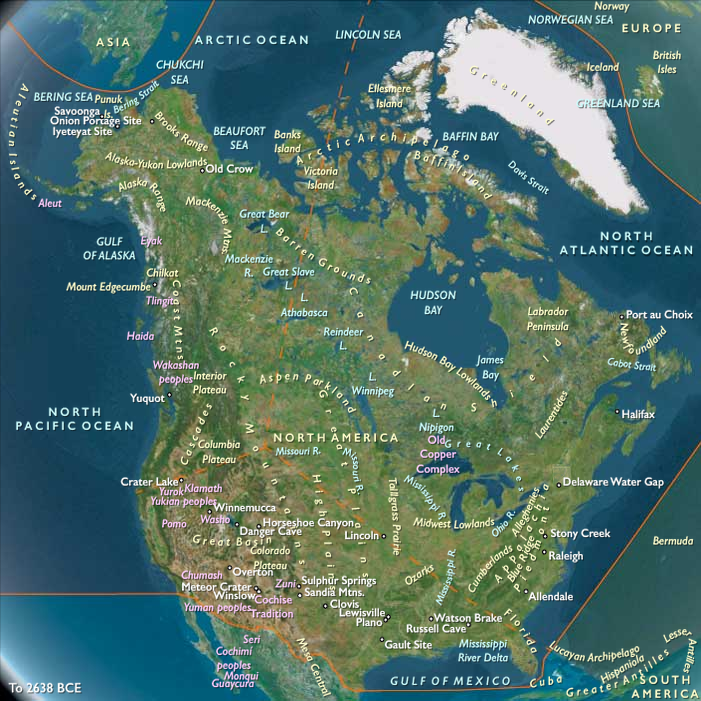
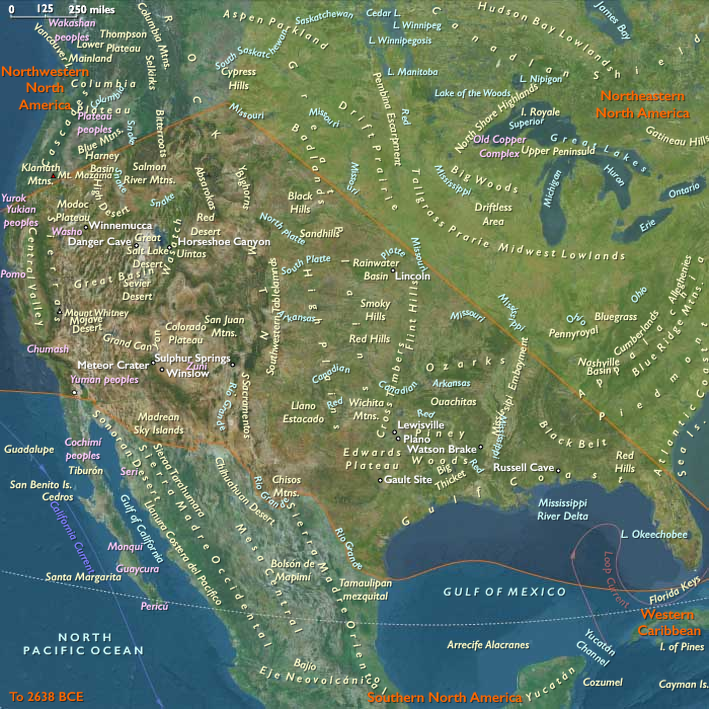
Gulf and Western North America includes Mississippi–Lower Mississippi, Gulf Coast Plains (FL Panhandle, AL–MS–LA–TX), Southern Plains (TX–OK–KS), Southwest deserts/plateaus (NM–AZ), Rocky Mountain fringes (CO–WY south), Great Basin (UT–NV), and nearly all California (except far NW).
Anchors: Lower Mississippi & Yazoo–Natchez bluffs; Mobile–Pensacola–Calusa estuaries; Edwards Plateau–Pecos; Chihuahuan–Sonoran drainages (Gila–Salt–Rio Grande); Colorado Plateau canyons; Great Basin playas; Sacramento–San Joaquin delta; Channel Islands & Chumash coast.
Subsistence & Settlement
-
California: bigger shell-middens; fish weirs; island–mainland canoe commute (Chumash forebears).
-
Lower Mississippi/Gulf: shell rings; riverine aggregation.
-
Southwest: seed-processing economies; rock art fluorescence; agave roasting pits.
-
Great Basin: wetland micro-patches; rabbit/drives; pine nuts.
Technology & Material Culture
-
Nets, basketry, millingstones; early pottery in some Gulf belts (very late); lined pits/earth ovens.
Movement & Interaction Corridors
-
Coastal cabotage; Lower Mississippi spine; Rio Grande–Gila–Salt exchanges.
Cultural & Symbolic Expressions
-
Rock art in Canyonlands–Chihuahuan; shell-heap ancestor cults.
Environmental Adaptation & Resilience
-
Engineered weirs, roasting pits, seed beats — “low-level food production.”
Transition
-
Late Holocene brings preceramic → ceramic transitions and broad exchange.
Groups
Topics
Commodoties
Subjects
Regions
Subregions
Years: 6093BCE - 4366BCE
Groups
Topics
Commodoties
Subjects
Regions
Subregions