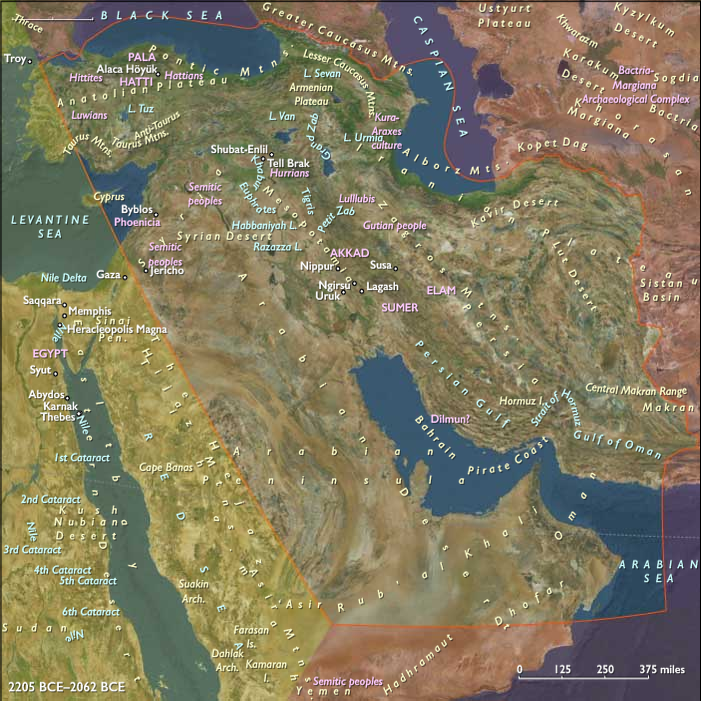
Hereditary kings in lower Mesopotamia rule such…
2205 BCE to 2062 BCE
Hereditary kings in lower Mesopotamia rule such Sumerian cities as Eridu, Kish, Larsa, Lagash, Sippar, Umma, Uruk, and Ur, representatives of which convene as a league in Nippur, the religious center.
Nippur never enjoys political hegemony in its own right, but its control is crucial, as it is considered capable of conferring the overall "kingship" on monarchs from other city-states.
It is distinctively a sacred city, important from the possession of the famous shrine of Enlil.
According to the Tummal Chronicle, Enmebaragesi, an early ruler of Kish, was the first to build up this temple.
His influence over Nippur has also been detected archaeologically.
The Chronicle lists successive early Sumerian rulers who kept up intermittent ceremonies at the temple: Aga of Kish, son of Enmebaragesi; Mesannepada of Ur; his son Meskiang-nunna; Gilgamesh of Uruk; his son Ur-Nungal; Nanni of Ur and his son Meskiang-nanna.
It also indicates that the practice was revived in Neo-Sumerian times by Ur-Nammu of Ur, and continues until Ibbi-Sin appoints Enmegalana high priest in Uruk around 1950 BCE.
Inscriptions of Lugal-Zage-Si and Lugal-kigub-nidudu, kings of Uruk and Ur respectively, and of other early pre-Semitic rulers, on door-sockets and stone vases, show the veneration in which the ancient shrine was then held, and the importance attached to its possession, as giving a certain stamp of legitimacy.
On their votive offerings, some of these rulers designate themselves as ensis, or governors.
Locations
People
Groups
Topics
Subjects
Regions
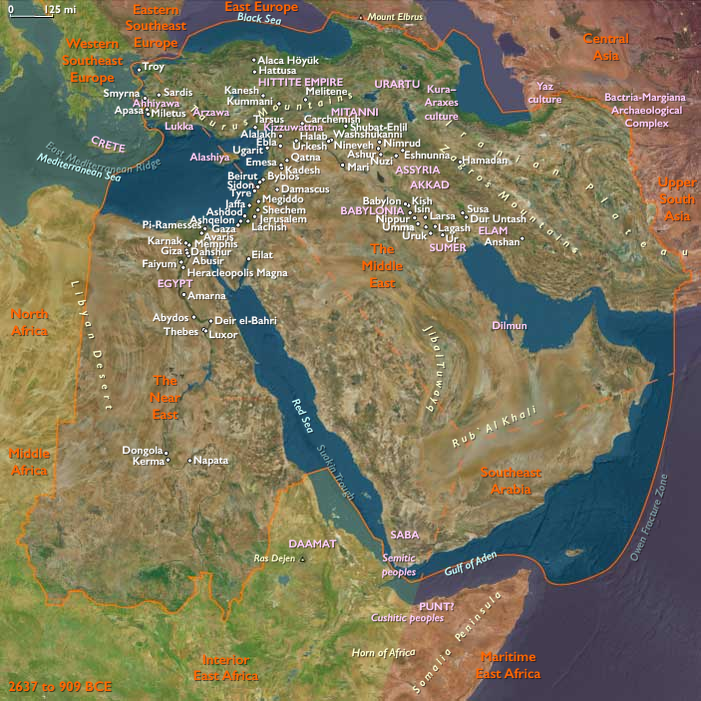
The Near and Middle East
View →Subregions