Land in Lusitania is divided among Muslim…
676 CE to 819 CE
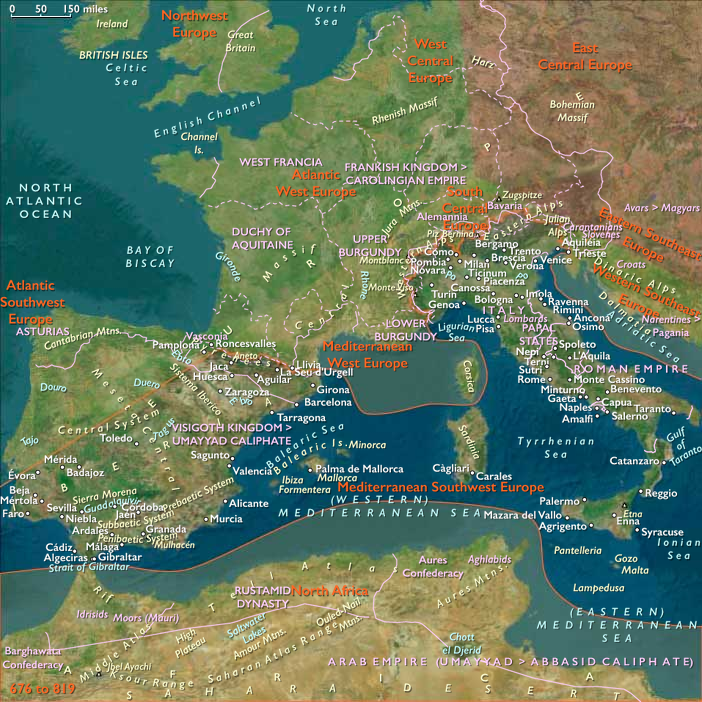
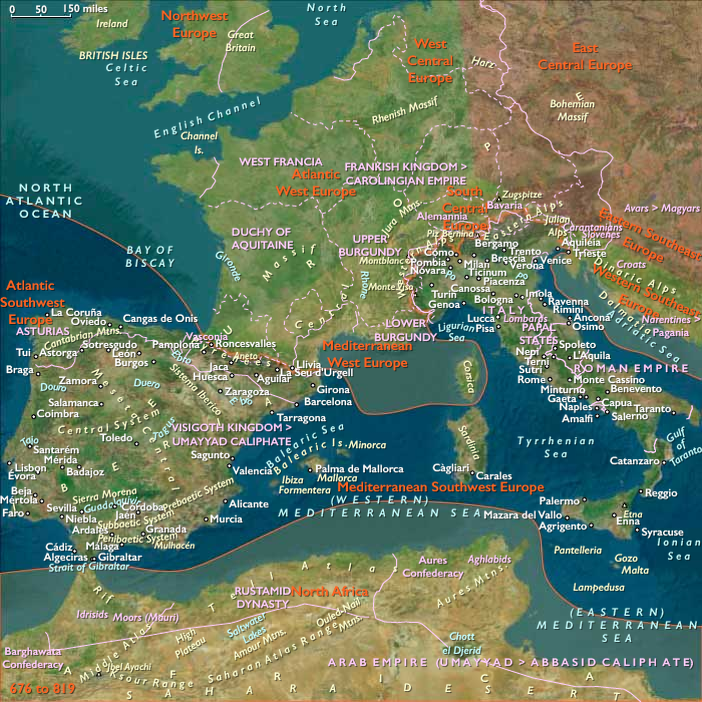
Land in Lusitania is divided among Muslim troops.
However, bad crops and a dislike for the wet climate puts an end to the short-lived Muslim colonization along the Rio Douro.
Musims prefer the dry country below the Tagus River because it is more familiar, especially the Algarve, an area of present-day Portugal where the Muslim imprint remains the strongest.
The Muslim aristocracy settles in towns and revives urban life; others fan out across the countryside as small farmers.
The Visigothic peasants readily convert to Islam, having only been superficially Christianized.
Some Visigothic nobles continue to practice Christianity, but most convert to Islam and are confirmed by the Muslims as local governors.
Jews, who are always an important element in the urban population, continue to exercise a significant role in commerce and scholarship.
Locations
Groups
Subjects
Regions
Southwest Europe
View →Subregions