
Event
Aaron Burr had won the vice-presidential nomination…
Aaron Burr had won the vice-presidential nomination on the Jeffersonian Republican ticket in 1800.
In carrying New York State, he had helped bring about a national victory for his party.
Under the prevailing Electoral College procedures, the electors had cast their votes for both Thomas Jefferson and Burr without indicating which should be president and which vice president.
Both men had won an equal number of electoral votes, and the Federalist-controlled House of Representatives had had to break the tie.
The Federalists, hating Jefferson, had wanted to throw the election to Burr.
Although Burr maintained that he would not challenge Jefferson—an assertion that Jefferson had not wholly accepted—Alexander Hamilton's determined opposition to Burr had been a strong factor in Jefferson's election after thirty-six ballots.
By supporting his old Republican enemy, Hamilton had lost prestige within his own party and virtually ended his public career.
Burr's friends in the New York legislature had nominated him for the governorship in February 1804, but the devious Hamilton, still influential, had helped to contribute to Burr's defeat by disseminating letters containing derogatory comments about Burr, and shortly thereafter George Clinton had replaced him as the Republican vice presidential candidate.
Feeling himself to be again the political victim of Hamilton's animosity, Burr challenges him to a duel at Weehawken, New Jersey, in which Hamilton is mortally wounded on July 11, 1804, dying the next day.
Burr will go on to Washington to complete his term as Vice President.
He will avoid New York and New Jersey for a time, but all the charges against him will eventually be dropped.
-
{# Image navigates to the detail page; the magnifying-glass chip is the only Fancybox lightbox trigger (kept a separate sibling — anchors can't nest). #}
 The North Atlantic Lands
World
-
{# Image navigates to the detail page; the magnifying-glass chip is the only Fancybox lightbox trigger (kept a separate sibling — anchors can't nest). #}
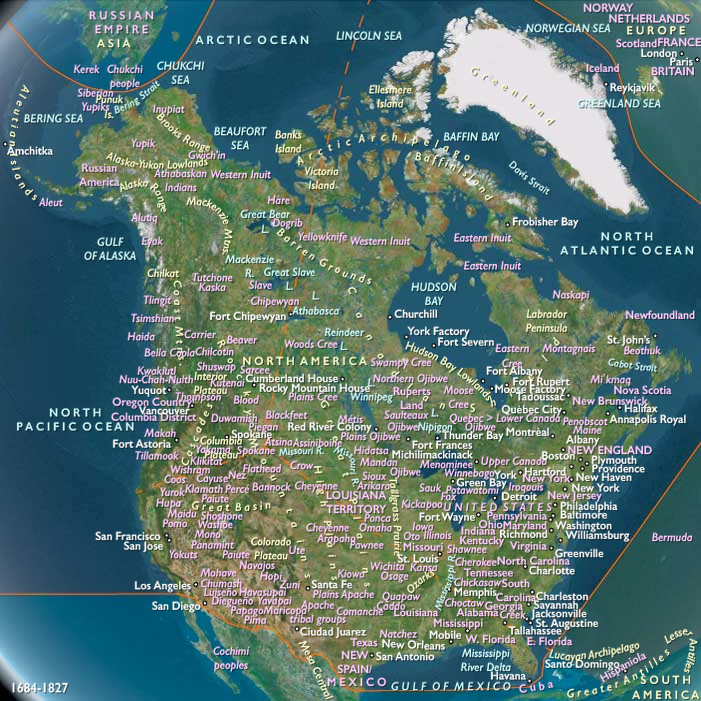 Northern North America
Region
-
{# Image navigates to the detail page; the magnifying-glass chip is the only Fancybox lightbox trigger (kept a separate sibling — anchors can't nest). #}
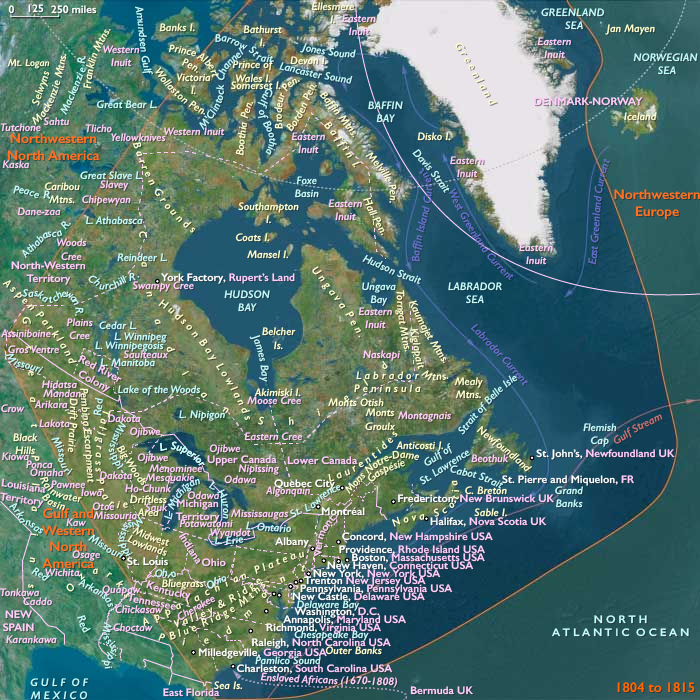 Northeastern North America
Subregion
