In 418 also, Severus, the bishop of …
Years: 418 - 418
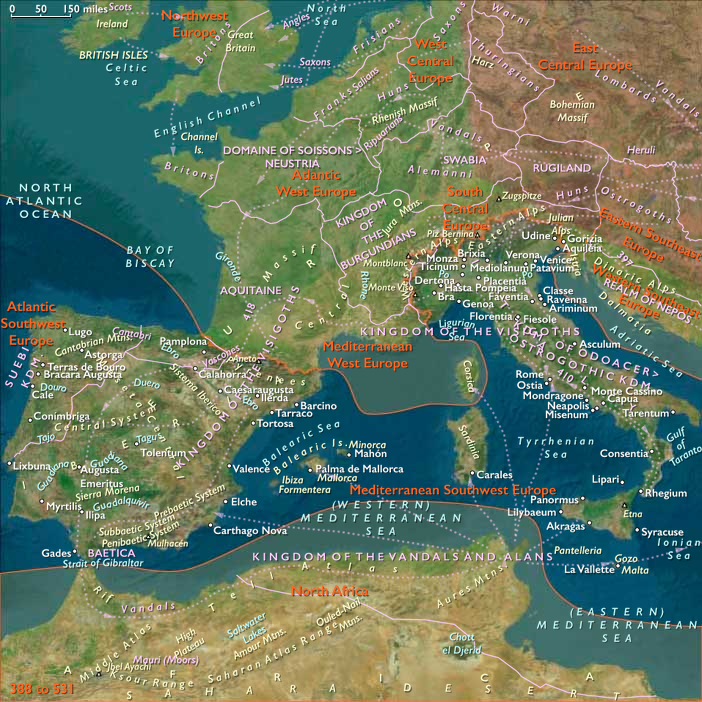
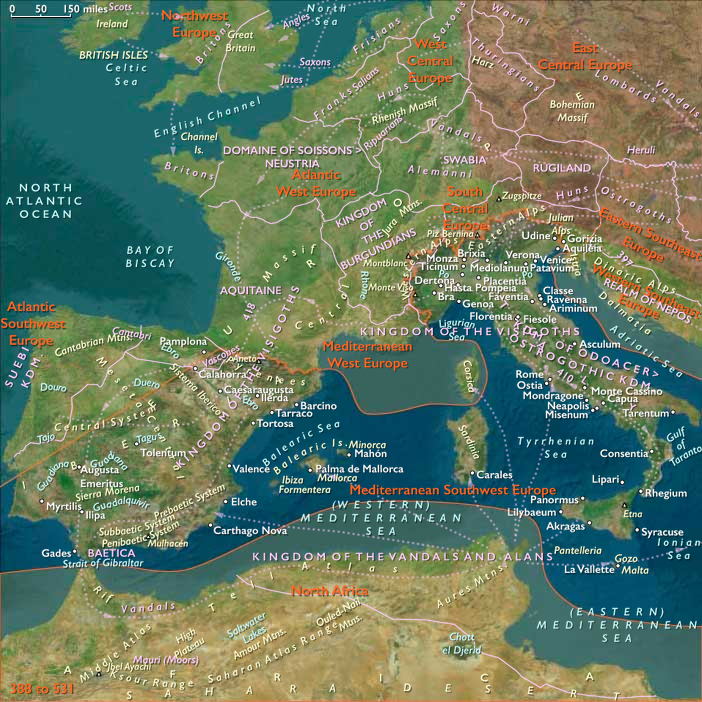
In 418 also, Severus, the bishop of Minorca, claims to have forced five hundred and forty Jews to accept Christianity upon conquering the island.
This first record of Jews on Minorca is also the first case of Jews being forced to choose between conversion and expulsion.
Locations
Groups
- Jews
- Christianity, Nicene
- Italy, Praetorian prefecture of
- Balearic Islands (Roman province)
- Illyricum, Praetorian prefecture of
- Roman Empire, Western (Ravenna)
Topics
Subjects
Regions
Subregions
Related Events
Filter results
Showing 2 events out of 2 total
East Central Europe (1192–1203 CE): Přemyslid Restoration under Ottokar I, Emergence of Andrew II in Hungary, Continued Polish Decentralization, and Austria’s Ascendant Babenberg Dynasty
Between 1192 and 1203 CE, East Central Europe—including modern-day Poland, Czechia, Slovakia, Hungary, and eastern regions of Germany and Austria east of 10°E and north of the defined southeastern boundary—experienced critical political transitions, dynastic realignments, and continued territorial consolidation. Bohemia saw renewed Přemyslid strength under Ottokar I, Hungary navigated succession struggles leading toward the ascendancy of Andrew II, Poland remained politically fragmented with strong regional principalities, and Austria continued its growth and stabilization under the prominent Babenberg dynasty. This era was pivotal in establishing lasting political frameworks, economic prosperity, and enduring cultural traditions across the region.
Political and Military Developments
Přemyslid Restoration under Ottokar I in Bohemia
-
In 1197, Ottokar I Přemysl (r. 1197–1230) secured power, bringing renewed stability and reinvigorating Přemyslid authority after prolonged dynastic strife. His effective governance restored Bohemia’s regional influence and solidified its alliance with the Holy Roman Empire.
-
Ottokar’s political acumen laid foundations for future Bohemian royal autonomy, leading eventually to his hereditary royal title recognition in 1198 by Philip of Swabia, bolstering the Přemyslid dynasty’s long-term prominence.
Hungarian Succession Struggles and Rise of Andrew II
-
Hungary entered a period of complex succession disputes after Béla III’s death (1196). His sons, Emeric (1196–1204) and Andrew II (1205–1235), contended for power, causing brief internal instability.
-
Emeric, ruling from 1196, attempted to stabilize royal power but faced challenges from his ambitious younger brother Andrew, whose eventual ascendancy in the following era (1205) would profoundly impact Hungarian politics.
Persistent Polish Decentralization and Regional Autonomy
-
Poland continued its fragmented political landscape, divided among powerful Piast principalities such as Silesia under Duke Henry I the Bearded, Greater Poland, Masovia, and Lesser Poland. Rivalry among these territories persisted, further decentralizing political authority and strengthening local aristocratic rule.
Austria’s Stability and Expansion under Leopold V and Frederick I
-
Under Duke Leopold V (r. 1177–1194) and his successor, Frederick I (r. 1195–1198), the Austrian Babenberg dynasty further solidified territorial cohesion, political stability, and regional influence within the Holy Roman Empire.
-
Austria’s expansion and strengthening of ducal authority prepared the foundation for greater autonomy and influence throughout the medieval period.
Imperial Transition after Frederick Barbarossa’s Death
-
The death of Emperor Frederick Barbarossa (1190) during the Third Crusade shifted imperial dynamics, temporarily affecting the political balance in East Central Europe. His successor, Henry VI (r. 1190–1197), and the subsequent imperial interregnum significantly influenced regional politics, alliances, and dynastic stability.
Economic and Technological Developments
Continued Economic Expansion and Urban Prosperity
-
Economic growth remained robust, supported by vibrant trade networks connecting regional economies with Baltic, Byzantine, Western European, and Mediterranean markets. Major urban centers like Prague, Vienna, Esztergom, Kraków, and Wrocław expanded as prosperous commercial hubs.
Agricultural Productivity and Technological Advancements
-
Continued adoption of advanced agricultural practices, including improved plowing techniques and systematic crop rotation, increased agricultural productivity. These innovations supported urban growth, population expansion, and regional prosperity.
Cultural and Artistic Developments
Bohemian Cultural Revival under Ottokar I
-
Ottokar I strongly supported ecclesiastical institutions, architectural projects, and manuscript production, significantly contributing to Bohemia’s cultural flourishing and reestablishing Prague as an influential intellectual and artistic center.
Hungarian Ecclesiastical and Cultural Continuity
-
Despite internal succession disputes, Hungary maintained robust cultural and religious activities. Ecclesiastical institutions, monasteries, and scholarly communities flourished, ensuring continuity and resilience in Hungarian cultural life.
Cultural Stability in Fragmented Poland
-
Polish cultural continuity remained resilient amid political fragmentation. Monasteries and ecclesiastical institutions continued scholarly and artistic traditions, preserving regional cultural and religious identities.
Settlement and Urban Development
Urban Consolidation and Expansion in Bohemia
-
Under Ottokar I, Bohemian towns such as Prague significantly expanded, enhancing fortifications, administrative structures, and economic infrastructure. This urban growth supported Přemyslid centralization and regional prominence.
Hungarian Urban Development Despite Instability
-
Hungarian urban centers, notably Esztergom and Székesfehérvár, maintained growth and infrastructure development, despite succession disputes, reflecting continued economic prosperity and strong local governance structures.
Austrian Territorial Cohesion and Urban Growth
-
Austria’s urban centers, especially Vienna, flourished under Babenberg rule, consolidating territorial cohesion, economic vitality, and regional administrative authority, reinforcing Austria’s long-term significance within East Central Europe.
Social and Religious Developments
Strengthened Ecclesiastical Structures and Religious Identity
-
Ecclesiastical institutions expanded and strengthened throughout the region, shaping governance, education, and cultural identities. Monasteries, bishoprics, and religious orders played vital roles in societal cohesion, education, and cultural preservation.
Aristocratic Dominance and Dynastic Stability
-
Aristocratic governance and dynastic authority continued to shape regional politics significantly. Bohemia’s Přemyslid restoration under Ottokar I, Austria’s Babenberg stability, and Hungary’s aristocratic power structures highlighted the pivotal role of nobility. Poland’s regional aristocratic autonomy deepened amid persistent fragmentation.
Long-Term Consequences and Historical Significance
The era 1192–1203 CE critically shaped East Central Europe’s political landscape, economic vitality, and cultural identity. The restoration of Přemyslid authority in Bohemia under Ottokar I, Hungary’s succession struggles leading toward Andrew II’s significant future rule, Austria’s territorial and political strengthening, and Poland’s persistent decentralization deeply influenced regional trajectories. These developments laid enduring foundations for the distinct political structures, economic patterns, and cultural identities characterizing East Central Europe throughout the medieval period and beyond.

East Central Europe (1204–1215 CE): Andrew II’s Hungarian Ascendancy, Bohemian Royal Consolidation under Ottokar I, Polish Regional Power under Henry the Bearded, and Austria’s Stability under Leopold VI
Between 1204 and 1215 CE, East Central Europe—including modern-day Poland, Czechia, Slovakia, Hungary, and eastern regions of Germany and Austria east of 10°E and north of the defined southeastern boundary—experienced significant political realignments, territorial consolidation, and cultural developments. Hungary entered a vibrant era under King Andrew II, Bohemia solidified Přemyslid royal authority under Ottokar I, Poland’s fragmentation continued but saw growing regional strength under Henry the Bearded in Silesia, and Austria prospered under Leopold VI of the Babenberg dynasty. These developments significantly influenced regional stability, economic expansion, and cultural flourishing.
Political and Military Developments
Hungarian Stability and Expansion under Andrew II
-
In 1205, following King Emeric’s death, his brother Andrew II (r. 1205–1235) ascended Hungary’s throne, ushering in a politically active and culturally vibrant reign. Andrew pursued ambitious foreign and domestic policies, seeking greater political influence across East Central Europe and actively engaging in Crusades.
-
His governance significantly strengthened Hungary’s regional standing, despite occasional internal disputes and aristocratic challenges.
Bohemian Royal Authority Strengthened under Ottokar I
-
King Ottokar I Přemysl (r. 1197–1230) reinforced royal authority, stabilizing Bohemia after previous dynastic conflicts. His strong leadership earned recognition of hereditary royal status from the Holy Roman Empire in the Golden Bull of Sicily (1212), enhancing Přemyslid autonomy and political prestige.
-
Ottokar’s reign marked significant administrative reform, territorial consolidation, and increased Bohemian political influence within imperial affairs.
Polish Fragmentation and Silesian Power under Henry the Bearded
-
Poland’s political fragmentation persisted with principalities operating autonomously. The most prominent was Silesia under Duke Henry I the Bearded (r. 1201–1238), who consolidated power, enhanced economic prosperity, and fostered diplomatic alliances.
-
Henry’s leadership elevated Silesia as the strongest of Poland’s regional duchies, significantly influencing broader Polish and Central European politics.
Austrian Stability and Prosperity under Leopold VI
-
Duke Leopold VI of Austria (r. 1198–1230) ensured political stability, territorial security, and economic prosperity within Austria. His rule strengthened urban centers, fortified regional influence, and reinforced Austria’s prominence in the Holy Roman Empire.
-
Leopold VI actively supported crusading efforts, fostering diplomatic relations across Europe and enhancing Austria’s international prestige.
Imperial Authority under Otto IV and Frederick II
-
The period featured contested imperial succession between Otto IV (r. 1198–1215) and Frederick II (r. 1212–1250), affecting regional politics. East Central European rulers navigated shifting imperial alliances, notably Bohemia under Ottokar I, whose support for Frederick II strengthened his position and royal autonomy.
Economic and Technological Developments
Prosperous Regional Economies and Expanded Trade
-
Economic prosperity continued through robust trade networks connecting Baltic, Western Europe, and Mediterranean markets. Major urban centers—Prague, Vienna, Esztergom, Kraków, and Wrocław—thrived commercially, becoming vital hubs of regional trade.
Agricultural Innovations and Population Growth
-
Agricultural productivity increased due to widespread adoption of advanced techniques, such as improved plows, crop rotation, and land management practices, supporting significant urbanization and population expansion.
Cultural and Artistic Developments
Hungarian Cultural and Artistic Flourishing under Andrew II
-
Andrew II patronized extensive ecclesiastical foundations, artistic endeavors, and intellectual developments, greatly enhancing Hungarian cultural life. Manuscript production, ecclesiastical architecture, and scholarly activities flourished, influenced by Western European and Byzantine traditions.
Bohemian Intellectual and Cultural Revival under Ottokar I
-
Bohemia’s cultural prominence significantly increased, particularly in Prague, driven by royal patronage of monastic scholarship, manuscript illumination, and architectural projects. Prague became an influential cultural and intellectual center within Central Europe.
Silesian Cultural and Economic Vitality under Henry the Bearded
-
Duke Henry the Bearded fostered cultural and economic vitality in Silesia, promoting monasteries, urban development, and artistic patronage. His support solidified Silesia’s role as a prominent cultural and commercial region within fragmented Poland.
Settlement and Urban Development
Urban Expansion in Hungary under Andrew II
-
Hungarian urban centers, notably Esztergom and Buda, expanded significantly, benefiting from improved fortifications, administrative organization, and flourishing commerce. This urban development reflected Andrew’s effective governance and economic policies.
Bohemian Town Consolidation and Growth
-
Under Ottokar I, Prague and other Bohemian urban centers experienced notable growth, infrastructure improvements, and commercial expansion. Prague’s prominence as a regional economic and administrative center was significantly enhanced.
Austrian Urban Prosperity and Infrastructure Development
-
Austria’s towns, particularly Vienna, experienced considerable prosperity under Leopold VI, supported by infrastructure enhancements, fortified settlements, and growing regional trade connections, reinforcing Austria’s economic strength and political influence.
Social and Religious Developments
Expansion and Strengthening of Ecclesiastical Structures
-
Ecclesiastical institutions expanded significantly, shaping regional governance, education, and cultural identities. Monasteries and bishoprics played critical roles in societal cohesion, intellectual development, and cultural continuity across East Central Europe.
Dynastic and Aristocratic Governance Structures
-
Aristocratic authority and dynastic leadership remained pivotal. Hungarian royal strength under Andrew II, Přemyslid consolidation in Bohemia, Austrian stability under Leopold VI, and Silesian prominence under Henry the Bearded emphasized the critical role of nobility and dynastic influence in regional governance.
Long-Term Consequences and Historical Significance
The era 1204–1215 CE represented a decisive period of regional consolidation and political realignment in East Central Europe. Andrew II’s reign solidified Hungarian regional prominence, Ottokar I secured lasting Přemyslid royal authority and autonomy in Bohemia, Henry the Bearded elevated Silesia within fragmented Poland, and Austria prospered under Leopold VI’s strong rule. These developments significantly shaped regional political identities, economic patterns, and cultural traditions, profoundly influencing East Central Europe’s medieval trajectory and future historical developments.
Years: 418 - 418
Locations
Groups
- Jews
- Christianity, Nicene
- Italy, Praetorian prefecture of
- Balearic Islands (Roman province)
- Illyricum, Praetorian prefecture of
- Roman Empire, Western (Ravenna)