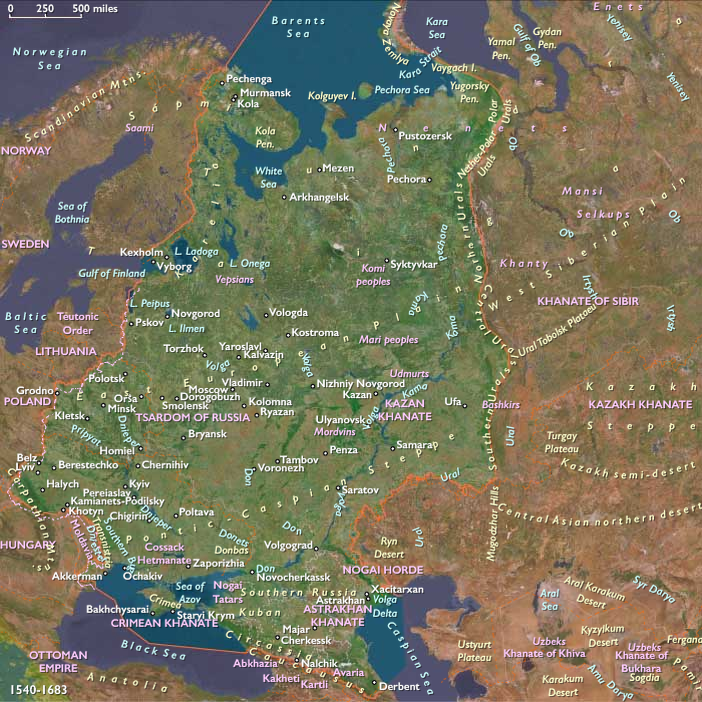
In addition to diplomatic tensions between Russia’s…
November 1656 CE
In addition to diplomatic tensions between Russia’s Tsar Alexis and Ukrainian hetman Bogdan Khmelnytsky, a number of other disagreements between the two have surfaced, notably in regard to Russian officials' interference in the finances of the Hetmanate and in the newly liberated Belarus.
The Treaty of Stolbovo had stripped Russia of the Baltic coast at the close of the Ingrian War in 1617.
Charles X of Sweden having invaded Poland, captured Warsaw and announced his claims on the Russian conquests in the orbit of the Grand Duchy of Lithuania, Afanasy Ordin-Nashchokin (who leads Russian diplomacy at this time) decides it is an opportune time to suspend hostilities against the weakened Polish-Lithuanian Commonwealth and to attack the rear of the Swedish Empire instead.
To this end he has opened negotiations and concludes a truce with Poland in November 1656 (the Truce of Vilna, or Truce of Niemież), a move which enrages a major ally of Russia, Khmelnytsky, who maintains good relations with Sweden and is fighting against Poland.
This complicates matters even further for Khmelnytsky, as his ally is now fighting his overlord, and at this initial stages are concentrating most of their attacks against the Commonwealth.
This puts Khmelnytsky into a delicate situation in regard to the Tsar, as the hetman has been negotiating with the Swedes for some time, coordinating their attacks on the Commonwealth.
The Hetman's emissaries had not even been allowed allowed to attend the negotiations, prompting Khmelnytsky to write an irate letter to the Tsar accusing him of breaking the Pereyaslav agreement.
In his anger, Khmelnytsky compares the Tsar unfavorably to the Swedes, claiming that the latter are more honorable and trustworthy than the latter.
As a result, Vyhovsky enters into negotiations with the Poles.
Groups
Topics
Commodities
Subjects
Regions

Northeastern Eurasia
View →Subregions