François Guizot had been elected by the…
July 1830 CE
François Guizot had been elected by the town of Lisieux to the Chamber of Deputies, a seat he is to retain during the whole of his political life, in January 1830.
An accomplished orater, he delivers an address in March 1830 calling for greater political freedom in the Chamber of Deputies; the motion passes 221 against 181.
Charles X responds by dissolving the Chamber and calling for new elections, which only strengthen opposition to the throne.
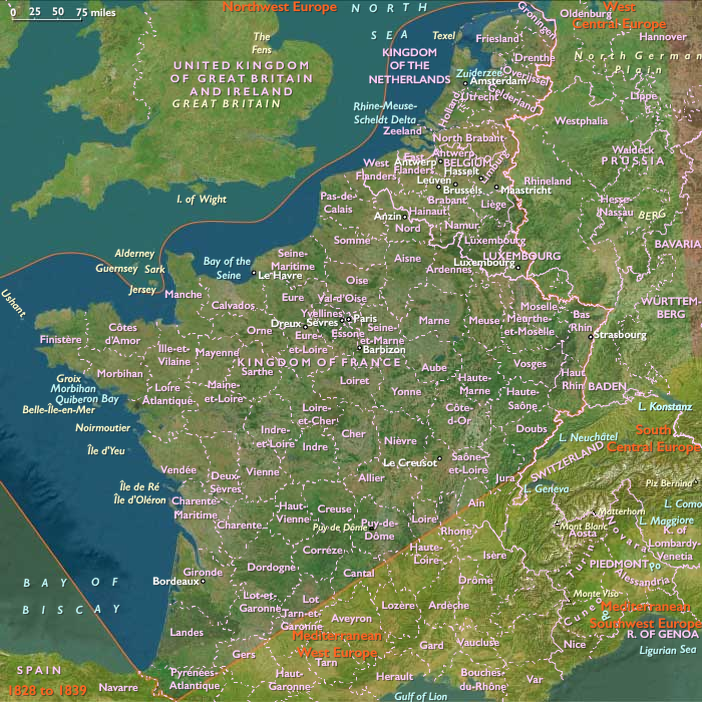
On his returning to Paris from Nîmes on July 27, the fall of Charles X is already imminent.
The major cause of his downfall, however, is that, while the king has managed to keep the support of the aristocracy, the Catholic Church and even much of the peasantry, he is deeply unpopular with industrial workers and the bourgeoisie.
Guizot is called upon by his friends Casimir Perier, Jacques Laffitte, Abel-François Villemain, and André Marie Jean Jacques Dupin to draw up the protest of the liberal deputies against the royal ordinances of July, which set up rigid control of the press,while he applies himself with them to control the revolutionary character of the latest contest.
The opposition deputies defy the changes and Parisians rise up in the violent rebellion known as the July Revolution.
Orleanist supporters win over the street fighters and enlist Guizot and other opposition deputies in bringing to the throne Charles’s cousin, Louis-Philippe, duc d'Orléans.
Hardly has the news of the capture of Algiers reached Paris when Charles X is deposed during the Three Glorious Days of July 1830. (Personally, Guizot will always opine that it had been a great misfortune for the cause of parliamentary government in France that the infatuation and ineptitude of Charles X and Prince Polignac had rendered a change in the hereditary line of succession inevitable. Once convinced that this is so, he becomes one of the most ardent supporters of Louis Philippe.)
Locations
People
Groups
Topics
Regions
West Europe
View →Subregions