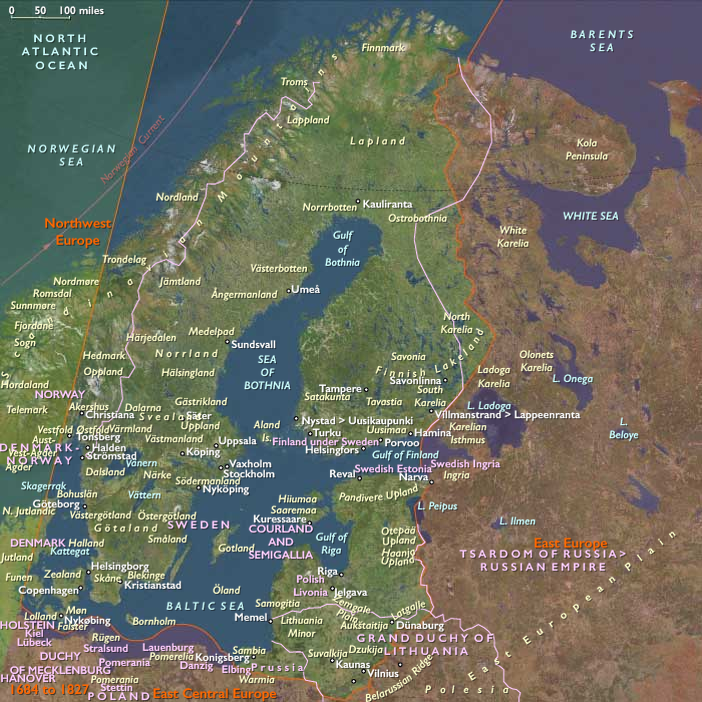
The plague had arrived in Blekinge in August 1710 by means of army movements from and to Karlskrona, the central Swedish naval base.
By the beginning of 1712, about fifteen thousand soldiers and civilians have died not only in Karlskrona, but also in Karlshamn and other localities in Blekinge.
... Cajana (Kajana, Kajaani) between 1710 and 1711.
As the actual cause of the plague is unknown, counter-measures include flight, dissection of buboes, and the lighting of huge fires to reduce the air's humidity, which is thought to reduce the chance of being affected by the plague's "bad air."
The plague had seemingly faded out in the winter in Uppland, but it continues, though with less intensity, to ravage the Uppland countryside throughout the whole year of 1711, infecting for instance Värmdö, Tillinge, and ...