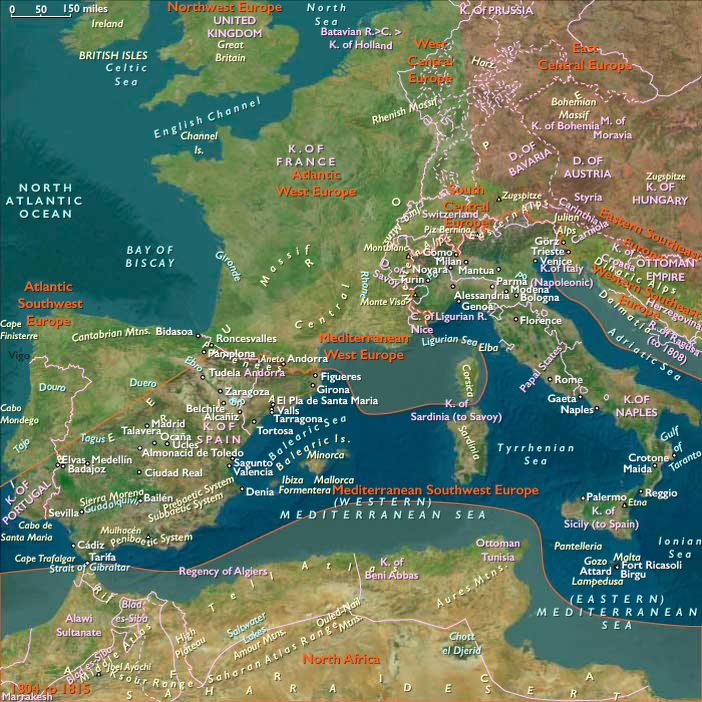
The victors, in the Treaty of Fontainebleau,…
February 1815 CE
The victors, in the Treaty of Fontainebleau, had exiled Napoleon to Elba, an island of twelve thousand inhabitants in the Mediterranean, twenty kilometers off the Tuscan coast.
Granting him sovereignty over the island, they have allowed him to retain his title of emperor.
Napoleon had attempted suicide with a pill he had carried since a near-capture by Russians on the retreat from Moscow.
Its potency had weakened with age, and he had survived to be exiled while his wife and son took refuge in Austria.
In the first few months on Elba, he had created a small navy and army, developed the iron mines, and issued decrees on modern agricultural methods.
After the new European frontiers are redrawn by the Grand Alliance at the Congress of Vienna, Napoleon, separated from his wife and son, who had come under Austrian control, cut off from the allowance guaranteed to him by the Treaty of Fontainebleau, and aware of rumors he is about to be banished to a remote island in the Atlantic Ocean, escapes from Elba on February 26, 1815.
Locations
People
Topics
Commodities
Subjects
Regions
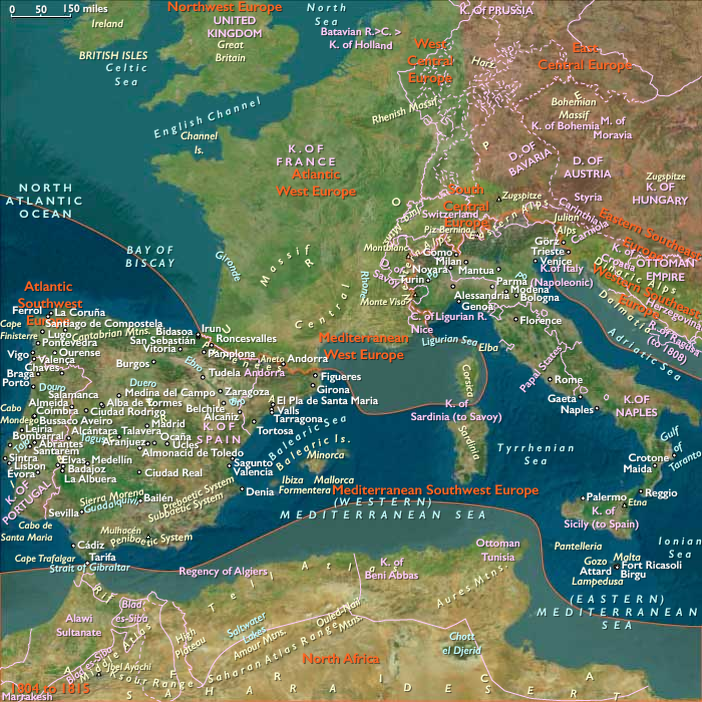
Southwest Europe
View →Subregions