
Interior East Africa (1888–1899 CE): Imperial Conquests, …
Years: 1888 - 1899
Interior East Africa (1888–1899 CE): Imperial Conquests, Resistance, and the Struggle for Sovereignty
From 1888 to 1899, Interior East Africa became a focal point for intense colonial rivalries, marked by fierce local resistance, significant European military engagements, and reshaped political landscapes. Conflicts escalated between European colonial powers—Britain, France, Germany, Italy, and Portugal—and indigenous states, profoundly transforming regional dynamics and setting the stage for colonial domination.
Ethiopia and the Mahdist Conflict
The Ethiopian Empire, under Johannes IV, faced ongoing threats from the Mahdist State in Sudan, led by the Khalifa, who pursued aggressive Islamic expansion. In 1888, a Mahdist Ansar army numbering around 60,000 invaded Ethiopian territory, penetrating as far as Gondar and causing widespread devastation. In response, Johannes IV launched a counterattack at Qallabat in March 1889 but was killed in battle, resulting in an Ethiopian withdrawal. The Khalifa’s forces, attempting further expansion into Egypt, faced decisive defeats by British-led Egyptian troops at Tushki (1889) and later by the Italians at Akordat (1893), effectively ending Mahdist ambitions toward Ethiopia.
Following Johannes IV’s death, a period of confusion allowed the Shewan king Menelik II to assert dominance. By 1889, Menelik became emperor, though he was forced to accept significant territorial losses to Italy, which consolidated control over Eritrea. Ethiopia lost its maritime access until after the Second World War.
The Anglo-Egyptian Sudan and the Fashoda Crisis
Following the Mahdist Revolt, southern Sudan descended into chaos, culminating in the loss of Egyptian control over Equatoria by 1889. The strategic importance of the Upper Nile region triggered the Fashoda Incident (1898), a near-war confrontation between British forces led by General Kitchener and a French expeditionary force seeking to assert French claims. France eventually withdrew, leaving Britain and Egypt to jointly administer the newly created Anglo-Egyptian Sudan, though Northern and Southern Sudan were governed separately within this condominium.
Buganda and Bunyoro: Religious Wars and British Conquest
Buganda faced intensified internal turmoil as Protestant and Catholic factions, initially allies against Islam, turned violently against each other. Conflict erupted openly in 1892, culminating in British captain Frederick Lugard employing Maxim machine guns to decisively aid Protestant converts. This ensured British supremacy in Buganda, expelled French Catholic missionaries, and ended Germany’s brief interest in the region.
Buganda subsequently aligned strongly with British interests, aiding Britain in conquering neighboring kingdoms, notably the powerful and unified kingdom of Bunyoro, under Kabalega. After a brutal five-year conflict, Bunyoro fell under British rule, losing half its territory to Buganda (the “lost counties”), creating lasting regional grievances.
By 1897, the Uganda Protectorate emerged, uniting diverse polities such as Acholi, Busoga, and Ankole through treaties or military conquest. A rebellion by Nubian mercenaries (1897–1899) briefly threatened British control but was suppressed with help from loyal Baganda Christian allies, prompting Britain to grant Buganda special autonomy within the protectorate.
Rwanda, Burundi, and German East Africa
In the Great Lakes region, Germany rapidly consolidated its colonial presence. Following the establishment of the German East Africa Company (1884), Germany intervened militarily to crush revolts and secure its colonial authority. By 1891, company rights were transferred directly to the German government, forming the colony of German East Africa, encompassing Rwanda (Ruanda), Burundi (Urundi), and mainland Tanzania (Tanganyika).
German explorer Gustav Adolf von Götzen was notably active in 1894, exploring Rwanda and establishing relations with its king. German colonial policy emphasized indirect rule, strengthening existing monarchies and hierarchical structures rather than dismantling them. Gitega in Burundi became a key administrative center for the colonial region known as Ruanda-Urundi.
French Somaliland and Djibouti
France firmly established its colonial administration around the Gulf of Tadjoura, an area previously governed by Somali and Afar sultans, through treaties signed between 1883 and 1887. By 1894, Governor Léonce Lagarde founded the city of Djibouti, proclaiming the region the colony of French Somaliland (officially established in 1896), solidifying French influence at this strategic Red Sea location.
British and Portuguese Rivalry in Southern East Africa
The British South Africa Company (BSA Company) under Cecil Rhodes aggressively pursued mineral and territorial rights throughout southern Interior East Africa. In 1888, the company secured significant mineral concessions from the Lozi king (Litunga) in present-day Zambia, and by 1899 established the protectorate Barotziland-North-Western Rhodesia. American scout Frederick Russell Burnham discovered valuable copper deposits along the Kafue River (1895), furthering the company's interests.
Concurrently, to counter Portuguese ambitions in Nyasaland (Malawi), Britain dispatched consul Harry Johnston in 1889 to secure treaties with local rulers. Britain proclaimed the area the British Central Africa Protectorate in 1891, consolidating its influence.
Colonial Administration and Resistance in Rhodesia
In Mashonaland and Matabeleland (present-day Zimbabwe), the BSA Company imposed separate administrative regimes following occupation in 1890 and the subsequent defeat of the Matabele king Lobengula (1893). Indigenous resistance, notably the Mwari-led uprising of 1896, was violently suppressed by the British, leading to tightened colonial administration by the end of the decade.
Meanwhile, in North-Eastern Rhodesia, company agents like Joseph Thompson and Alfred Sharpe forcibly subdued indigenous groups. The area was effectively pacified after the defeat of Mpezeni’s Ngoni rebellion (1897), solidifying British colonial control by 1899.
Consequences and Long-term Impact
By the century’s end, Interior East Africa was effectively partitioned among European powers, transforming indigenous political structures, economies, and societies profoundly. Resistance persisted, but the era marked a decisive turning point toward sustained colonial rule. Long-term grievances—such as the division of Bunyoro and the presence of European enclaves in Ethiopia—would resonate through subsequent decades, shaping future anti-colonial movements and nationalist aspirations.
People
- Abdullah Ibn-Mohammed Al-Khalifa
- Alfred Sharpe
- Cecil Rhodes
- Frederick Lugard, 1st Baron Lugard
- Frederick Russell Burnham
- Gustav Adolf von Götzen
- Harry Johnston
- Joseph Thomson
- Kabalega
- Lobengula
- Léonce Lagarde
- Menelik II
- Mpezeni
- Yohannes IV
Groups
- Hadza people
- Nubians
- Nuer people
- Dinka people
- Arab people
- Tigray-Tigrinya people
- Yao people
- Agaw people
- Ethiopian Orthodox Tewahedo Church
- Oromo people
- Tumbuka people
- Chewa people
- Great Lakes Twa
- Meru people
- Kamba people
- Kikuyu
- Islam
- Gurage people
- Mari people
- Amhara people
- Nguni people
- Luo people of Kenya and Tanzania
- Christians, Roman Catholic
- Wameru
- Atuot
- Tonga people of Zambia and Zimbabwe
- Kalenjin
- Iraqw
- Datooga
- Akie
- Maasai
- Murle people
- Zande people
- Kisii people
- Ethiopia, Solomonid Dynasty of
- Buganda, Kingdom of
- Portuguese Empire
- Maravi
- Portuguese Mozambique
- Fipa people
- Protestantism
- Anglicans (Episcopal Church of England)
- Bemba people
- Tonga people (Malawi)
- Yaaku
- Nkoya
- Bari people
- Bunyoro (Bunyoro-Kitara), kingdom of
- Presbyterians
- Angola (Portuguese colony)
- Portugal, Bragança Kingdom of
- Acholi people
- Church Mission Society (CMS)
- Egypt, (Ottoman) Viceroyalty of
- France, constitutional monarchy of
- Belgium, Kingdom of
- Matabele Kingdom
- Obock Territory and Dependencies
- White Fathers
- Italy, Kingdom of
- German Empire (“Second Reich”)
- African Lakes Company
- French Somaliland
- British Somaliland
- East Africa, German
- Mahdist State (Mahdist Sudan)
- Italian Somaliland
- British South Africa Company (SAC)
- Rhodesia, Company rule in
- East Africa, German
- British Central Africa Protectorate (BCA)
- Buganda, (British) Protectorate of (Uganda Protectorate)
- Uganda, Protectorate of
- Sudan, Anglo-Egyptian
- Barotziland-North-Western Rhodesia
- Britain (United Kingdom of Great Britain and Northern Ireland)
Topics
- Exploration of Africa, Later European
- Scramble for Africa
- Mahdist War
- Gallabat, Battle of
- Mahdist Invasion of Abyssinia
- Toski (Tushkah), Battle of
- Agordat, Second Battle of
- Mahdist Invasion of Eritrea
- Fashoda Incident
Commodoties
Subjects
Regions
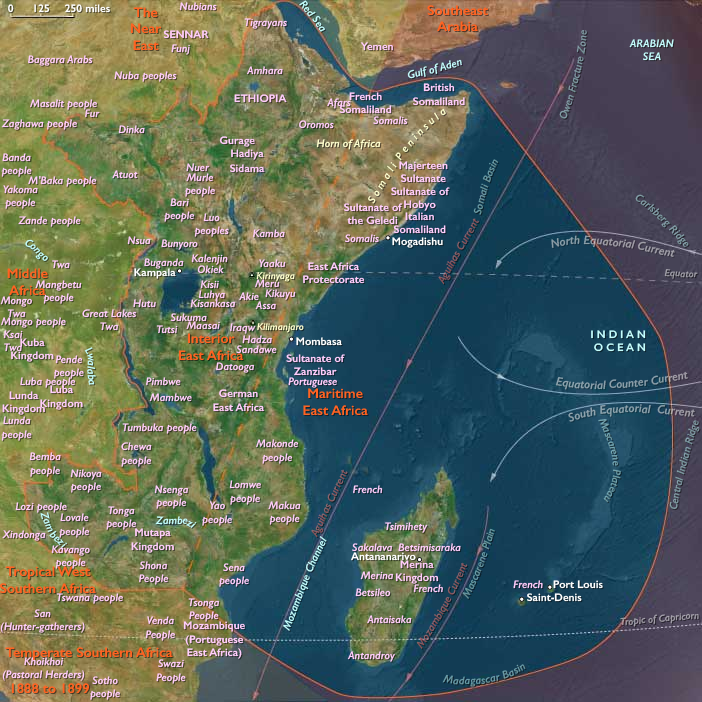
Subregions
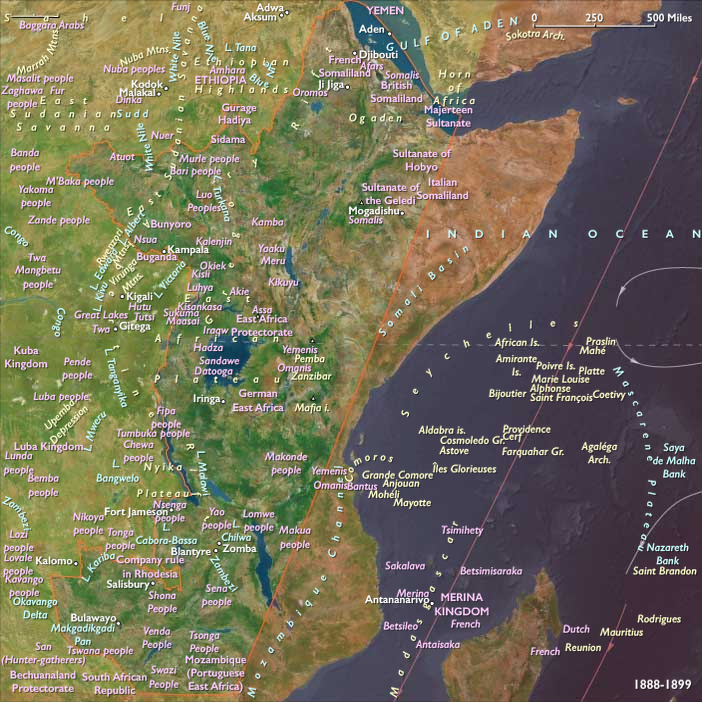
Related Events
Showing 10 events out of 10660 total
Years: 1888 - 1899
People
- Abdullah Ibn-Mohammed Al-Khalifa
- Alfred Sharpe
- Cecil Rhodes
- Frederick Lugard, 1st Baron Lugard
- Frederick Russell Burnham
- Gustav Adolf von Götzen
- Harry Johnston
- Joseph Thomson
- Kabalega
- Lobengula
- Léonce Lagarde
- Menelik II
- Mpezeni
- Yohannes IV
Groups
- Hadza people
- Nubians
- Nuer people
- Dinka people
- Arab people
- Tigray-Tigrinya people
- Yao people
- Agaw people
- Ethiopian Orthodox Tewahedo Church
- Oromo people
- Tumbuka people
- Chewa people
- Great Lakes Twa
- Meru people
- Kamba people
- Kikuyu
- Islam
- Gurage people
- Mari people
- Amhara people
- Nguni people
- Luo people of Kenya and Tanzania
- Christians, Roman Catholic
- Wameru
- Atuot
- Tonga people of Zambia and Zimbabwe
- Kalenjin
- Iraqw
- Datooga
- Akie
- Maasai
- Murle people
- Zande people
- Kisii people
- Ethiopia, Solomonid Dynasty of
- Buganda, Kingdom of
- Portuguese Empire
- Maravi
- Portuguese Mozambique
- Fipa people
- Protestantism
- Anglicans (Episcopal Church of England)
- Bemba people
- Tonga people (Malawi)
- Yaaku
- Nkoya
- Bari people
- Bunyoro (Bunyoro-Kitara), kingdom of
- Presbyterians
- Angola (Portuguese colony)
- Portugal, Bragança Kingdom of
- Acholi people
- Church Mission Society (CMS)
- Egypt, (Ottoman) Viceroyalty of
- France, constitutional monarchy of
- Belgium, Kingdom of
- Matabele Kingdom
- Obock Territory and Dependencies
- White Fathers
- Italy, Kingdom of
- German Empire (“Second Reich”)
- African Lakes Company
- French Somaliland
- British Somaliland
- East Africa, German
- Mahdist State (Mahdist Sudan)
- Italian Somaliland
- British South Africa Company (SAC)
- Rhodesia, Company rule in
- East Africa, German
- British Central Africa Protectorate (BCA)
- Buganda, (British) Protectorate of (Uganda Protectorate)
- Uganda, Protectorate of
- Sudan, Anglo-Egyptian
- Barotziland-North-Western Rhodesia
- Britain (United Kingdom of Great Britain and Northern Ireland)
Topics
- Exploration of Africa, Later European
- Scramble for Africa
- Mahdist War
- Gallabat, Battle of
- Mahdist Invasion of Abyssinia
- Toski (Tushkah), Battle of
- Agordat, Second Battle of
- Mahdist Invasion of Eritrea
- Fashoda Incident
Commodoties
Subjects
Regions
Subregions