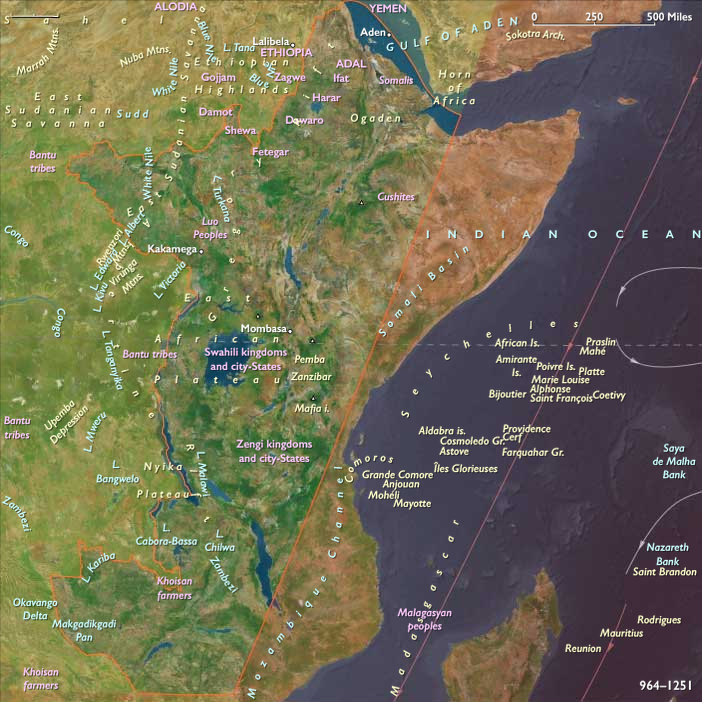
Interior East Africa (964 – 1107 CE):…
964 CE to 1107 CE
Interior East Africa (964 – 1107 CE): Highland Monasteries, Cattle Chiefdoms, and Great Lakes Consolidation
Geographic and Environmental Context
Interior East Africa includes Eritrea, Djibouti, Ethiopia, South Sudan, Uganda, Rwanda, Burundi, Zambia, northern Zimbabwe, northern Malawi, northwestern Mozambique, inland Tanzania, and inland Kenya.
-
Ethiopian Highlands remained the cultural and spiritual core of Christian communities.
-
The Upper Nile savannas of South Sudan supported agro-pastoral Nilotic groups.
-
The Great Lakes region (Uganda, Rwanda, Burundi, western Kenya, northern Tanzania) saw denser farming and fishing settlements.
-
Zambia, northern Zimbabwe, Malawi, and inland Mozambique sustained ironworking and farming villages tied to lake and river systems.
Climate and Environmental Shifts
-
The Medieval Warm Period (c. 950–1250) brought generally favorable rainfall.
-
Highlands maintained stable harvests of teff, barley, and ensete; Great Lakes basins supported intensive banana and yam agriculture.
-
Savannas experienced episodic dry spells, buffered by ecological diversity and mobility.
Societies and Political Developments
-
Ethiopian Highlands (post-Aksum fragmentation):
-
Power lay with regional Christian polities in Tigray, Amhara, and Lasta (Agaw), each allied to prominent churches and monasteries.
-
Monastic networks preserved Geʽez texts, liturgy, and pilgrimage, while local dynasts patronized churches and market towns.
-
No unified royal house ruled the highlands in this age; later Zagwe consolidation comes after 1137.
-
-
Upper Nile (South Sudan):
-
Ancestors of Dinka, Nuer, and Shilluk organized cattle-centered polities with ritual leadership and lineage federations.
-
-
Great Lakes (Uganda–Rwanda–Burundi–western Kenya/northern Tanzania):
-
Bantu chiefdoms expanded with banana farming, fishing, and ironworking.
-
Proto-kingdoms (e.g., antecedents of Buganda, Bunyoro, Rwanda, Burundi) coalesced through clan alliances and fortified hill centers.
-
-
Southern interior (Zambia, northern Zimbabwe, Malawi, inland Mozambique):
-
Iron-smelting and copper production grew; farming villages consolidated into regional chieftaincies—precursors to later states (e.g., Great Zimbabwe horizon after our age).
-
Economy and Trade
-
Agriculture: teff, barley, and ensete (highlands); millet, sorghum, bananas, and yams (savannas and lake basins).
-
Livestock: cattle, sheep, goats; cattle wealth central to Nilotic social power.
-
Fisheries: dried/smoked fish from Lakes Victoria, Tanganyika, Malawi entered regional trade.
-
Metals: iron tools ubiquitous; copper from Zambia moved widely.
-
Trade networks:
-
Highlands exported gold, ivory, and slaves to the Red Sea via inland–coastal caravans; monasteries and market towns served as nodes.
-
Great Lakes corridors connected inland produce to the Swahili Coast via caravan links.
-
Southern interior exchanged copper, salt, and ivory northward and eastward.
-
Subsistence and Technology
-
Terraces and irrigation in the highlands; banana groves and garden complexes around lake settlements.
-
Pastoral systems: kraals and seasonal grazing circuits in the Upper Nile.
-
Iron and copper smelting supported farm expansion and craft production.
-
Canoes and nets enabled intensive lacustrine fisheries.
Movement and Interaction Corridors
-
Upper Nile linked cattle peoples to Nubia and Egypt.
-
Great Lakes waterways integrated fishing and farming hubs.
-
Zambezi–Copperbelt tracks moved copper, salt, and ivory.
-
Highland–Red Sea routes carried pilgrims, merchants, and tribute to coastal emporia.
Belief and Symbolism
-
Christianity endured in the highlands through monasteries, churches, and Geʽez scripture; saints’ cults attracted regional pilgrimage.
-
Ancestor veneration structured clan authority in Great Lakes and savannas.
-
Cattle ritual among Nilotic groups sacralized fertility and political legitimacy.
-
Emergent sacred kingship in proto-kingdoms of Uganda and Rwanda bound harvests, rain, and justice to chiefs.
Adaptation and Resilience
-
Ecological complementarity (terraces, lakes, cattle savannas) cushioned climate variability.
-
Clan federations and monasteries stabilized law, surplus management, and dispute settlement.
-
Route redundancy—multiple caravan/lake paths—kept trade flowing despite local conflict.
-
Craft intensification (iron, copper) expanded arable land and exchange.
Long-Term Significance
By 1107 CE, Interior East Africa was regionally consolidated but not centralized in the highlands:
-
Christian polities in Tigray–Amhara–Lasta anchored church scholarship and trade without a single royal dynasty.
-
Nilotic cattle societies and Great Lakes proto-kingdoms strengthened political complexity.
-
Copper–salt–ivory routes deepened inland ties to the Swahili Coast and the Red Sea.
These dynamics set the stage for Zagwe unification after 1137, later Great Lakes monarchies, and broader integration into Indian Ocean and Nile worlds.
Images

Interior East Africa (with civilization) ©2024-25 Electric Prism, Inc. All rights reserved.
Commodities
Regions
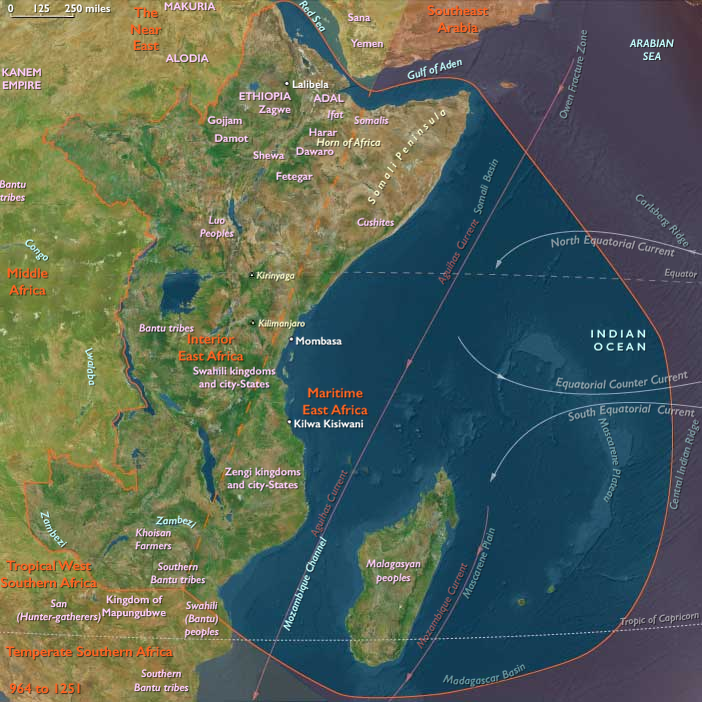
East Africa
View →Subregions