Event
The Ponca tribe, at first European contact,…
The Ponca tribe, at first European contact, live around the mouth of the Niobrara River in northern Nebraska.
According to tradition, they had moved there from an area east of the Mississippi just before Columbus' arrival in the Americas.
Siouan-speaking tribes such as the Omaha, Osage, Quapaw and Kaw also have traditions of having migrated to the West from east of the Mississippi River.
The invasions of the Iroquois from their traditional base in the north had pushed those tribes out of the Ohio River area.
The Dhegihan languages are a group of Siouan languages that include Kansa–Osage, Omaha–Ponca, and Quapaw.
Their historical region includes parts of the Ohio and Mississippi River Valleys, the Great Plains, and southeastern North America.
The shared Dhegihan (Degihan) migration history and separation story places them as a united group in the late 1600s near the confluence of the Ohio and Tennessee rivers (southern Illinois and western Kentucky, which then moved westward towards the Missouri river, and separated into different bands.
Kansa and Osage are mutually intelligible, as are Omaha and Ponca.
Scholars are not able to determine precisely when the Dhegiha Siouan tribes migrated west, but know the Iroquois also pushed tribes out from the Ohio and West Virginia areas in the Beaver Wars.
The Iroquois maintain the lands as hunting grounds.
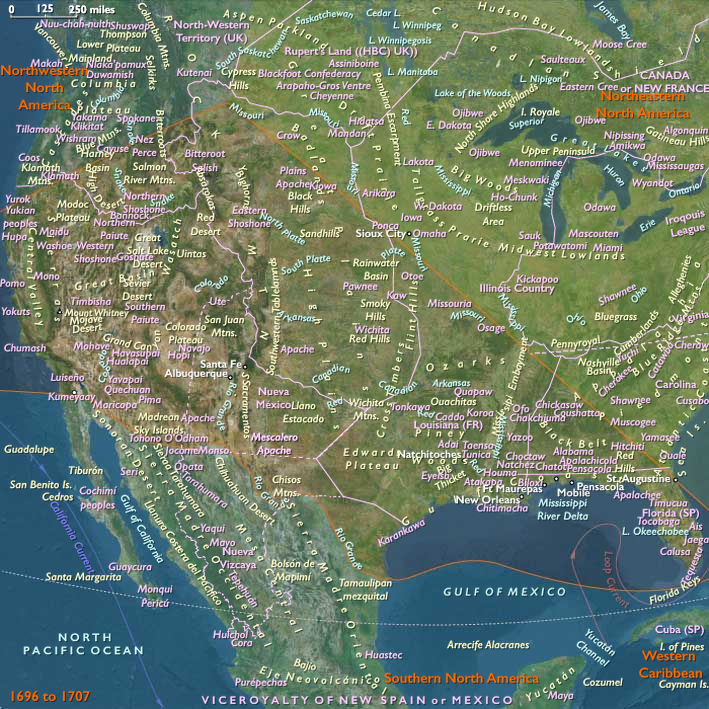
The Ponca appear on a 1701 map by Pierre-Charles Le Sueur, who places them along the upper Missouri.
In the 1930s, the University of Nebraska and the Smithsonian Institution will conduct an archeological project to identify and save prehistoric artifacts before they were destroyed during agricultural development.
The team will excavate a prehistoric Ponca village, which includes large circular homes up to sixty feet in diameter, located almost two miles (three kilometers) along the south bank of the Niobrara River.
-
{# Image navigates to the detail page; the magnifying-glass chip is the only Fancybox lightbox trigger (kept a separate sibling — anchors can't nest). #}
 The Far West
World
-
{# Image navigates to the detail page; the magnifying-glass chip is the only Fancybox lightbox trigger (kept a separate sibling — anchors can't nest). #}
 Northern North America
Region
-
{# Image navigates to the detail page; the magnifying-glass chip is the only Fancybox lightbox trigger (kept a separate sibling — anchors can't nest). #}
 Gulf and Western North America
Subregion