
The Execution of Olivier IV de Clisson …
Years: 1343 - 1343
November
The Execution of Olivier IV de Clisson and the Collapse of the Truce of Malestroit (1343–1345)
Though the Truce of Malestroit was meant to pause hostilities between England and France until September 29, 1346, tensions quickly escalated. By early 1345, war fully resumed, but even before then, Philip VI of France had already violated the spirit of the truce through a series of politically motivated executions, shocking the nobility and further fueling the Breton War of Succession.
Philip VI Ends the Truce with Executions (1343–1344)
- On August 2, 1343, Philip VI ordered the execution of Olivier IV de Clisson in Paris, a shocking move that set a precedent for further purges of Breton nobles loyal to John of Montfort.
- On November 29, 1343, fourteen more Breton lords were executed, including:
- Geoffroi de Malestroit
- Jean de Montauban
- Alain de Quédillac
- Denis du Plessis
- Guillaume II des Brieux and his brothers, Jean and Olivier
- These executions targeted key Montfortist supporters, signaling that Philip VI had no intention of maintaining peace.
The Suspicion and Execution of Olivier IV de Clisson
- Olivier IV de Clisson had been a commander in the defense of Vannes against the English in 1342, alongside Harvey VII, Lord of Léon.
- Both were captured by the English, but Olivier’s release was secured through a prisoner exchange for Ralph de Stafford, 1st Earl of Stafford, and for an unusually low ransom.
- This led to rumors that Clisson had not defended Vannes to his fullest, and Charles of Blois accused him of treason.
Philip VI’s Betrayal and the Brutal Execution (August 2, 1343)
- After the peace treaty was signed, Olivier was invited to Paris under the pretext of attending a tournament.
- Instead, he was arrested, tried, and executed by beheading at Les Halles—without a public trial or full evidence of guilt.
- His corpse was posthumously desecrated:
- His body was hanged by the armpits at Montfaucon gallows in Paris.
- His severed head was placed on a pike at the Sauvetout Gate of Nantes.
Shock and Condemnation by the Nobility
- The French nobility was appalled by the execution, as Philip VI had failed to publicly prove Clisson’s guilt.
- Such posthumous desecration was normally reserved for common criminals, not nobles.
- Jean Froissart and his contemporaries harshly condemned Philip VI’s actions, as they violated:
- Chivalric traditions—nobles were expected to be treated honorably, even in betrayal.
- The feudal right of allegiance—many nobles saw loyalty as a personal choice, not an unbreakable obligation.
Consequences: The Full Resumption of War (1345–1362)
- Despite the Truce of Malestroit, Philip VI’s executions had already reignited hostilities before the official resumption of war.
- By February 1345, Edward III was already preparing for a new military campaign, expecting the war to fully restart once the truce expired.
- Although full-scale hostilities did not officially recommence until 1345, the Breton War of Succession would now continue until 1362, fueled by the brutality of Philip VI’s reprisals.
Philip VI’s execution of Olivier IV de Clisson and other Breton nobles was a major political miscalculation, as it alienated the nobility, further escalated tensions, and ensured that war would continue for decades.
Locations
People
- Charles of Blois Châtillon
- Edward III of England
- Harvey VII of Léon
- Jean Froissart
- Jeanne de Clisson
- Joan, Duchess of Brittany
- John IV, Duke of Brittany
- John of Montfort
- Philip VI of France
- Pope Clement VI
Groups
Topics
- Avignon Papacy
- Hundred Years' War: Beginning of the War
- Hundred Years' War
- Breton Succession, War of the
Subjects
Regions
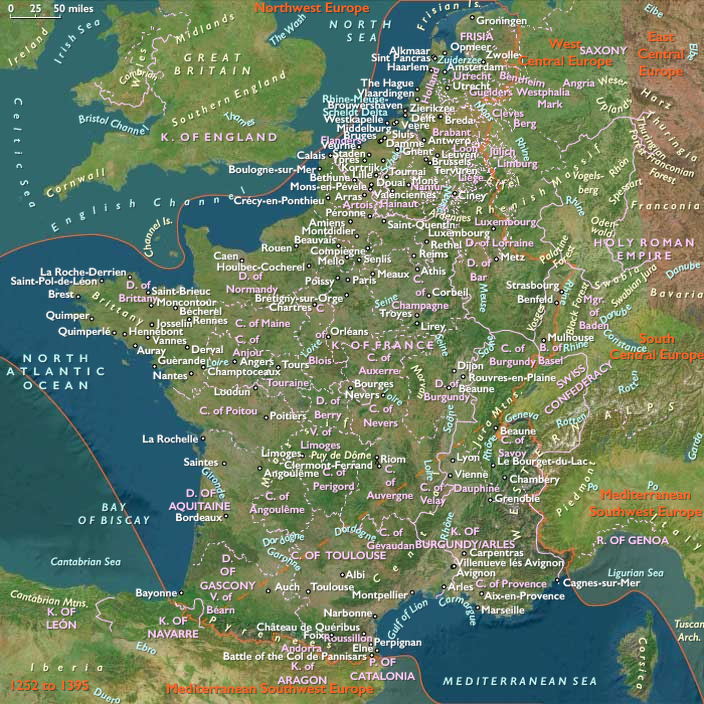
Subregions
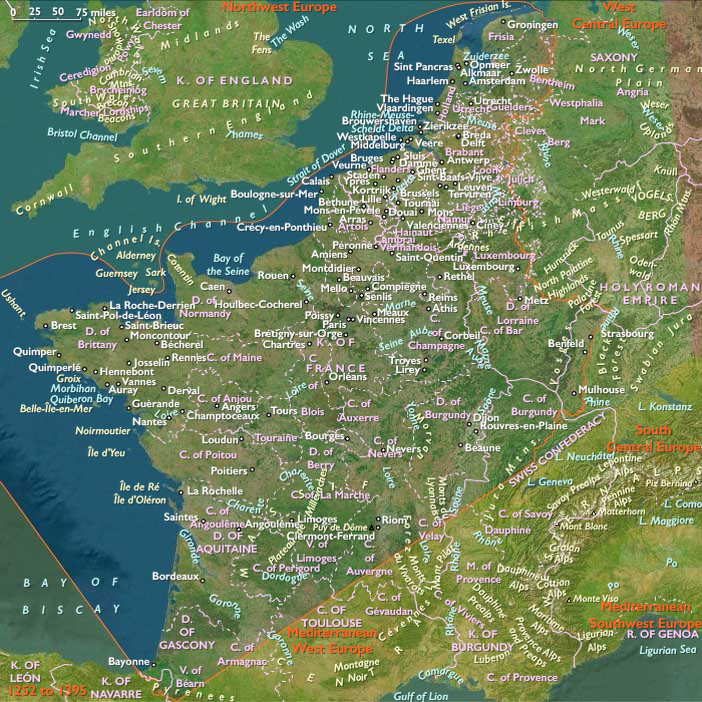
Related Events
Showing 10 events out of 44425 total
Years: 1343 - 1343
November
Locations
People
- Charles of Blois Châtillon
- Edward III of England
- Harvey VII of Léon
- Jean Froissart
- Jeanne de Clisson
- Joan, Duchess of Brittany
- John IV, Duke of Brittany
- John of Montfort
- Philip VI of France
- Pope Clement VI
Groups
Topics
- Avignon Papacy
- Hundred Years' War: Beginning of the War
- Hundred Years' War
- Breton Succession, War of the
Subjects
Regions
Subregions