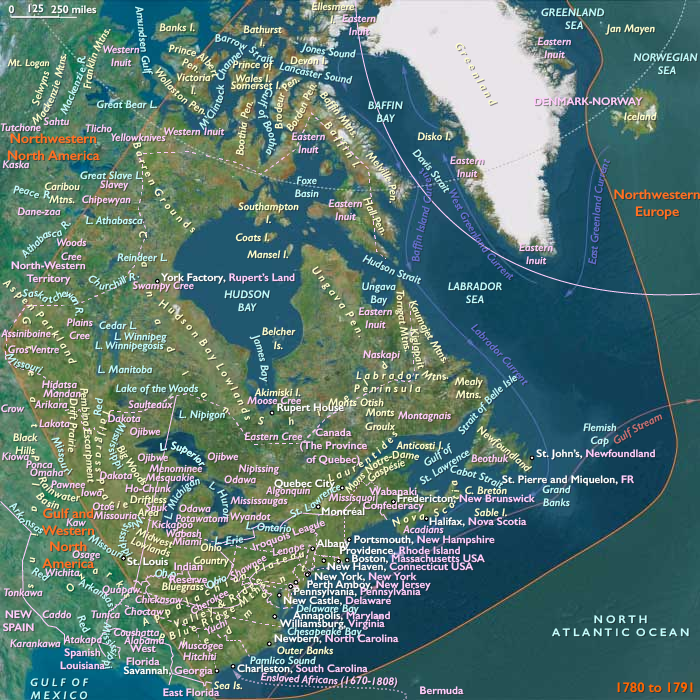
John Stevens has petitioned Congress for a…
April 1790 CE
Through his efforts, his bill becomes a law on April 10, 1790 which introduces the patent system as law in the United States.
Stevens, born June 26, 1749, in New York City, New York, is the only son of John Stevens Jr. (1715–1792), a prominent state politician who had served as a delegate to the Continental Congress, and Elizabeth Alexander (1726–1800).
His sister, Mary Stevens (d. 1814), has married Robert R. Livingston, the first Chancellor of the State of New York.
His maternal grandparents were James Alexander (1691–1756), the Attorney General of New Jersey, and Mary (née Spratt) Provoost Alexander (1693–1760), herself a prominent merchant in New York City.
His paternal grandfather, John Stevens, emigrated from London England around 1695, and was married to Mary Campbell.
He graduated King's College (which will become Columbia University) in May 1768.
After his graduation from King's College, he had studied law and had been admitted to the bar of New York City in 1771.
He practices law in New York and lives across the river.
At public auction, he had bought from the state of New Jersey a piece of land which had been confiscated from a Tory landowner.
The land, described as "William Bayard's farm at Hoebuck" comprises approximately what is now the city of Hoboken.
Stevens has built his estate at Castle Point, on land that will later become the site of Stevens Institute of Technology (bequeathed by his son Edwin Augustus Stevens).
In 1776, at age twenty-seven, he had been appointed a Captain in Washington's army in the American Revolutionary War.
During the war, he was promoted to Colonel and became Treasurer of New Jersey, serving from 1776 to 1779.
Locations
Groups
Subjects
Regions
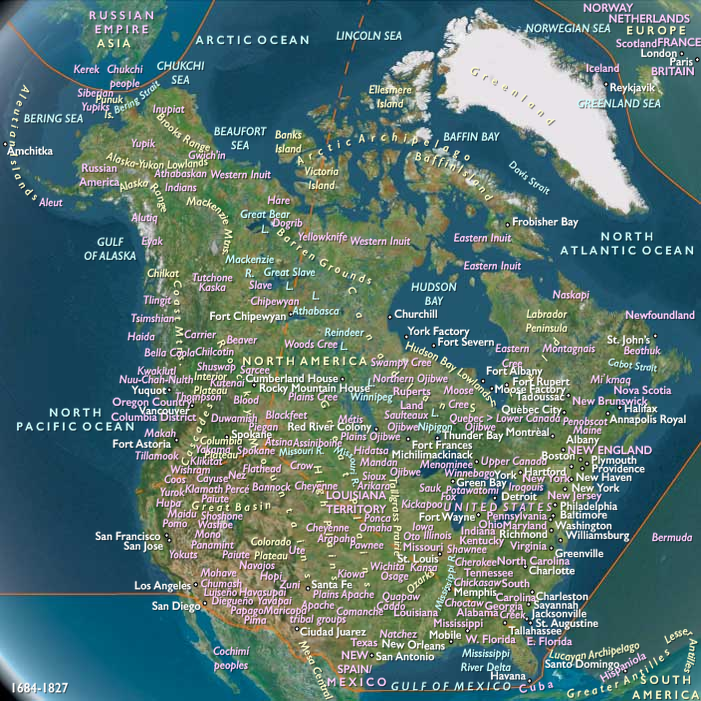
Northern North America
View →Subregions