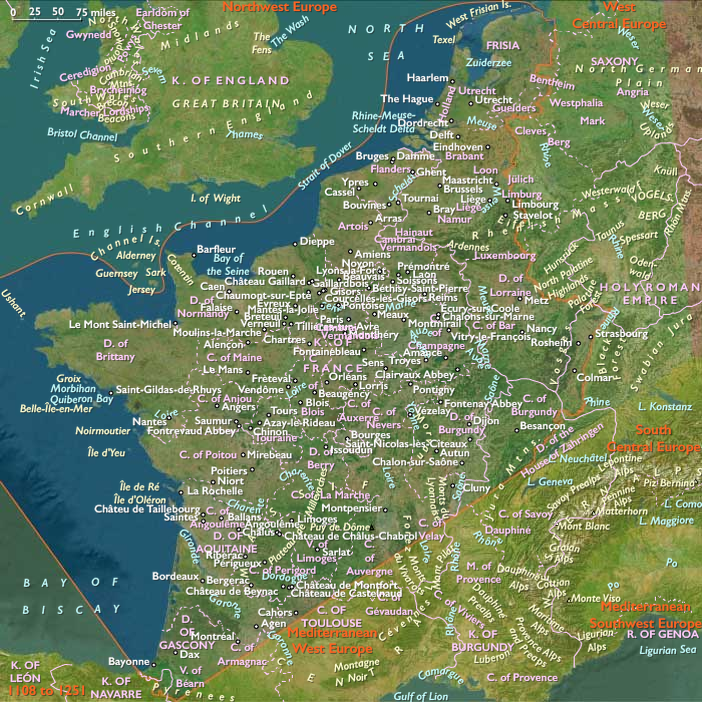
The Death of Isabella of Hainaut and…
March 1190 CE
The Death of Isabella of Hainaut and the Succession of Louis VIII (1190 CE)
On March 14, 1190, Queen Isabella of Hainaut, wife of Philip II of France, gave birth to twin boys, Robert and Philip, after a difficult pregnancy. However, due to complications in childbirth, she died the next day, on March 15, 1190, at not quite twenty years old. She was buried in Notre-Dame Cathedral in Paris, mourned by the people of the capital, where she had been a beloved queen.
Her twin sons survived only briefly, both dying on March 18, 1190.
Isabella’s Role in the Capetian Dynasty
- Isabella had previously given birth to Philip II’s long-awaited heir, the future King Louis VIII, on September 5, 1187.
- Her dowry of Artois, which she brought from her marriage to Philip, was a key territorial acquisition for the Capetians.
- Upon her death, Louis inherited Artois, becoming its count.
- When Philip II died and Louis became King of France (1223), Artois returned to the French Crown, further expanding royal territory.
Legacy and Impact
- Her early death marked a tragic moment in Philip II’s reign, occurring just before his departure for the Third Crusade.
- Her political and dynastic role was significant, as her marriage secured the Capetian claim to Artois.
- Though she did not live to see it, her son Louis VIII would eventually inherit the throne, ensuring the continuation of the Capetian dynasty.
Isabella’s short but impactful life strengthened the French monarchy, and her legacy lived on through her son and the territorial gains she brought to the Capetians.
Locations
People
Groups
Subjects
Regions
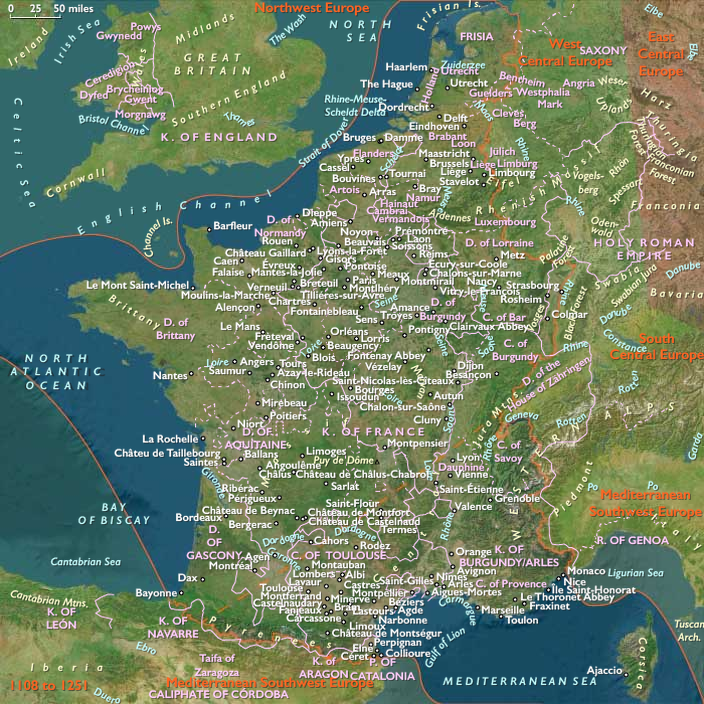
West Europe
View →Subregions