
Timur's regime is characterized by its inclusion …
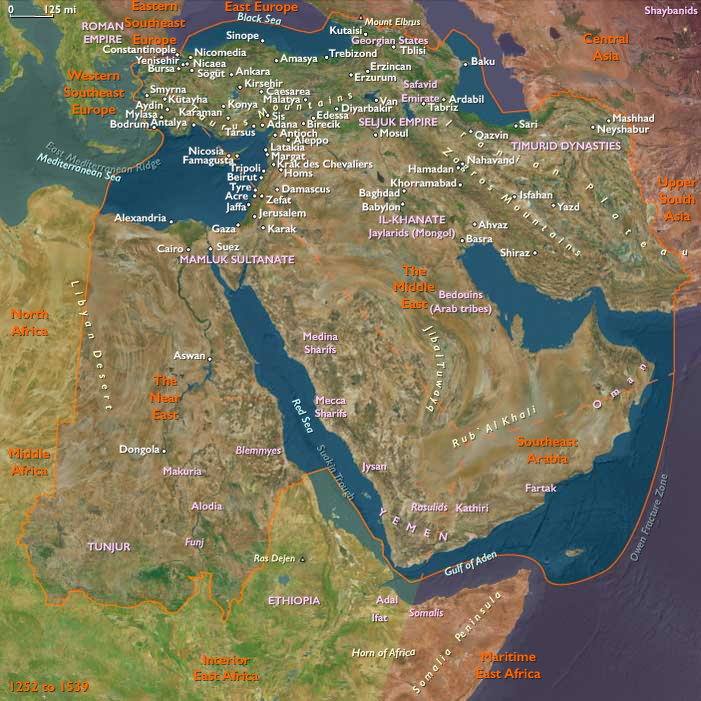
Years: 1396 - 1539
Timur's regime is characterized by its inclusion of Iranians in administrative roles and its promotion of architecture and poetry.
His empire disintegrates rapidly after his death in 1405, however, and Mongol tribes, Uzbeks, and Turkmens rule an area roughly coterminus with present-day Iran until the rise of the Safavi dynasty, the first native Iranian dynasty in almost a thousand years.
The Safavis, who come to power in 1501, are leaders of a militant Sufi order of Islamic mystics.
The Safavis trace their ancestry to Sheikh Safi ad Din (died circa 1334), the founder of the Sufis, who claimed descent from Shia Islam's Seventh Imam, Musa al Kazim.
From their home base in Ardabil, the Safavis recruit followers among the Turkmen tribesmen of Anatolia and forge them into an effective fighting force and an instrument for territorial expansion.
The Safavis adopt Shia Islam in the mid-fifteenth century, and their movement becomes highly millenarian in character.
Locations
People
Groups
- Iranian peoples
- Arab people
- Oghuz Turks
- Muslims, Sunni
- Muslims, Shi'a
- Sufism
- Turkmen, Iraqi
- Turkmen people
- Mongols
- Salghurids
- Mongol Empire
- Il-khanate
- Muzaffarids (Iran)
- Injuids
- Jalairid Sultanate
- Timurid Empire
- Kara Koyunlu (Black Sheep Turks), (Turkmen) Emirate of the
- Ag Qoyunlu (White Sheep Turks), (Turkmen) Emirate of the
- Timurid Emirates
- Ag Qoyunlu (White Sheep Turks), (Turkmen) Emirate of the
- Qizilbash or Kizilbash, (Ottoman Turkish for "Crimson/Red Heads")
- Ag Qoyunlu (White Sheep Turks), (Turkmen) Emirate of the
- Ag Qoyunlu (White Sheep Turks), (Turkmen) Emirate of the
- Persia, Safavid Kingdom of
Topics
Commodoties
Subjects
Regions
Subregions
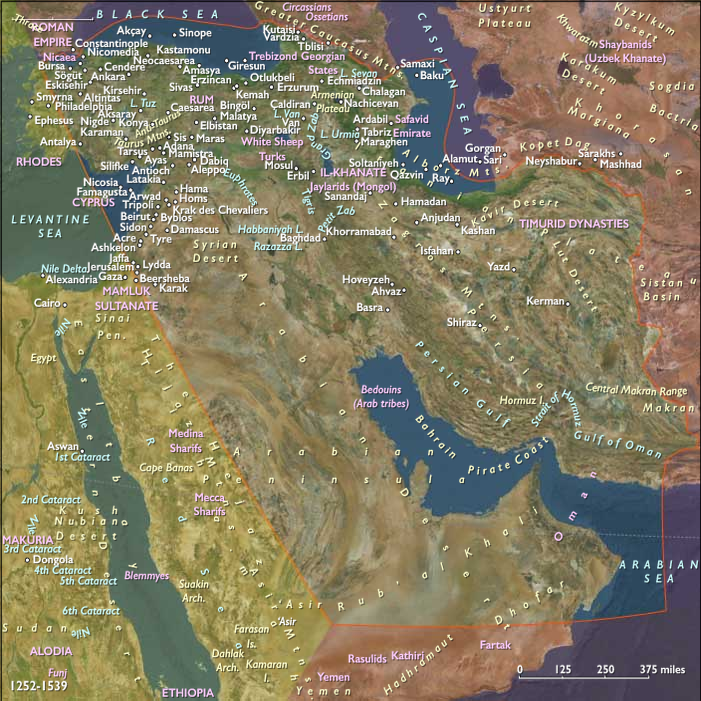
Years: 1396 - 1539
Locations
People
Groups
- Iranian peoples
- Arab people
- Oghuz Turks
- Muslims, Sunni
- Muslims, Shi'a
- Sufism
- Turkmen, Iraqi
- Turkmen people
- Mongols
- Salghurids
- Mongol Empire
- Il-khanate
- Muzaffarids (Iran)
- Injuids
- Jalairid Sultanate
- Timurid Empire
- Kara Koyunlu (Black Sheep Turks), (Turkmen) Emirate of the
- Ag Qoyunlu (White Sheep Turks), (Turkmen) Emirate of the
- Timurid Emirates
- Ag Qoyunlu (White Sheep Turks), (Turkmen) Emirate of the
- Qizilbash or Kizilbash, (Ottoman Turkish for "Crimson/Red Heads")
- Ag Qoyunlu (White Sheep Turks), (Turkmen) Emirate of the
- Ag Qoyunlu (White Sheep Turks), (Turkmen) Emirate of the
- Persia, Safavid Kingdom of
Topics
Commodoties
Subjects
Regions
Subregions