
Isthmian America (1684–1827 CE): Colonial Gateways, Silver…
1684 CE to 1827 CE
Isthmian America (1684–1827 CE): Colonial Gateways, Silver Routes, and the Age of Revolutions
Geography & Environmental Context
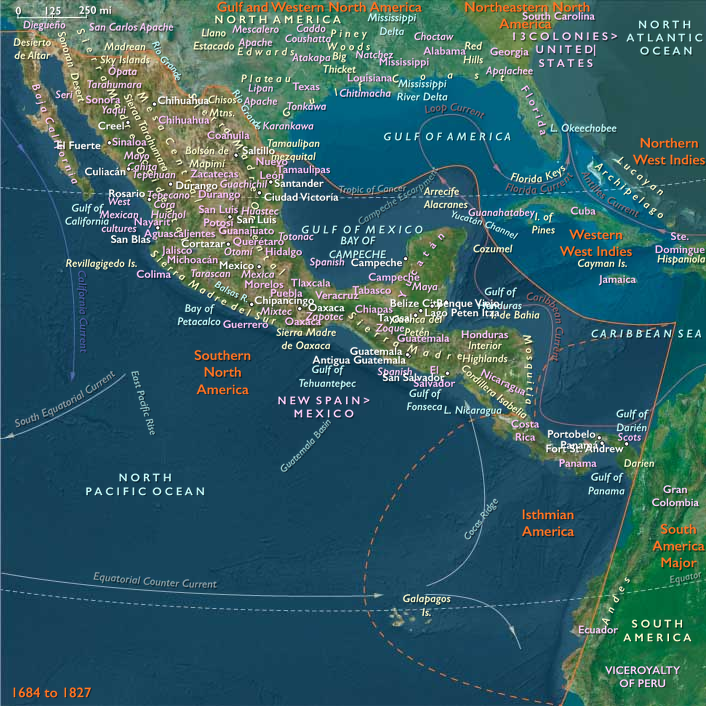
Isthmian America includes Costa Rica, Panama, the Galápagos Islands, the San Andrés Archipelago, and the northeastern edge of South America (including the capes of Ecuador and the Darién region of Colombia and Panama). Anchors include the Panama Isthmus and its overland crossings, the Chagres River, the Darién Gap’s swamps and forests, the volcanic uplands of Costa Rica, the Pacific and Caribbean coasts, and the Galápagos Islands, perched in the equatorial Pacific. The narrow isthmus made this subregion one of the world’s great bottlenecks, funneling wealth and empires across a few miles of land.
Climate & Environmental Shifts
The Little Ice Age persisted, bringing cooler, wetter conditions in some decades. Heavy rains swelled rivers and swamps across the Isthmus; tropical diseases (malaria, yellow fever) thrived in the humid lowlands, devastating European and Indigenous laborers. The Galápagos, though drier and volcanic, offered limited fresh water and intermittent fertile soils in highlands. Earthquakes and volcanic eruptions (notably in Ecuador) periodically disrupted settlement and trade.
Subsistence & Settlement
-
Panama Isthmus: Villages along the Chagres River and trails between Portobelo (Caribbean) and Panama City (Pacific) provisioned mule caravans with maize, cassava, and livestock.
-
Costa Rica: Highland farms grew maize, beans, and cacao; cattle ranching spread in valleys. Settlements like Cartago remained small compared to other colonial centers.
-
Galápagos: Uninhabited until used as a provisioning station by whalers and pirates; crews harvested tortoises, fish, and wood, leaving camps but no permanent towns.
-
San Andrés Archipelago: Small settlements practiced fishing, turtle harvesting, and coconut cultivation; strategically tied to Caribbean shipping lanes.
Urban centers were sparse but strategic: Panama City as the Pacific hub, Portobelo as the Caribbean entrepôt, and smaller towns like Cartago or Esparza in Costa Rica.
Technology & Material Culture
-
Transport: Mule trains, dugout canoes on the Chagres, and fortified roads carried silver and goods across the isthmus.
-
Fortifications: Massive bastions at Portobelo and San Lorenzo del Chagres defended treasure routes.
-
Everyday material culture: Subsistence farmers relied on machetes, iron pots, and woven mats; Spanish elites displayed imported textiles, silver plate, and ceramics.
-
Ships: Galleons, frigates, and later British and American merchantmen linked the isthmus to Atlantic and Pacific circuits.
Movement & Interaction Corridors
-
Treasure route: Silver from Peru and Mexico flowed through Panama City and overland to Portobelo, where the famed annual fairs drew merchants from Spain and beyond.
-
Smuggling & piracy: English, Dutch, and later British privateers harassed Spanish fleets; the Darién Scheme(1698–1700) by Scotland failed catastrophically.
-
Maritime circuits: Costa Rica exported cacao and hides through Caribbean ports; the Galápagos became a provisioning point for whalers and a hideout for privateers.
-
Indigenous & African corridors: Maroon communities in Darién and along the coasts resisted colonial authority, maintaining exchange networks in forest and river zones.
-
Post-independence shifts: After 1821, Panama and Costa Rica declared independence from Spain and entered the new Republic of Gran Colombia; isthmian routes continued but under changing authority.
Cultural & Symbolic Expressions
-
Religion: Catholic parishes and festivals structured community life; Jesuits and Franciscans evangelized in Costa Rica and Darién.
-
Maroon and Indigenous traditions: Oral histories, forest shrines, and communal rituals preserved autonomy in remote zones.
-
Urban culture: Portobelo fairs staged processions, markets, and displays of imperial wealth; Panama City developed a cosmopolitan identity through its Atlantic–Pacific role.
-
Oral traditions of the sea: Pirates, whalers, and sailors left tales of hidden treasure, shipwrecks, and tortoise harvests on the Galápagos.
Environmental Adaptation & Resilience
-
Isthmus: Mixed farming and fishing sustained populations vulnerable to disease; African-descended communities developed medical and agricultural practices adapted to humid tropics.
-
Costa Rica: Highland settlers adapted by growing cacao and later coffee, supplementing maize and beans.
-
Galápagos: Whalers adapted by capturing giant tortoises for fresh meat and oil, introducing goats and pigs that reshaped ecosystems.
-
San Andrés: Coconut groves and fisheries provided reliable subsistence, while exchange with passing ships ensured continuity.
Transition
From 1684 to 1827, Isthmian America remained a strategic corridor of global trade and conflict. Spain’s treasure fleets made Panama one of the empire’s most vital but vulnerable arteries, attracting pirates and rival empires. Costa Rica, relatively isolated, developed small-scale farming and ranching. The Galápagos and San Andrés became maritime outposts for whalers, sealers, and smugglers. By the 1820s, the collapse of Spanish authority and the rise of independent republics shifted control of this bottleneck, foreshadowing its continued role as one of the world’s great geopolitical crossroads.
Images

Isthmian America (with civilization) ©2024-25 Electric Prism, Inc. All rights reserved.
Groups
Topics
Commodities
Subjects
Regions
Middle America
View →Subregions
