The Cultivation System in the Dutch East…
1864 CE to 1875 CE
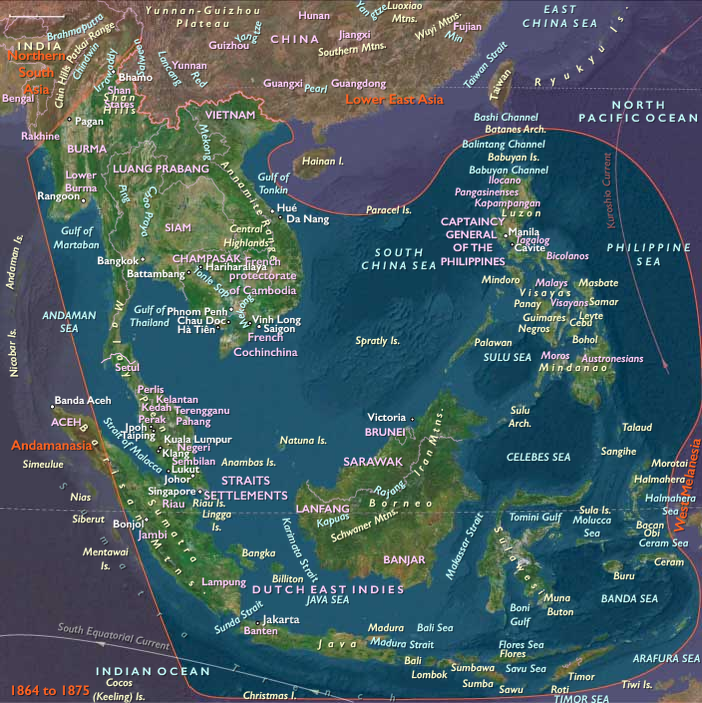
The Cultivation System in the Dutch East Indies does not require an elaborate state apparatus.
It is deliberately a form of indirect rule using an existing hierarchy of the Javanese priyayi elite, especially the upper ranks of traditional local officeholders known as the pangreh praja (rulers of the realm) and village heads.
As late as the mid-1850s, European officials and regional supervisors numbered fewer than three hundred for an indigenous population of more than ten million.
A small number of freelance European engineers and locally requisitioned laborers have undertaken the construction of roads and irrigation works needed for the new plantations.
This begins to change, however, as the system grows, undergoes reform, and, especially after the Sugar Act and Agrarian Act of 1870, gradually gives way to private enterprise.
The responsibilities of the colonial government burgeon, and in order to meet them, it expands pangreh praja ranks by dividing and standardizing their administrative territories and tightens control, by rescinding their traditional rights to symbols of status and access to villagers' labor and services, tying them to government salaries and procedures.
Alongside the pangreh praja now served a growing parallel hierarchy of European officials—ostensibly functioning as advisers or "elder brothers" of their native counterparts but increasingly directing them—whose reach, by 1882, will extend as far down as the subdistrict level, just above the village head.
In addition, more specialized government offices come into being: a Bureau of Public Works (with its own corps of engineers and an irrigation division), as well as departments of agriculture, education, finance, justice, and religion, all with their own structures and technical staffs.
Regions
Southeast Asia
View →Subregions