Jacques Besson, a French engineer born in…
1569 CE
Jacques Besson, a French engineer born in Grenoble, develops the first screw-cutting lathe in 1569, an improvement on the foot treadle-powered woodturning lathes used during the Middle Ages.
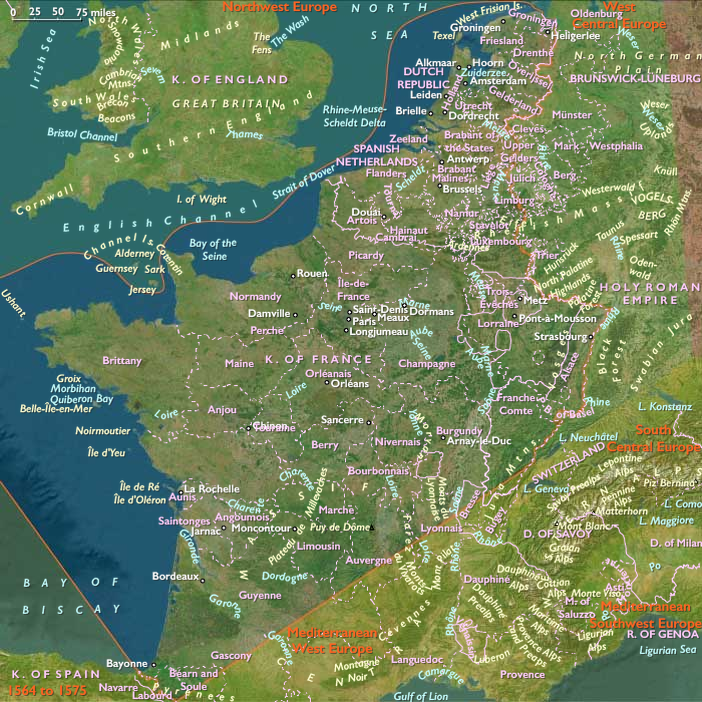
When King Charles IX of France makes a royal visit to Orléans in 1569, Besson presents to the King a draft of his new illustrated treatise, what is to become the Theatrum Instrumentorum, in which Besson publishes his designs.
He introduces cams and templates (patterns used to guide the form of a piece being made) to the screw-cutting lathe, thus increasing the operator's mechanical control of tool and workpiece and permitting the production of more accurate and intricate work in metal.
He also improves the drive and feed mechanism of the ornamental lathe and describes a more efficient form of waterwheel, considered a prototype of the water turbine.
His improvements in the lathe are of signal importance in the development of the machine-tool industry and of scientific instrumentation.
In this same year, Besson returns with the King to Paris as "master of the King's Engines".
Charles gives Besson exclusive rights to his designs.
While employed by the court, Besson also creates an ingenious screw-cutting lathe that is semiautomatic, in that the operator only needs to pull and release a cord.
Locations
Topics
Regions
West Europe
View →Subregions