
Jean Hey's Madonna in Glory with …
Years: 1498 - 1498
Jean Hey's Madonna in Glory with Saints and Donors (c. 1498)
In 1498, French painter Jean Hey, later known as the Master of Moulins, created his renowned masterpiece, the monumental Triptych of Moulins, for the Cathedral of Moulins. This remarkable altarpiece, celebrated for its exquisite technique and sophisticated realism, portrays Peter II, Duke of Bourbon, and his wife, Anne of France, alongside their daughter, Suzanne, offering a profound meditation on piety, family legacy, and political symbolism.
Historical Context: The Bourbons and the Crown
The commission emerged amid significant political transformations in late 15th-century France. Peter II had risen to prominence under King Louis XI, whose careful manipulation of noble alliances reshaped the balance of power among France's greatest houses. Initially betrothed to Marie d'Orléans—a union opposed by Louis XI to limit noble power—Peter was instead married to the king's daughter, Anne of France, on November 3, 1473, binding the Bourbon family firmly to the crown.
Under Louis XI, Peter's loyalty and reliability earned him substantial rewards, including a seat on the royal council and the fief of Bourbonnais. By the time Louis XI died in 1483, Peter was one of the few nobles who had consistently maintained royal favor, entrusted even on the king's deathbed with safeguarding royal interests. Subsequently, he and Anne guided young Charles VIII's early reign (1483–1491), influencing royal policies and strengthening their power base within the Bourbonnais region.
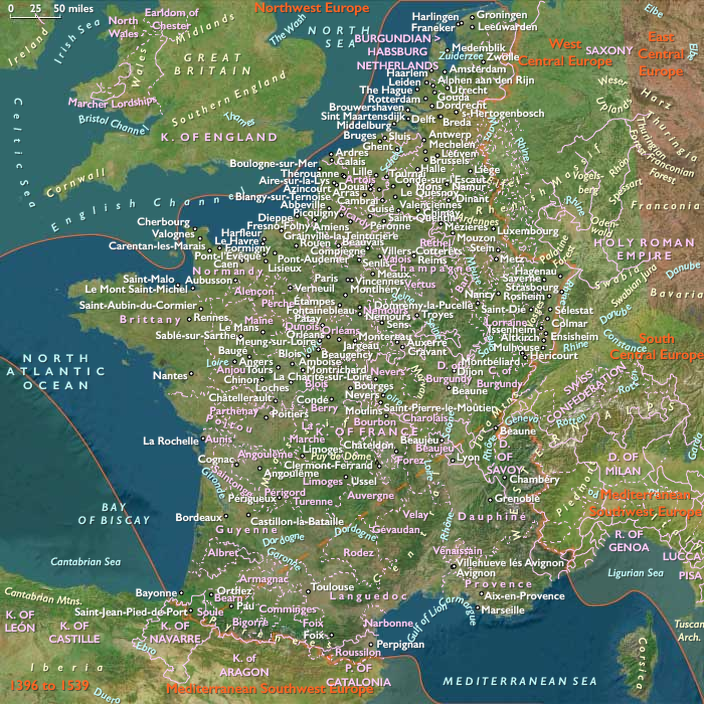
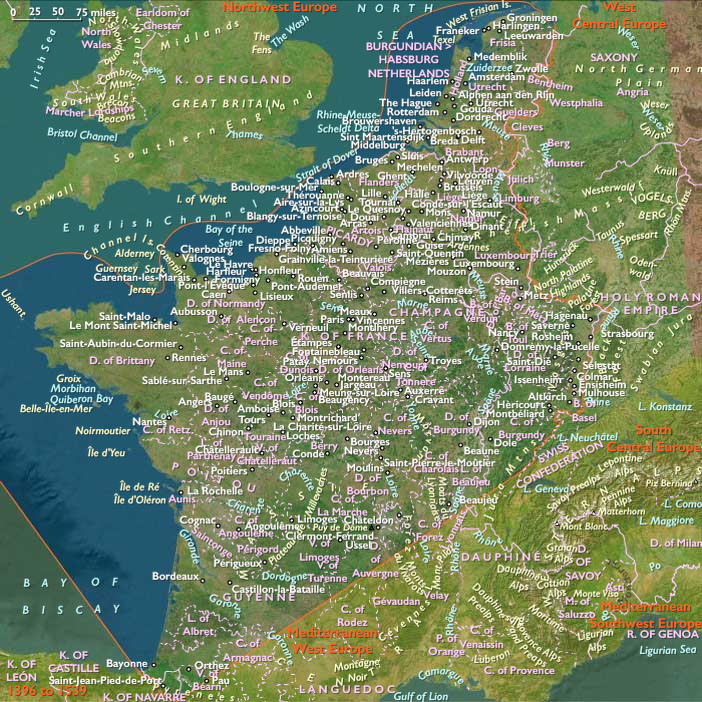
By 1488, the couple had consolidated significant territorial power. Peter, initially Count of Clermont and Beaujeu, inherited the substantial domains of his family, including the Duchy of Bourbon and the Counties of Forez and La Marche, following the death of his elder brother. Together, Peter and Anne strategically expanded their territories, acquiring Bourbon-Lancy in December 1488 and conducting territorial exchanges, such as trading l'Isle-en-Jordain with the Armagnacs in 1489. Significantly, these newly acquired domains were granted with the remarkable freedom to designate inheritance as they pleased, outside customary feudal restrictions.
The birth of their daughter, Suzanne, on May 10, 1491, secured their lineage, though earlier reports of an heir born in 1476 remain contradictory, suggesting either a miscarriage or stillbirth. Suzanne's eventual inheritance became a critical dynastic issue.
However, by 1491, their influence over French politics waned as Charles VIII reached maturity and began making independent—and sometimes controversial—decisions, such as marrying Anne, Duchess of Brittany, despite Peter and Anne's objections. Charles's untimely death in 1498 and Louis XII's succession saw Peter withdraw from active court politics, choosing instead to dedicate his remaining years to family, notably his cherished daughter Suzanne.
Cultural and Artistic Significance
The Triptych of Moulins symbolizes both personal piety and the assertion of dynastic prestige. Jean Hey (the Master of Moulins) infused the altarpiece with richly symbolic details, combining northern Renaissance realism with Burgundian elegance. The central panel, portraying the Virgin and Child in majesty, and side panels featuring Peter and Anne in devotional poses, subtly reinforce themes of dynastic continuity, moral virtue, and divine favor. The altarpiece thus embodies the intertwined political ambitions and devotional culture characteristic of late medieval nobility, marking a high point in artistic patronage within Atlantic West Europe.
Culturally and artistically, Jean Hey's work at Moulins epitomizes the transition from the Late Gothic to early Renaissance aesthetics, influencing later artistic developments in France and the Low Countries. Politically, the altarpiece memorializes the height of Bourbon influence, preceding their gradual political decline at the French royal court.
This period thus marks a notable intersection of artistic brilliance, political symbolism, and shifting noble fortunes in Atlantic West Europe.
Locations
People
- Anne of France
- Charles VIII of France
- Jean Hey
- Louis XII of France
- Margaret of Austria
- Peter II
- Philip I of Castile
- Suzanne
Groups
Topics
Commodoties
Subjects
Regions
Subregions
Years: 1498 - 1498
Locations
People
- Anne of France
- Charles VIII of France
- Jean Hey
- Louis XII of France
- Margaret of Austria
- Peter II
- Philip I of Castile
- Suzanne
Groups
Topics
Commodoties
Subjects
Regions
Subregions