
Filters:
Olivier de Clisson’s Return to France and …
Years: 1360 - 1360
Olivier de Clisson’s Return to France and the Treaty of Brétigny-Calais (1360)
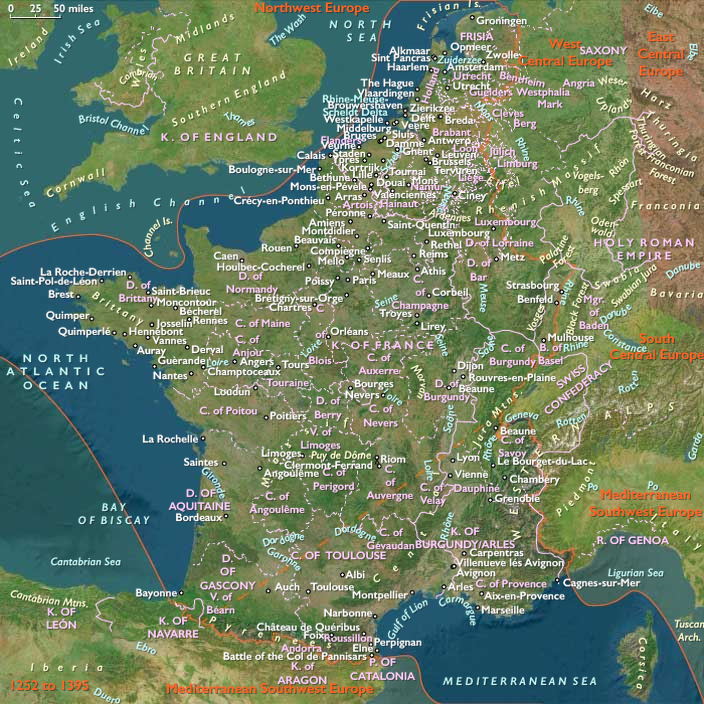
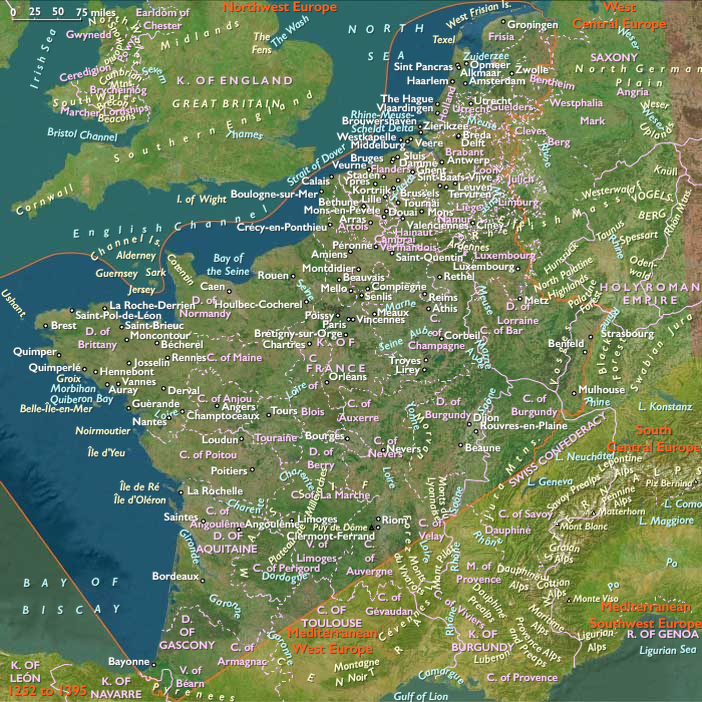
After spending ten years in England, Olivier de Clisson returned to Brittany in 1359, leading a Breton-English force alongside King Edward III and John IV de Montfort in a guerrilla campaign near Poitou. However, as diplomatic shifts reshaped the balance of power, Olivier was reconciled with the French Crown in 1360 as part of the Treaty of Brétigny, later renamed the Treaty of Calais.
The Treaty of Brétigny-Calais: Ending Hostilities (1360)
- Drafted on May 8, 1360, and officially ratified on October 24, the Treaty of Brétigny sought to defuse tensions between England and France, marking the start of a nine-year truce in the Hundred Years’ War.
- One of the treaty’s provisions aimed at rectifying past grievances and securing loyalty from former enemies:
- Olivier de Clisson was officially reconciled with the French Crown under King John II ("the Good").
- His father, Olivier IV de Clisson, executed in 1343 on charges of treason, was posthumously reinstatedwith full noble honors.
- The Clisson family regained its confiscated lands, rights, and privileges, restoring their place among the Breton and French aristocracy.
Marriage to Catherine of Laval and Political Alliances
- In 1360, Olivier married Catherine of Laval and Châteaubriant, a powerful heiress and granddaughter of Duke Arthur II of Brittany.
- This marriage strengthened his political standing, making him first cousin to both claimants to the Duchy of Brittany:
- John IV de Montfort, leader of the pro-English Montfortist faction.
- Joan, Duchess of Brittany, wife of Charles de Blois, leader of the pro-French faction.
- Additionally, this marriage connected Olivier to the French royal family, opening new political and military opportunities.
Impact and Legacy
- Olivier’s return to French service marked the beginning of his gradual rise in power, eventually leading to his appointment as Constable of France (1380).
- His marriage strengthened his ties to Brittany’s ruling houses, making him a key figure in the ongoing struggle for the duchy.
- The rehabilitation of the Clisson family restored their noble prestige, setting the stage for Olivier’s future influence in both French and Breton politics.
The Treaty of Brétigny-Calais (1360) not only secured peace between England and France but also reintegrated former enemies like Olivier de Clisson into the French nobility, allowing him to rebuild his family’s legacy and expand his influence.
Locations
People
- Charles of Blois Châtillon
- Edward III of England
- Joan, Duchess of Brittany
- John II of France
- John IV, Duke of Brittany
- Olivier de Clisson
Groups
Topics
- Hundred Years' War: Beginning of the War
- Hundred Years' War
- Breton Succession, War of the
- Hundred Years' War: First Peace
Subjects
Regions
Subregions
Years: 1360 - 1360
Locations
People
- Charles of Blois Châtillon
- Edward III of England
- Joan, Duchess of Brittany
- John II of France
- John IV, Duke of Brittany
- Olivier de Clisson
Groups
Topics
- Hundred Years' War: Beginning of the War
- Hundred Years' War
- Breton Succession, War of the
- Hundred Years' War: First Peace
Subjects
Regions
Subregions