Event
Japan's Tokugawa shogunate shows signs of weakening…
Japan's Tokugawa shogunate shows signs of weakening by the late eighteenth and early nineteenth centuries.
The dramatic growth of agriculture that had characterized the early Edo period has ended and the government handles the devastating Tenpō famines poorly.
Peasant unrest grow and government revenues fall.
The shogunate cuts the pay of the already financially distressed samurai, many of whom work side jobs to make a living.
Discontented samurai are soon to play a major role in engineering the downfall of the Tokugawa shogunate.
At the same time, the people draw inspiration from new ideas and fields of study.
Dutch books brought into Japan stimulate interest in Western learning, called rangaku or "Dutch learning".
The physician Sugita Genpaku, for instance, had used concepts from Western medicine to help spark a revolution in Japanese ideas of human anatomy.
The scholarly field of kokugaku or "National Learning", developed by scholars such as Motoori Norinaga and Hirata Atsutane, promote what it asserts are native Japanese values.
For example, it criticizes the Chinese-style Neo-Confucianism advocated by the shogunate and emphasizes the Emperor's divine authority, which the Shinto faith teaches has its roots in Japan's mythic past, which is referred to as the "Age of the Gods".
The dramatic growth of agriculture that had characterized the early Edo period has ended and the government handles the devastating Tenpō famines poorly.
Peasant unrest grow and government revenues fall.
The shogunate cuts the pay of the already financially distressed samurai, many of whom work side jobs to make a living.
Discontented samurai are soon to play a major role in engineering the downfall of the Tokugawa shogunate.
At the same time, the people draw inspiration from new ideas and fields of study.
Dutch books brought into Japan stimulate interest in Western learning, called rangaku or "Dutch learning".
The physician Sugita Genpaku, for instance, had used concepts from Western medicine to help spark a revolution in Japanese ideas of human anatomy.
The scholarly field of kokugaku or "National Learning", developed by scholars such as Motoori Norinaga and Hirata Atsutane, promote what it asserts are native Japanese values.
For example, it criticizes the Chinese-style Neo-Confucianism advocated by the shogunate and emphasizes the Emperor's divine authority, which the Shinto faith teaches has its roots in Japan's mythic past, which is referred to as the "Age of the Gods".
-
{# Image navigates to the detail page; the magnifying-glass chip is the only Fancybox lightbox trigger (kept a separate sibling — anchors can't nest). #}
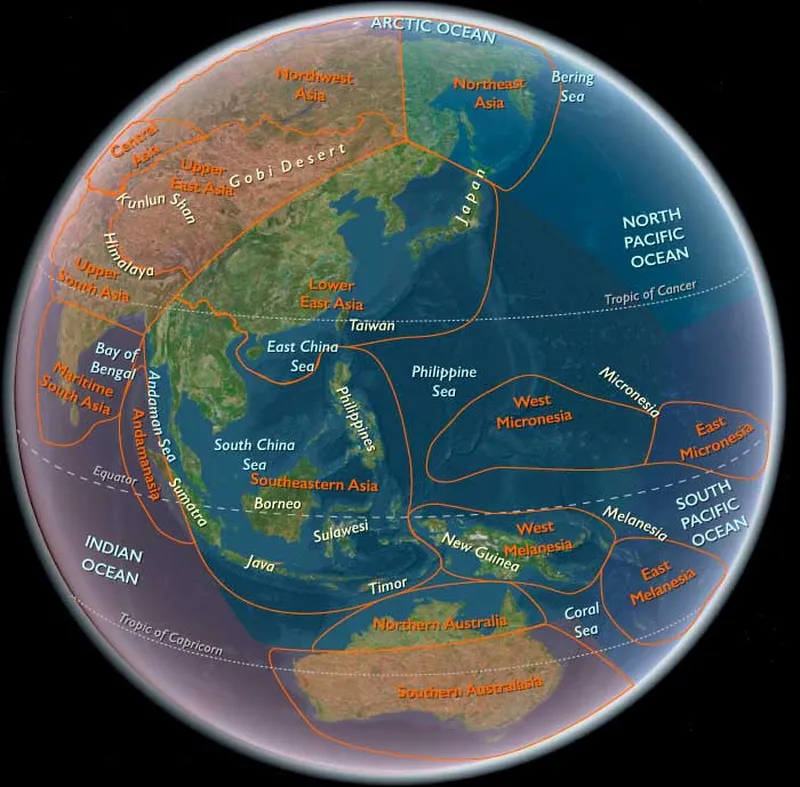 The Far East
World
The Far East
World
-
{# Image navigates to the detail page; the magnifying-glass chip is the only Fancybox lightbox trigger (kept a separate sibling — anchors can't nest). #}
 East Asia
Region
East Asia
Region
-
{# Image navigates to the detail page; the magnifying-glass chip is the only Fancybox lightbox trigger (kept a separate sibling — anchors can't nest). #}
 Maritime East Asia
Subregion
Maritime East Asia
Subregion