Leaders of what will soon come to…
1568 CE
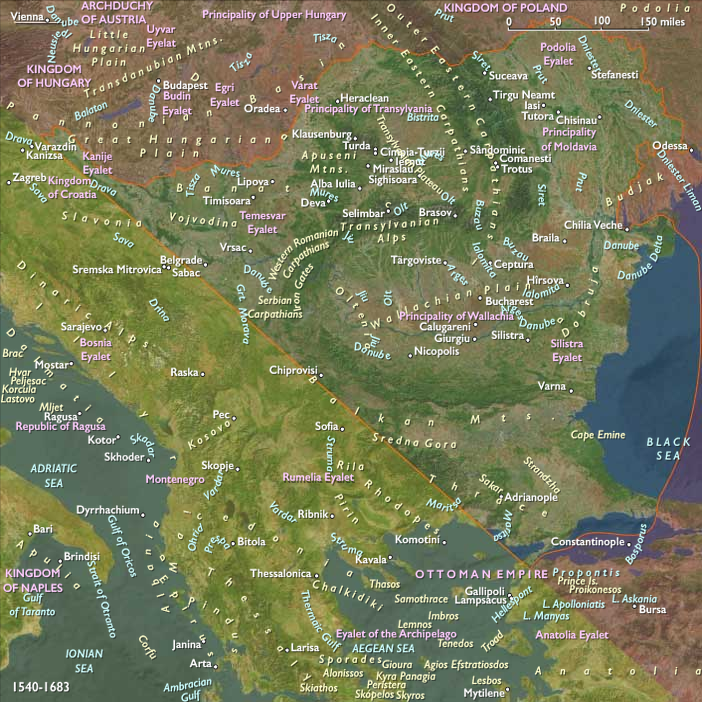
Leaders of what will soon come to be called Unitarianism, an organized religious movement that has emerged in Poland and Transylvania, seek to achieve a reformation that is completely in accordance with the Hebrew Scriptures and the New Testament; in particular, they find no warrant for the doctrine of the Trinity accepted by other Christian churches.
Italian-born physician George Blandrata, or Giorgio Biandrata, had served Queen Bona Sforza of Poland from 1540 to 1552, then returned to Italy to practice medicine at Pavia, where he had aroused the hostility of the authorities of the Inquisition by his interest in theological speculation.
He had fled in 1556 to Geneva and there became an elder in the Calvinist congregation of Italians, but soon antagonized Jean Calvin by declaring that debates over the nature of the Trinity threatened the concept of the unity of God.
Blandrata had returned two years later to Poland, where he has become an influential elder in the Minor Church, an anti-Trinitarian organization.
The Unitarian king János Sigismund Zápolya, or John Sigismund II, had in 1563 summoned him to Transylvania as court physician.
Here Blandrata and the Unitarian bishop Ferenc Dávid win many converts from Calvinist to Unitarian beliefs.
Dávid, after successively rejecting Roman Catholicism and Lutheranism, had in 1566 become bishop of the Calvinist community at Kolozsvár and court preacher to John Sigismund.
Converted to Unitarianism by Blandrata before 1567, Dávid had begun to advocate the unity rather than the trinity of the Godhead.
He has transformed the Great Church at Kolozsvár into a center of anti-Trinitarianism, introduced Unitarianism at the court, won many converts, and secured state toleration through the 1568 Edict of Torda, by which ...
Locations
Groups
Topics
Commodities
Subjects
Regions
Southeast Europe
View →Subregions